
In modern industrial engineering and infrastructure construction, flooring systems are required to withstand increasingly demanding working conditions, including heavy equipment loads, continuous pedestrian traffic, chemical exposure, and extreme environmental changes. Among the many structural solutions available, industrial steel grating has become one of the most widely adopted systems due to its exceptional combination of strength, safety performance, drainage capability, and long service life.
Unlike conventional solid flooring materials, industrial steel grating is designed with an open-grid structure that allows it to perform multiple functions simultaneously, including load bearing, ventilation, and fluid drainage, making it highly suitable for complex industrial environments where efficiency and safety are critical.
What is industrial steel grating in engineering applications?
Industrial steel grating is a fabricated structural flooring system composed of load-bearing steel bars and cross bars that are assembled into a rigid grid pattern through welding, pressing, or locking techniques. The finished grating panels are then installed onto steel frames or supporting structures to form durable platforms, walkways, trench covers, and working surfaces.
Because of its structural design, industrial steel grating distributes loads evenly across the supporting framework while minimizing material usage, which allows it to achieve high strength with relatively low self-weight.
● It is engineered to support heavy industrial loads such as machinery, vehicles, and equipment
● It is manufactured in different bar spacing configurations to match load and safety requirements
● It can be customized with different materials and coatings for corrosion resistance
● It is designed for modular installation to simplify construction and maintenance processes
Why industrial steel grating is essential in heavy-duty environments
Industrial environments such as factories, refineries, power plants, and processing facilities require flooring systems that can perform under constant stress while maintaining safety and operational efficiency. Industrial steel grating is widely used because it solves multiple engineering challenges at the same time.
● It provides a strong yet lightweight structure that reduces overall load on supporting beams and foundations
● It allows liquids, oils, and debris to pass through the surface, preventing accumulation and reducing slip hazards
● It improves air circulation in enclosed industrial spaces, helping control temperature and humidity levels
● It supports continuous heavy usage without significant deformation or structural fatigue
● It can be installed quickly in modular sections, reducing construction downtime
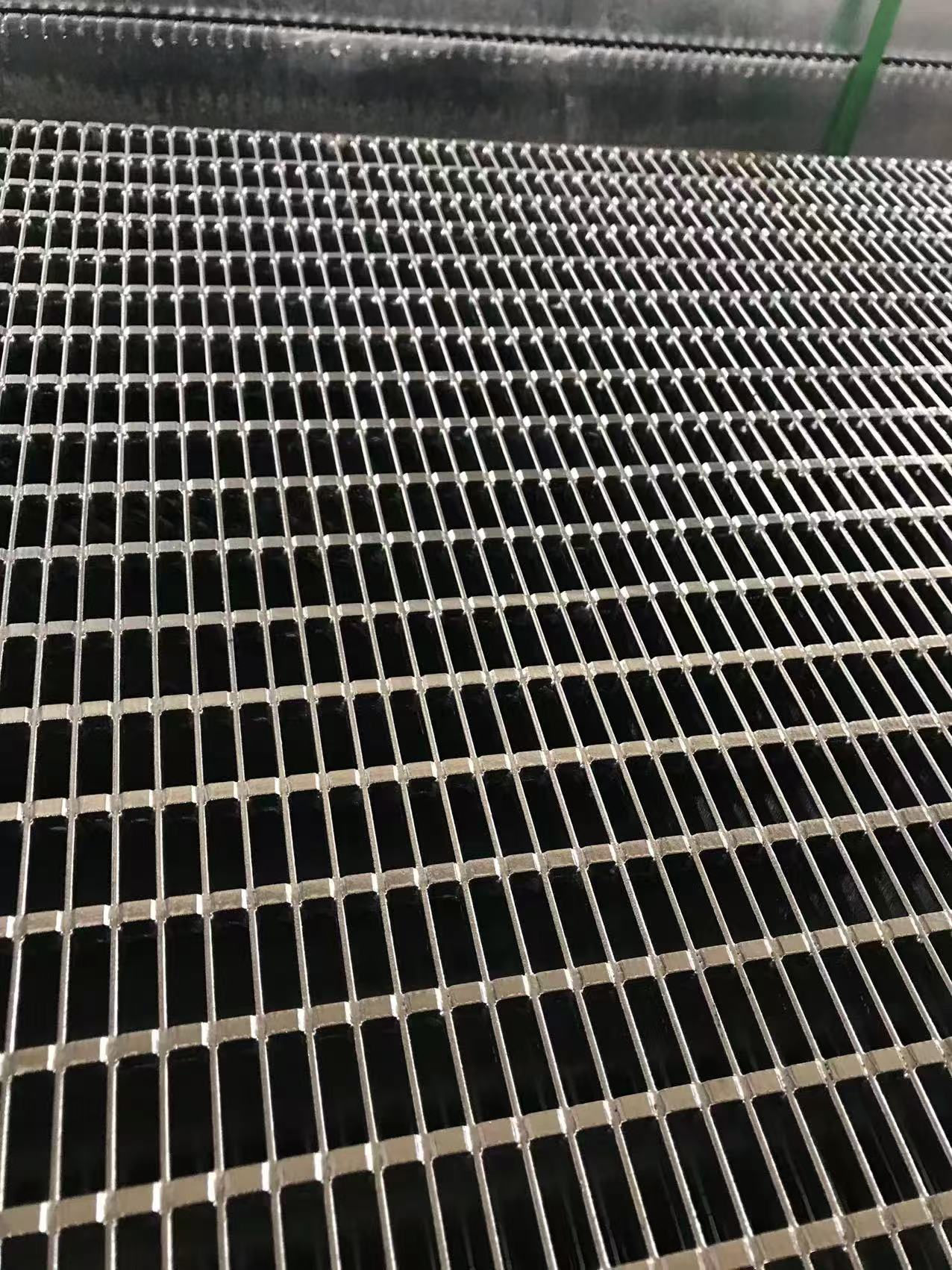
Key structural advantages of industrial steel grating systems
The engineering design of industrial steel grating focuses on maximizing performance under harsh operational conditions while maintaining cost efficiency and long-term reliability.
High load-bearing efficiency with optimized material usage
● Designed to handle concentrated and distributed loads across industrial platforms
● Load transfer is evenly distributed through bearing bars into the support structure
● Reduced material weight helps lower transportation and installation costs
Enhanced safety performance in industrial environments
● Anti-slip surface options such as serrated bars improve traction in wet or oily conditions
● Open grid structure reduces standing water and minimizes slip-related accidents
● Stable structural behavior ensures safe movement of workers and equipment
Excellent drainage and environmental adaptability
● Rainwater, chemicals, and industrial fluids pass through the grating surface easily
● Prevents corrosion and surface degradation caused by fluid accumulation
● Performs reliably in indoor, outdoor, and high-humidity environments
Long-term durability with minimal maintenance
● Hot-dip galvanized or stainless steel options provide strong corrosion resistance
● Structural integrity remains stable under long-term heavy use
● Maintenance requirements are significantly lower compared to solid flooring systems
Common industrial applications of steel grating
Industrial steel grating is used in a wide range of industries where structural strength, safety, and durability are essential.
● Oil and gas refineries where platforms must withstand harsh chemical exposure and heavy equipment loads
● Power generation facilities including thermal, hydro, and nuclear plants requiring safe maintenance access
● Chemical processing plants where corrosion resistance and drainage performance are critical
● Manufacturing plants that require elevated walkways, maintenance platforms, and equipment access systems
● Mining operations where heavy-duty structural flooring is required in demanding environments
● Municipal and infrastructure projects such as drainage systems, bridges, and service corridors
Material selection and surface treatment options
The performance and lifespan of industrial steel grating are strongly influenced by material selection and protective treatments applied during manufacturing.
● Carbon steel industrial grating offers high strength and cost efficiency for general industrial use
● Hot-dip galvanized steel grating provides excellent corrosion resistance for outdoor and humid environments
● Stainless steel grating is used in highly corrosive, marine, or hygienic environments where maximum durability is required
● Painted or coated finishes can be applied for additional corrosion protection and visual identification
How industrial steel grating improves project efficiency and lifecycle cost
Beyond structural performance, industrial steel grating provides significant advantages in construction efficiency and long-term cost optimization.
● Modular installation reduces construction time and labor requirements
● Lightweight structure reduces transportation and installation expenses
● Easy replacement of individual panels minimizes downtime during maintenance
● Long service life reduces the frequency of replacement and repair cycles
● Improved safety performance helps reduce operational risk and accident-related costs
Conclusion
Industrial steel grating has become an essential structural solution in modern heavy-duty engineering because it successfully combines strength, safety, durability, and cost efficiency in a single system. Its open-grid design enhances drainage, ventilation, and operational safety while maintaining excellent load-bearing performance under demanding industrial conditions.
For B2B buyers and engineering professionals, selecting industrial steel grating is not only a material choice but also a strategic decision that improves project efficiency, reduces long-term operational costs, and enhances workplace safety. As industrial infrastructure continues to evolve toward higher efficiency and sustainability standards, industrial steel grating will remain a core component in global engineering applications.
FAQ:
1. What is industrial steel grating mainly used for?
Industrial steel grating is mainly used for platforms, walkways, trench covers, and flooring systems in heavy-duty industrial environments such as factories, power plants, and refineries.
2. What are the main advantages of industrial steel grating?
It offers high load-bearing capacity, excellent drainage, anti-slip safety options, long service life, and low maintenance requirements.
3. What materials are commonly used for industrial steel grating?
Common materials include carbon steel, hot-dip galvanized steel, and stainless steel depending on environmental and operational requirements.
4. Is industrial steel grating suitable for outdoor use?
Yes, especially hot-dip galvanized and stainless steel versions, which provide strong corrosion resistance and long-term durability in outdoor conditions.
Post time: Jun-11-2026