
A trench cover may look like a small part of a drainage or access system, but in many industrial and commercial projects, it is often one of the first components to show problems. Some trench covers start to bend after forklifts pass over them. Some create loud noise when carts or vehicles move across the channel. Some rust too quickly, while others reduce drainage efficiency because the opening design does not match the site conditions.
These problems are not always caused by poor material alone. In many cases, early failure happens because the trench cover was selected without enough attention to real load conditions, support structure, installation details, drainage needs, surface treatment, and long-term maintenance. For factories, warehouses, parking areas, workshops, power stations, drainage systems, and outdoor industrial sites, choosing the right trench cover means solving practical site problems before they appear.
Load Conditions Are Often More Complex Than Expected
One common reason trench covers fail early is that the actual load is heavier than expected. At the beginning of a project, the area may be planned only for pedestrian traffic. However, after installation, the same trench cover may need to support pallet trucks, forklifts, maintenance carts, small vehicles, or temporary equipment.
A trench cover for walking areas is very different from a trench cover used in a loading zone. If the selected panel does not match the real load, bending, vibration, edge damage, loose fitting, and noise may appear after a period of use.
Before choosing a trench cover, buyers should confirm:
- Whether the cover is used for pedestrian traffic, carts, forklifts, or vehicles
- Whether the load is occasional or repeated every day
- Whether small wheels will pass over the cover
- Whether impact loads may happen during operation
- Whether the trench opening is narrow or wide
- Whether the cover needs to be removable for cleaning or inspection
The wider the trench opening, the more important the bearing bar direction, support frame, and panel strength become. A cover that works well on a narrow trench may not be suitable for a larger span.
Rattling Noise Usually Comes From Poor Fit
A noisy trench cover is not only annoying; it can also indicate that the panel is moving during use. This problem is common in workshops, warehouses, parking garages, and vehicle access areas.
Rattling may happen when the trench cover does not fit the frame properly, the support surface is uneven, the panel is too light, or the fixing method is not suitable. In vehicle or trolley areas, repeated movement can damage the edges and shorten the service life of the cover.
To reduce noise and improve stability, the trench cover should have:
- Accurate panel dimensions
- Suitable edge bar design
- Stable support on both sides
- Correct bearing direction
- Proper fixing clips or locking parts
- Optional anti-vibration details for special projects
A well-designed trench cover should sit firmly on the frame, remain stable under normal traffic, and reduce unnecessary movement during long-term use.
Drainage Performance Depends on the Cover Design
When water stays around a drainage channel, people often assume the trench itself is blocked. But in some cases, the problem comes from the trench cover design.
If the opening is too small, water cannot enter the trench quickly. If the surface traps leaves, mud, dust, metal chips, or packaging waste, drainage efficiency will also decrease. For industrial areas, drainage covers often need to deal with more than rainwater. Oil residue, production dust, small debris, and cleaning water may all affect performance.
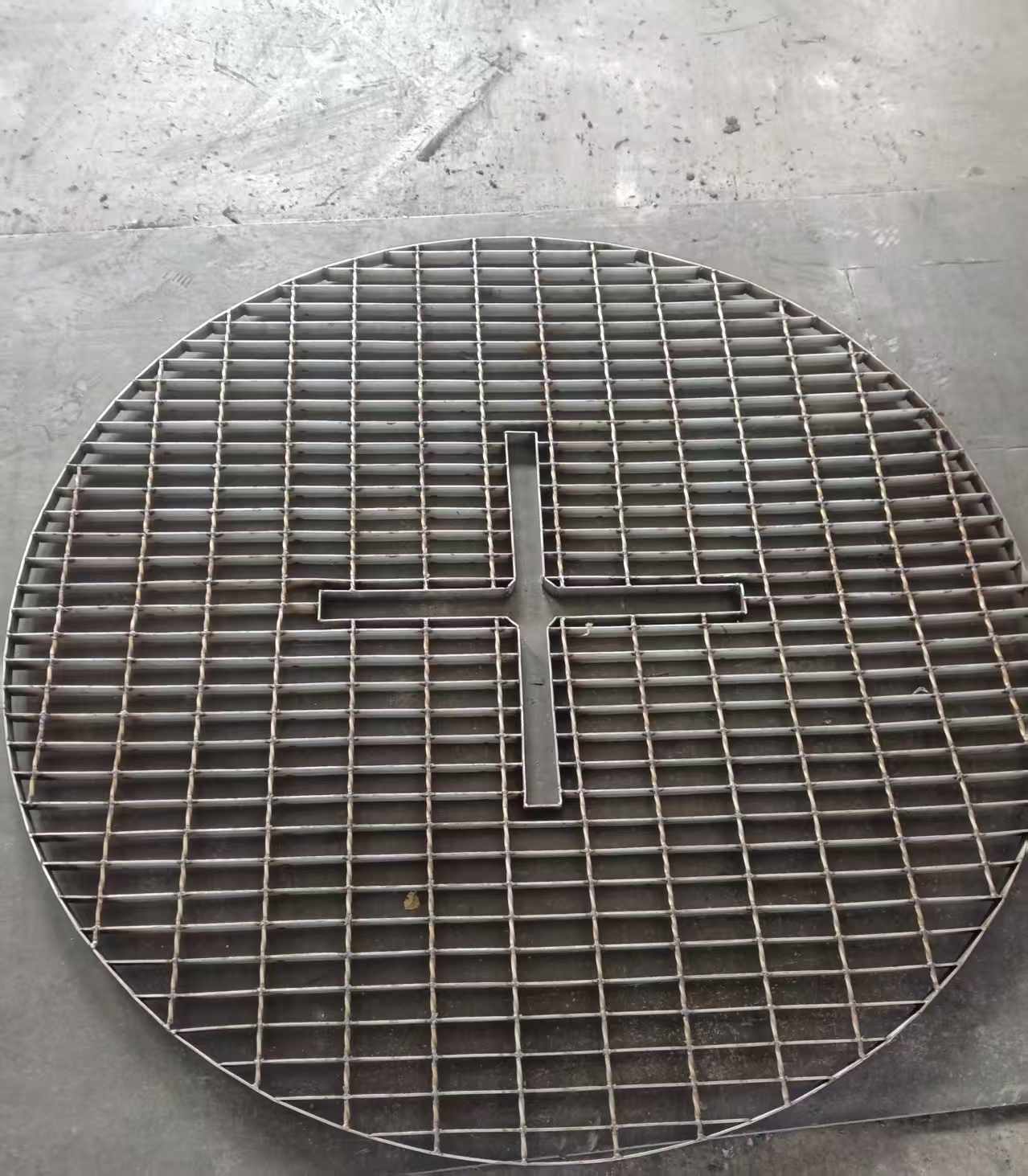
This is why steel grating trench covers are widely used. The open grid structure allows water, air, and small debris to pass through more easily than solid plate covers. At the same time, the grating panel can still provide a stable walking or driving surface when the bearing bar size and spacing are correctly selected.
Small Wheels Can Cause Big Damage
In many warehouses and factories, trench covers are crossed by pallet trucks, tool carts, transport trolleys, and other small-wheel equipment. These wheels create concentrated pressure on a small contact area. Even if the total load is not extremely heavy, an unsuitable trench cover may still become damaged.
For this reason, opening size and bearing bar spacing should be selected according to real use. If the gaps are too wide, small wheels may bounce, get stuck, or create repeated impact on the cover. If the spacing is too narrow, drainage may be affected or the cost may increase unnecessarily.
A better solution is to balance wheel traffic, drainage needs, load capacity, and walking safety instead of choosing only by price or standard panel size.
Material and Surface Treatment Decide Long-Term Durability
Trench covers are often exposed to moisture, dust, outdoor weather, wastewater, oil, or industrial pollution. If ordinary steel is used without proper surface treatment, rust may appear quickly and gradually reduce the strength and appearance of the cover.
Common material and surface choices include:
- Carbon steel trench cover: suitable for general industrial use with good strength and cost performance.
- Hot-dip galvanized trench cover: suitable for outdoor, wet, and industrial drainage areas where corrosion resistance is needed.
- Stainless steel trench cover: suitable for corrosive, hygienic, coastal, or chemical environments.
- Serrated steel grating trench cover: suitable for wet, oily, or slippery areas where better anti-slip performance is required.
- Heavy duty steel grating trench cover: suitable for vehicle access, forklift routes, loading areas, and high-load industrial projects.
The right material should be selected according to the real environment. A lower-cost cover may not be economical if it needs frequent replacement, while a properly treated trench cover can reduce maintenance pressure and support longer service life.
Trench Covers Designed Around Real Project Conditions
For trench cover applications, standard products are not always enough. Different projects may have different trench widths, support frames, load levels, drainage requirements, anti-slip needs, and installation methods. This is why product matching is especially important.
Our trench cover products can be designed based on actual site conditions instead of only offering one fixed specification. For industrial drainage channels, steel grating trench covers can help improve water flow and maintenance convenience. For outdoor projects, hot-dip galvanized trench covers can provide better corrosion resistance. For high-load areas, heavy duty steel grating trench covers can be matched with stronger bearing bars and suitable support structures.
For areas where workers often walk across wet or oily ground, serrated steel grating can improve surface traction. For warehouse and workshop trenches crossed by carts or small wheels, closer spacing and stable edge treatment can help reduce wheel impact and improve daily use experience.
Product Options for Different Trench Cover Applications
Different working areas require different trench cover solutions. Product selection can be adjusted from several aspects:
- Bearing bar size: chosen according to load capacity and trench span.
- Bar spacing: selected based on drainage, walking comfort, and small-wheel traffic.
- Panel size: customized according to trench width, length, and installation space.
- Surface treatment: hot-dip galvanizing, stainless steel material, or other surface options can be selected for different environments.
- Anti-slip surface: serrated surface can be used where rainwater, oil, mud, or dust may cause slipping.
- Edge treatment: edge bars, frames, lifting holes, and fixing parts can be added according to installation and maintenance needs.
- Load grade: light-duty, medium-duty, and heavy-duty trench covers can be matched with pedestrian areas, cart routes, forklift areas, or vehicle access zones.
This type of product flexibility helps the trench cover fit the project better, rather than forcing the project to adapt to a standard panel.
Why Custom Matching Matters for Industrial Buyers
For industrial buyers, a trench cover is not only a piece of steel placed over a channel. It affects drainage efficiency, worker safety, vehicle movement, maintenance frequency, and long-term operating cost.
When trench covers are properly matched to site conditions, they can help:
- Reduce bending and deformation
- Lower rattling noise during use
- Improve drainage performance
- Support pedestrian, cart, or vehicle traffic
- Reduce rust and corrosion problems
- Make inspection and cleaning easier
- Improve the safety of platforms, workshops, and outdoor drainage areas
This is especially important for factories, warehouses, power stations, wastewater treatment plants, parking areas, loading zones, and outdoor industrial facilities where trench covers are used every day.
Conclusion
Trench cover problems such as bending, rattling, rusting, poor drainage, and early failure are often caused by a mismatch between product design and real working conditions. A reliable trench cover should not only cover an opening. It should support the expected load, allow smooth drainage, remain stable during use, resist the environment, and make maintenance easier.
For industrial drainage channels, cable trenches, workshop floors, parking areas, loading zones, and outdoor access systems, steel grating trench covers offer a practical and durable solution. By selecting the right material, bar spacing, load design, surface treatment, and installation details, buyers can improve site safety and reduce long-term maintenance problems.
FAQ
1. What type of trench cover is suitable for industrial drainage?
Steel grating trench covers are commonly used for industrial drainage because the open grid structure allows water, air, and small debris to pass through while still providing a stable surface for walking or equipment access.
2. Can trench covers be customized for different trench sizes?
Yes. Trench covers can be customized according to trench width, length, load requirement, support frame, bar spacing, material, surface treatment, and installation method.
3. What trench cover is better for outdoor use?
Hot-dip galvanized trench covers are commonly used outdoors because the zinc coating helps improve corrosion resistance in rain, humidity, and industrial environments.
4. How do I choose a trench cover for forklift or vehicle traffic?
For forklift or vehicle traffic, buyers should choose heavy duty steel grating trench covers with suitable bearing bar size, span direction, support structure, and fixing method based on the actual load.
Post time: Jul-02-2026