
Steel Grating is a widely used metal flooring and covering material in industrial plants, workshops, warehouses, drainage systems, power stations, platforms, walkways, stair areas, and outdoor access structures. It is made from bearing bars and cross bars, forming an open-grid structure that provides strength while allowing water, air, light, and debris to pass through.
In many projects, steel grating is not selected only because it is strong. It is chosen because it can solve several practical site problems at the same time. A good steel grating system can support safe walking, reduce water accumulation, improve ventilation, protect drainage channels, make inspection easier, and lower long-term maintenance pressure.
Steel Grating Is More Than a Floor Panel
In industrial environments, the floor system often needs to handle more than foot traffic. Workers may carry tools, carts may move materials, machines may create vibration, and outdoor areas may face rain, mud, oil, or dust. Ordinary solid flooring may collect water or debris, while weak covers may bend or become unsafe.
Steel grating provides an open and strong structure. The bearing bars carry the main load, while the cross bars keep the panel stable and aligned. This combination makes steel grating suitable for areas where strength, drainage, and access are required together.
It is commonly used in:
- Industrial platforms
- Factory walkways
- Drainage trench covers
- Stair treads and landings
- Equipment maintenance areas
- Power plant access platforms
- Wastewater treatment facilities
- Parking and loading zones
- Outdoor bridges and service paths
- Warehouse material handling areas
Different applications require different grating structures, materials, spacing, and surface treatments.
Why Open-Grid Design Matters
One of the biggest advantages of Steel Grating is its open-grid design. This structure allows water, dust, snow, mud, oil residue, and small debris to pass through instead of staying on the surface.
For drainage areas, this helps water enter the trench quickly. For outdoor walkways, it reduces water accumulation after rain. For industrial floors, it helps keep the working surface cleaner and easier to inspect. For ventilation areas, the open structure allows air and light to pass through without blocking access.
Compared with solid steel plates, steel grating can also reduce weight while maintaining useful load-bearing performance. This makes installation, removal, and maintenance easier in many projects.
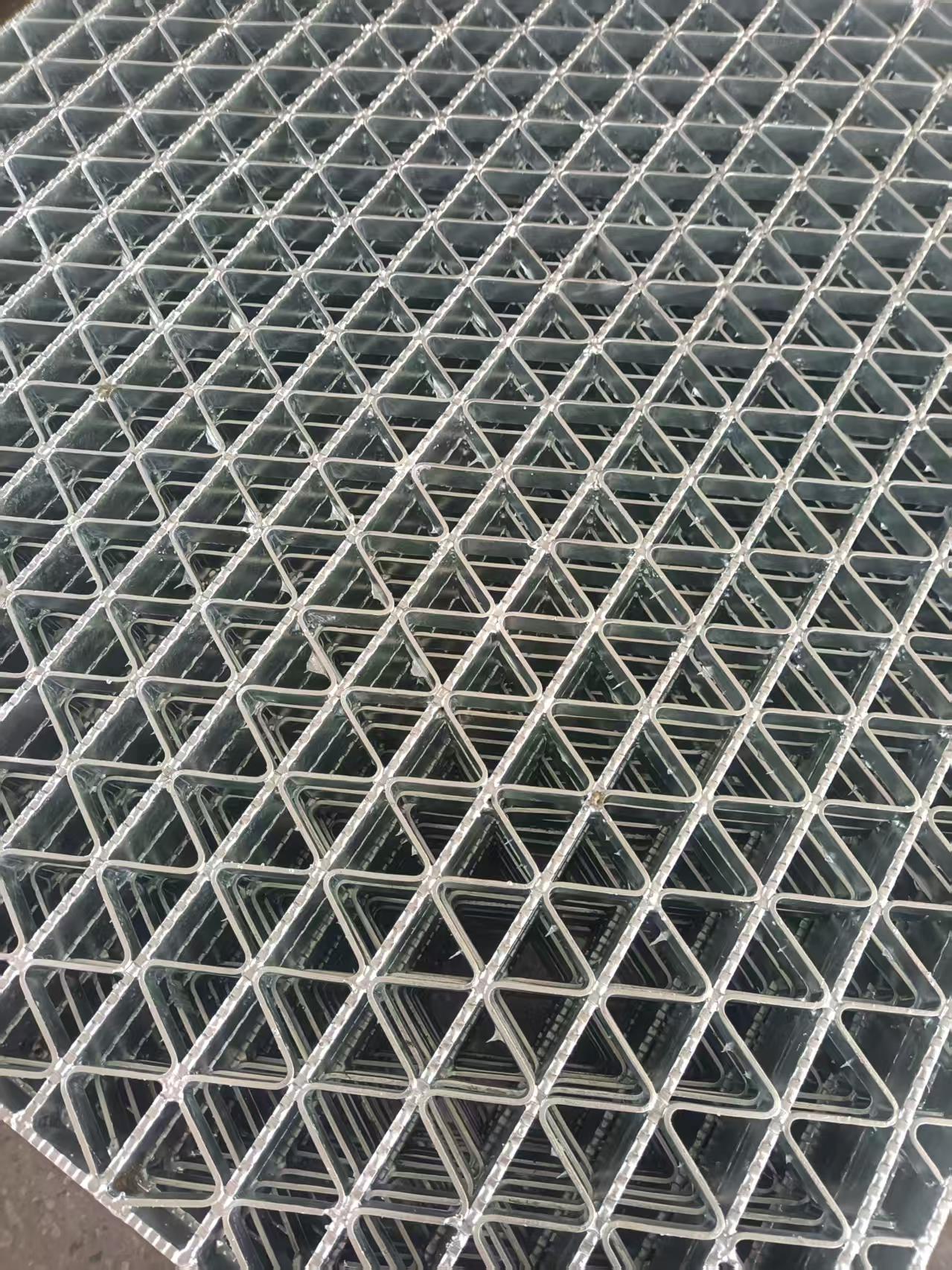
Choosing the Right Steel Grating Structure
Steel Grating can be produced in different structures according to the project requirement.
Welded steel grating is common in heavy industrial areas because it has strong joints and stable load-bearing performance. It is often used for platforms, walkways, trench covers, and general industrial flooring.
Press lock steel grating has a cleaner appearance and more uniform spacing. It is suitable for projects that need both function and visual quality, such as public walkways, architectural areas, and visible platform surfaces.
Serrated steel grating provides better slip resistance because the bearing bars have a toothed surface. It is suitable for wet, oily, outdoor, or dusty environments where walking safety is important.
Heavy duty steel grating is designed for higher loads, such as vehicle access areas, forklift routes, loading zones, and large-span industrial floors.
Decorative or special-pattern steel grating, such as wave-shaped steel grating, can be used where both design appearance and practical function are required.
Material Selection Affects Service Life
The material of Steel Grating should match the working environment. Carbon steel is widely used for general industrial applications because it offers good strength and cost efficiency. When used outdoors or in humid areas, it usually needs surface protection.
Hot-dip galvanized steel grating is one of the most common choices for outdoor and industrial projects. The zinc coating helps improve corrosion resistance, making it suitable for drainage covers, platforms, walkways, parking areas, and wet environments.
Stainless steel grating is used where corrosion resistance, hygiene, or appearance is more important. It is suitable for food processing areas, chemical plants, water treatment facilities, coastal projects, and clean industrial environments.
Choosing material only by price can lead to problems later. If the environment is wet, corrosive, or exposed to outdoor weather, proper material and surface treatment can reduce rust, extend service life, and lower maintenance costs.
Safety Depends on Details
A steel grating panel may look simple, but safety depends on many details. The bearing bar size, spacing, span direction, edge treatment, fixing method, and support frame all affect final performance.
For walking areas, the spacing should be comfortable and safe for foot traffic. For areas where carts or small wheels pass, the opening size should not create wheel impact or movement problems. For wet or oily areas, serrated grating can improve traction. For trench covers, the panel should sit firmly on the frame and be easy to remove when maintenance is needed.
Installation is also important. If the bearing direction is wrong, the grating may lose part of its load capacity. If the support frame is uneven, the panel may shake or create noise. If fixing clips are missing in high-traffic areas, panels may move during use.
A reliable steel grating system should be designed as a complete structure, not only as a single panel.
Our Steel Grating Product Support
Our Steel Grating products can be matched with different industrial, drainage, platform, and architectural applications. Product options include welded steel grating, press lock steel grating, serrated steel grating, heavy duty steel grating, trench cover grating, wave-shaped steel grating, and related support parts such as angle steel embedded components and steel frames.
For drainage systems, steel grating trench covers can improve water flow and allow easier inspection. For industrial platforms, suitable bearing bar size and surface treatment can support safe long-term use. For wet or oily areas, serrated steel grating can improve anti-slip performance. For vehicle or forklift access areas, heavy duty steel grating can be designed with stronger load-bearing structure. For architectural or public projects, press lock or special-pattern grating can provide a cleaner visual effect.
Steel Grating Should Match the Whole System
In many projects, the performance of steel grating is affected not only by the grating panel itself but also by the surrounding support system. A trench cover needs a stable frame. A platform grating needs correct support span. A heavy-duty grating needs stronger bearing direction. An outdoor grating needs corrosion protection. A removable panel needs convenient lifting and accurate placement.
This is why steel grating, support frames, embedded parts, fixing clips, and surface treatment should be considered together. When the whole system is matched correctly, the final installation becomes safer, quieter, more durable, and easier to maintain.
Conclusion
Steel Grating is a practical solution for industrial flooring, drainage covers, platforms, walkways, stair areas, and access systems. Its open-grid structure provides strength, drainage, ventilation, visibility, and maintenance convenience, making it suitable for many demanding project environments.
By choosing the right grating type, material, surface treatment, spacing, load design, and support method, buyers can improve safety, reduce maintenance problems, and extend service life. Whether used in factories, warehouses, outdoor drainage channels, power stations, parking areas, or architectural projects, steel grating performs best when it is designed around real site conditions.
FAQ
1. What is Steel Grating used for?
Steel Grating is used for industrial platforms, walkways, drainage trench covers, stair treads, equipment access areas, parking zones, wastewater treatment facilities, and outdoor service paths.
2. What types of Steel Grating are available?
Common types include welded steel grating, press lock steel grating, serrated steel grating, heavy duty steel grating, trench cover grating, and decorative steel grating.
3. Is galvanized Steel Grating suitable for outdoor use?
Yes. Hot-dip galvanized steel grating is commonly used outdoors because the zinc coating helps improve corrosion resistance in rain, humidity, and industrial environments.
4. How do I choose the right Steel Grating?
You should consider the load requirement, material, surface treatment, bearing bar size, spacing, installation environment, anti-slip needs, and support structure before selecting steel grating.
Post time: Jul-09-2026