
In industrial plants, construction sites, offshore platforms, and infrastructure projects, safe and efficient access systems are essential for protecting personnel safety and improving operational efficiency. Among various stair structural components, the rotating stair tread with side plates is gradually becoming an important solution for complex installation requirements.
Unlike traditional fixed stair treads, this design combines a rotating structure with reinforced side plates, allowing the tread to achieve higher adaptability and flexibility during installation. For B2B buyers, engineering designers, and contractors, it not only improves installation efficiency but also effectively solves alignment challenges in complex structural environments, delivering higher overall engineering value in practical applications.
What is a rotating stair tread with side plates
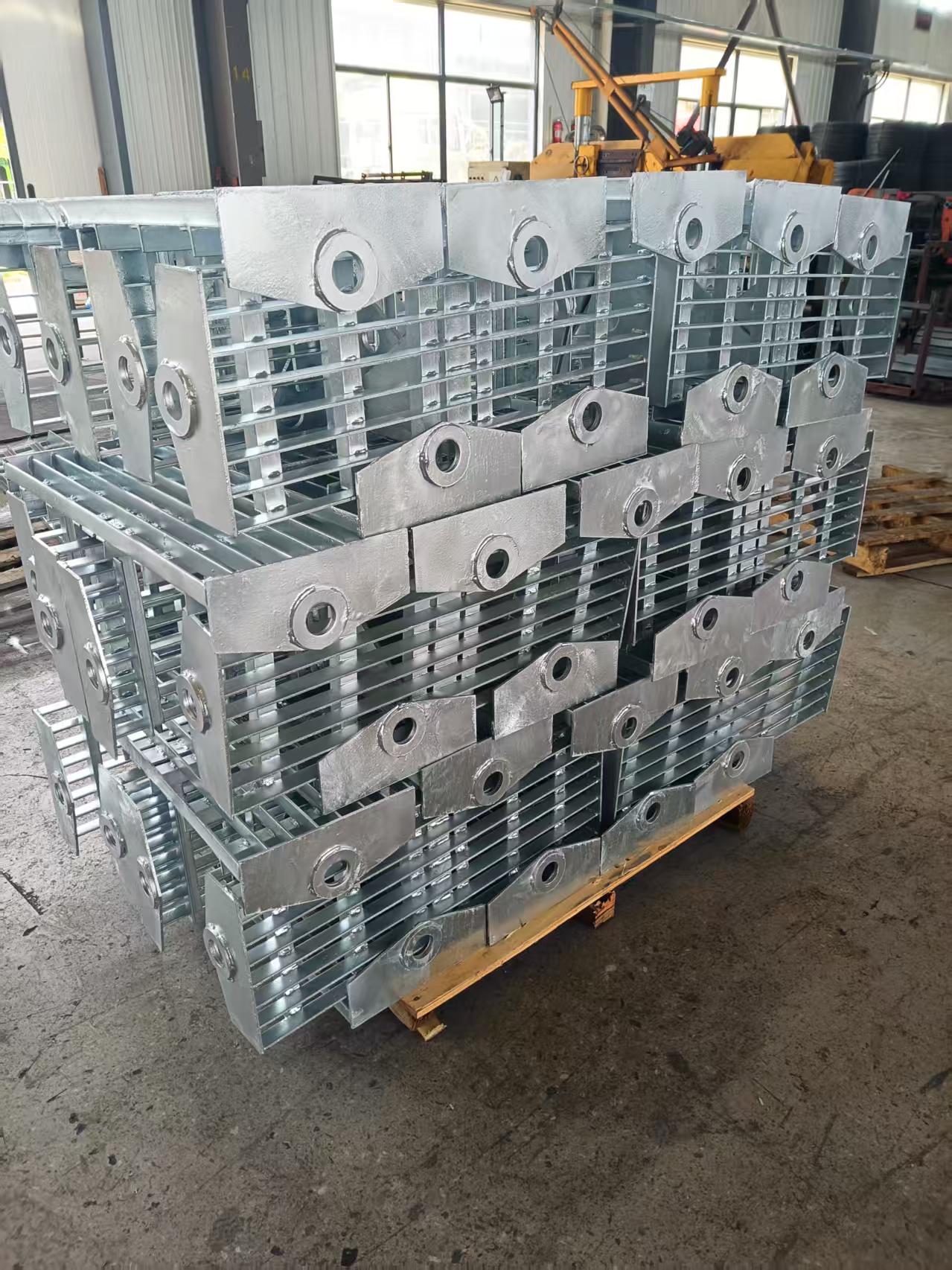
A rotating stair tread with side plates is a specialized industrial stair component typically composed of a load-bearing tread surface and side plate structures on both sides, where the side plates are used to connect stair stringers or support frames and allow a certain degree of rotation or positional adjustment during installation.
This structure enables installers to flexibly adjust the tread angle on-site according to actual structural deviations, ensuring precise matching with the overall stair system. After installation, the mechanism is locked to maintain long-term structural stability and load-bearing safety.
Why this design is important in modern engineering
In real construction environments, fully standardized structural conditions are rare. Due to site deviations, structural inconsistencies, and complex engineering requirements, traditional fixed stair treads often require extensive cutting, welding, or repeated adjustments, which not only increases construction difficulty but also extends the project schedule.
The rotating stair tread with side plates introduces an adjustable installation mechanism, allowing installers to correct angles and positions within a controlled range during construction. This significantly reduces on-site fabrication work, minimizes rework, and improves overall construction efficiency and quality.
Key advantages of rotating stair tread with side plates
● Greater installation flexibility with adaptability to complex construction environments, as the rotating structure allows angle adjustments during installation to reduce reliance on cutting and secondary fabrication on site
● Improved alignment accuracy and enhanced installation quality, as side plates provide stable connection reference points that ensure precise positioning in complex structures
● Higher safety performance, forming a stable load-bearing system once locked, making it suitable for long-term industrial pedestrian use
● Significantly reduced construction time and lower on-site fabrication costs, as welding and cutting operations are minimized
● Strong load-bearing capacity, capable of supporting industrial-grade personnel and equipment loads, suitable for heavy-duty applications
● Excellent adaptability to complex structural designs, especially non-standard stair systems and customized engineering projects, where irregular geometries are involved
Common applications
The rotating stair tread with side plates is widely used in various industrial and infrastructure projects across multiple high-demand sectors.
Industrial manufacturing plants
In industrial environments, it is commonly used in equipment platforms, maintenance walkways, and elevated access stair systems, where its adjustability helps adapt to complex equipment layouts.
Steel structure platforms
In steel building systems, installation deviations are unavoidable. This product effectively compensates for such deviations, ensuring overall installation accuracy and system stability.
Oil and gas industry
It is suitable for refineries, drilling platforms, and chemical facilities where high safety standards and durability are required under harsh working conditions.
Power and energy facilities
It is widely used in multi-level equipment platforms and maintenance access systems, where varying heights and angles are required.
Marine and offshore engineering
In marine platforms and dock structures, corrosion-resistant materials are often combined with this system to ensure long-term performance in aggressive environments.
Construction and infrastructure projects
It is used in both temporary and permanent stair systems in large-scale construction projects requiring flexible installation solutions.
Material selection and surface treatment
Depending on environmental requirements, this product can be manufactured using different materials and surface treatments.
● Carbon steel structure
Suitable for general industrial environments, offering a cost-effective solution while maintaining adequate strength for large-scale applications
● Hot-dip galvanized steel structure
Suitable for outdoor and humid environments, providing excellent corrosion resistance and extended service life through zinc protection
● Stainless steel structure
Ideal for marine and chemical environments where high corrosion resistance and long-term durability are required
● Anti-slip surface treatment
Optional serrated or coated finishes can be applied to enhance walking safety and reduce slip risks
Structural design features
The rotating stair tread with side plates is engineered to balance strength and flexibility, making it suitable for a wide range of complex engineering requirements.
● Reinforced side plate structure provides stable and reliable connection support, ensuring firm integration with the main framework
● Rotating connection design allows angle adjustment during installation to accommodate structural deviations and site conditions
● Load-bearing tread surface is designed for industrial pedestrian safety and stability
● Modular structure allows easy maintenance and replacement, reducing long-term operational costs
● Compatible with various stair systems, including steel grating treads and customized stair structures
How it improves efficiency and reduces cost
From a construction management perspective, this product provides significant advantages in multiple areas, helping optimize overall project costs.
● Reduces rework caused by misalignment issues, thereby lowering construction risks
● Minimizes on-site welding and cutting operations, improving installation efficiency
● Accelerates stair system installation timelines, shortening project duration
● Enhances compatibility between prefabricated and on-site structures, improving coordination efficiency
● Reduces long-term maintenance requirements, lowering lifecycle costs
Common engineering problems it solves
This structural system effectively addresses several common construction challenges, including but not limited to:
● Alignment difficulties between stair structures and main support systems
● Excessive installation adjustment time reducing construction efficiency
● Structural stress concentration caused by forced installation
● Stability issues resulting from accumulated installation errors
● Increased labor costs and frequent rework during construction
Conclusion
The rotating stair tread with side plates is a modern stair structural component designed for complex engineering environments. By combining a rotating adjustment mechanism with reinforced side plate connections, it achieves a balance between installation flexibility and structural stability, making it highly valuable in industrial engineering applications.
For B2B clients, this product not only improves construction efficiency but also reduces installation errors and maintenance costs. It is widely used in industrial plants, steel structure platforms, offshore engineering, and infrastructure construction projects.
As engineering projects continue to increase in complexity, this type of flexible yet high-strength stair structure will play an increasingly important role in future industrial stair system design.
FAQ
Q1: What is the main function of a rotating stair tread with side plates?
It allows angle adjustment during installation while maintaining stable load-bearing performance.
Q2: What industries commonly use it?
It is widely used in industrial plants, steel platforms, offshore engineering, and infrastructure projects.
Q3: What material options are available?
Common materials include carbon steel, hot-dip galvanized steel, and stainless steel.
Q4: Is it suitable for heavy-duty applications?
Yes, it can be designed to meet industrial-grade load requirements depending on specifications.
Post time: May-21-2026