
Plug-in Steel Grating is designed for projects where flooring or cover panels need to be strong, stable, and easy to remove when maintenance is required. In many industrial sites, grating panels are not just installed once and left untouched. Drainage channels need cleaning, cable trenches need inspection, and equipment access areas may need regular opening. In these situations, a removable grating system can make daily operation much easier.
Compared with permanently welded or fixed grating panels, Plug-in Steel Grating offers more flexibility. It can be placed into a prepared frame, angle steel support, or edge structure, allowing the panel to sit firmly during use while still being removable when workers need access below.
A Practical Choice for Areas That Need Regular Access
In factories, workshops, water treatment plants, parking areas, and industrial platforms, floor openings often serve a practical purpose. Some cover drainage trenches, some protect cables, and some provide access to valves, pipes, or equipment below the surface. If the grating panel is difficult to remove, even simple cleaning or inspection can become time-consuming.
Plug-in Steel Grating helps solve this problem. The panel can be designed as a removable module, so workers can lift it when needed and place it back after maintenance. This makes it suitable for areas where access convenience is just as important as load-bearing strength.
This type of grating is especially useful for:
- Drainage trench covers
- Cable trench covers
- Workshop maintenance channels
- Industrial platform openings
- Equipment access floors
- Water treatment plant walkways
- Parking drainage systems
- Public access covers
- Removable floor grating systems
In these applications, the grating must remain stable during daily use but should not make maintenance difficult.
Why Removable Design Matters
A removable grating panel can reduce maintenance time and help keep industrial sites safer and cleaner. For drainage trenches, mud, leaves, oil residue, and production debris may collect inside the channel. If the cover is removable, cleaning becomes faster and easier.
For cable trenches, workers may need to check cables, repair wiring, or add new lines. A plug-in structure allows access without damaging the surrounding floor or frame. For equipment areas, removable panels can support inspection without requiring large-scale dismantling.
This is the main value of Plug-in Steel Grating: it gives the project both a solid walking surface and future maintenance flexibility.
Plug-in Steel Grating vs. Fixed Steel Grating
Fixed steel grating is usually installed with welding, clips, bolts, or other fastening methods. It works well for platforms and walkways where panels do not need to be removed often.
Plug-in Steel Grating is different because it focuses on modular placement and easier removal. The panel works together with a frame or support edge, so it can be lifted out and reinstalled when required. This makes it a better option for trench covers, cable channels, inspection openings, and maintenance floors.
The choice depends on how the area will be used. If the floor is mainly permanent, fixed grating may be enough. If the panel must be opened regularly, plug-in grating is usually more convenient.
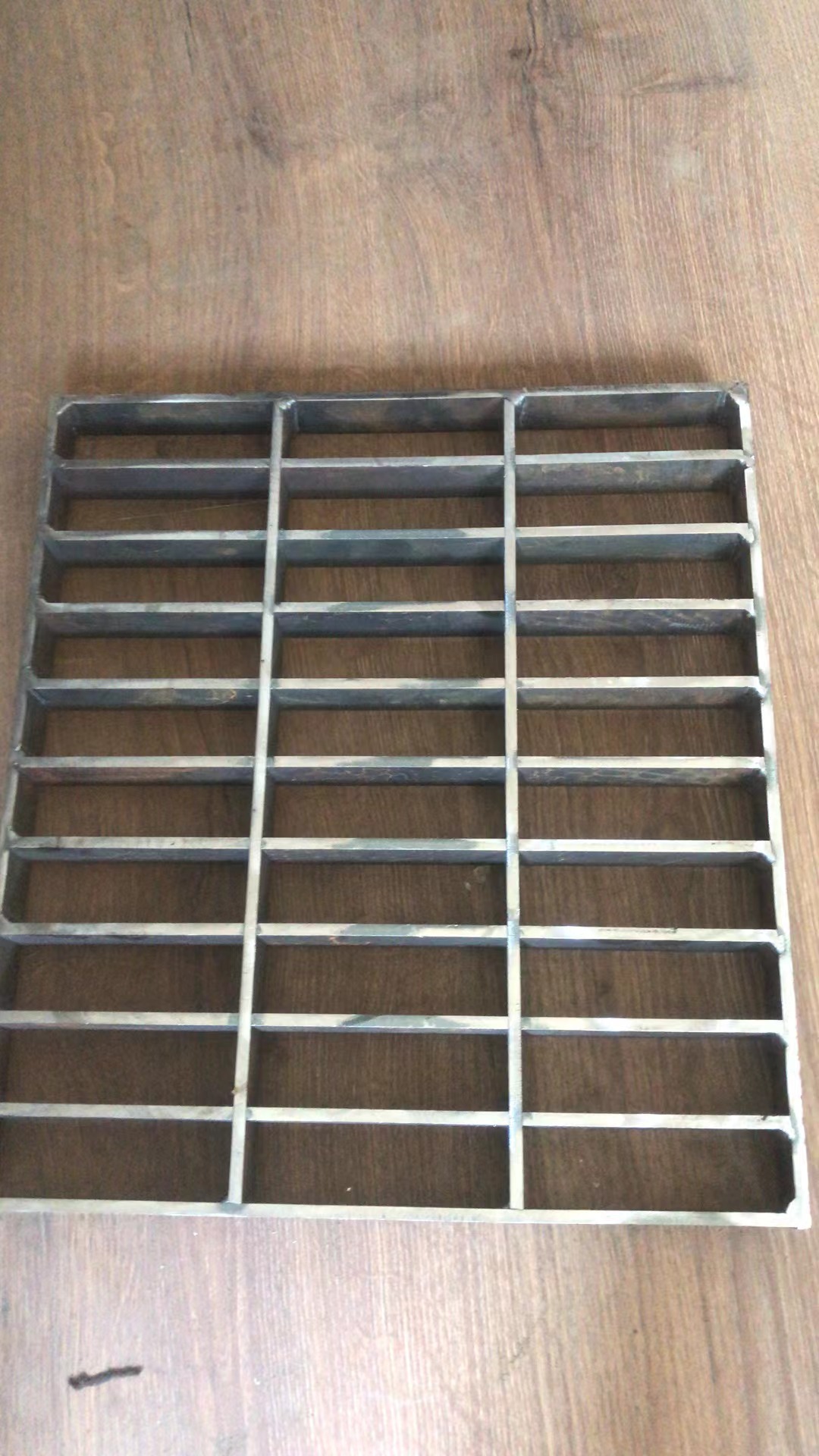
Frame Matching Is the Key to Stability
For Plug-in Steel Grating, the panel itself is only one part of the system. The support frame, edge structure, and installation height also affect performance. If the frame is uneven, too narrow, or not strong enough, the grating may move, rattle, or fail to sit flat.
A stable plug-in grating system should consider:
- Correct panel size
- Suitable support width
- Proper bearing bar direction
- Matching frame height
- Enough load-bearing area
- Stable edge treatment
- Easy lifting and repositioning
For pedestrian areas, a lighter structure may be suitable. For carts, forklifts, or vehicle access areas, stronger bearing bars and reinforced frames may be required. The goal is to make the grating easy to remove without sacrificing stability during daily use.
Material and Surface Treatment Options
Plug-in Steel Grating can be made from different materials depending on the working environment.
Carbon steel is often used for general indoor industrial applications because it provides good strength and cost efficiency. Hot-dip galvanized steel is suitable for outdoor, humid, or drainage-related areas because the zinc coating helps improve corrosion resistance. Stainless steel can be selected for chemical plants, coastal areas, water treatment facilities, or environments with higher corrosion requirements.
Surface design should also match the application. In wet, oily, or dusty areas, serrated Plug-in Steel Grating can improve slip resistance. For outdoor projects, galvanized treatment can reduce rust and extend service life. For public or visible areas, cleaner edge finishing and accurate panel dimensions can improve the final installation appearance.
Plug-in Steel Grating for Drainage Trenches
Drainage trenches are one of the most common applications for Plug-in Steel Grating. The open grid allows water to enter the channel quickly, while the removable structure makes cleaning easier.
In workshops and outdoor drainage systems, channels may collect mud, dust, metal chips, packaging waste, or oil residue. If the grating cover can be lifted out, workers can clean the trench more efficiently and reduce blockage problems.
For drainage trench covers, the grating should sit firmly on the support frame. Angle steel embedded parts or steel frames can help improve seating stability, protect concrete edges, and make repeated removal more convenient.
Plug-in Steel Grating for Cable Trenches and Equipment Access
Cable trenches and equipment access openings often need regular inspection. A fixed cover may make maintenance slower, while a removable plug-in panel allows workers to access the lower space more easily.
For cable trench projects, the panel should be strong enough for daily walking or light cart movement, but also easy to remove when cable work is needed. For equipment access floors, panel size and weight should be designed so workers can safely lift and reinstall the grating.
This balance between strength and convenience is what makes Plug-in Steel Grating useful in many industrial maintenance areas.
Our Plug-in Steel Grating Product Support
Our Plug-in Steel Grating products can be customized according to trench size, load requirement, installation method, removal frequency, material, and surface treatment. Instead of only offering standard panels, the grating can be matched with the actual frame and site conditions.
For drainage systems, Plug-in Steel Grating can be used with steel frames or angle steel embedded parts to improve stability and cleaning convenience. For cable trench covers, removable panel design can support easier inspection. For outdoor applications, hot-dip galvanized treatment can help improve corrosion resistance. For wet or slippery areas, serrated surfaces can be selected to improve walking safety.
Our related products also include Press-Welded Steel Grating, Serrated Steel Grating, Heavy Duty Steel Grating, Steel Grating Platform, Trench Cover, Angle Steel Embedded Part, Steel Pallet, steel frames, and customized metal components. This helps buyers match the grating panel with the complete installation system instead of choosing a single part separately.
When Is Plug-in Steel Grating a Better Choice?
Plug-in Steel Grating is suitable when the project needs a strong but removable grating panel. It is a practical choice when the area below the panel needs cleaning, inspection, cable maintenance, drainage access, or equipment checking.
It is also useful when the project prefers modular installation rather than permanent welding. For industrial buyers, the value is not only in the grating panel itself, but also in the time saved during later maintenance.
Conclusion
Plug-in Steel Grating is a flexible solution for removable floors, trench covers, cable channels, maintenance walkways, and industrial access areas. It combines the strength and open-grid benefits of steel grating with easier removal and better maintenance access.
For long-term performance, buyers should consider panel size, load capacity, frame support, material, surface treatment, anti-slip requirements, and removal method together. When the grating panel and support system are properly matched, Plug-in Steel Grating can improve site safety, maintenance efficiency, and overall project reliability.
FAQ
1. What is Plug-in Steel Grating?
Plug-in Steel Grating is a removable steel grating system designed to sit securely in a frame or support edge while allowing easier removal for cleaning, inspection, or maintenance.
2. Where is Plug-in Steel Grating commonly used?
It is commonly used for drainage trench covers, cable trench covers, workshop maintenance channels, equipment access floors, industrial platforms, and removable walkway panels.
3. Can Plug-in Steel Grating be hot-dip galvanized?
Yes. Hot-dip galvanized Plug-in Steel Grating is suitable for outdoor, humid, and drainage-related environments because it helps improve corrosion resistance.
4. Is Plug-in Steel Grating suitable for heavy-duty applications?
Yes. It can be designed for heavier loads by selecting suitable bearing bar size, spacing, frame support, and installation structure according to actual working conditions.
Post time: Jul-16-2026