
In industrial facilities, commercial buildings, and public infrastructure, handrail systems are essential safety components that protect workers and pedestrians from falls and accidents. However, the performance of a handrail system is not only determined by the main structure but also by its finishing and connection details. One of the most critical yet often overlooked components is the hot-dip galvanized handrail termination.
This small but essential element plays a major role in ensuring safety, structural integrity, corrosion resistance, and long-term durability of railing systems in demanding environments. For B2B buyers, engineers, and project contractors, understanding its function is important for improving project quality and reducing long-term maintenance risks.
What is a hot-dip galvanized handrail termination?
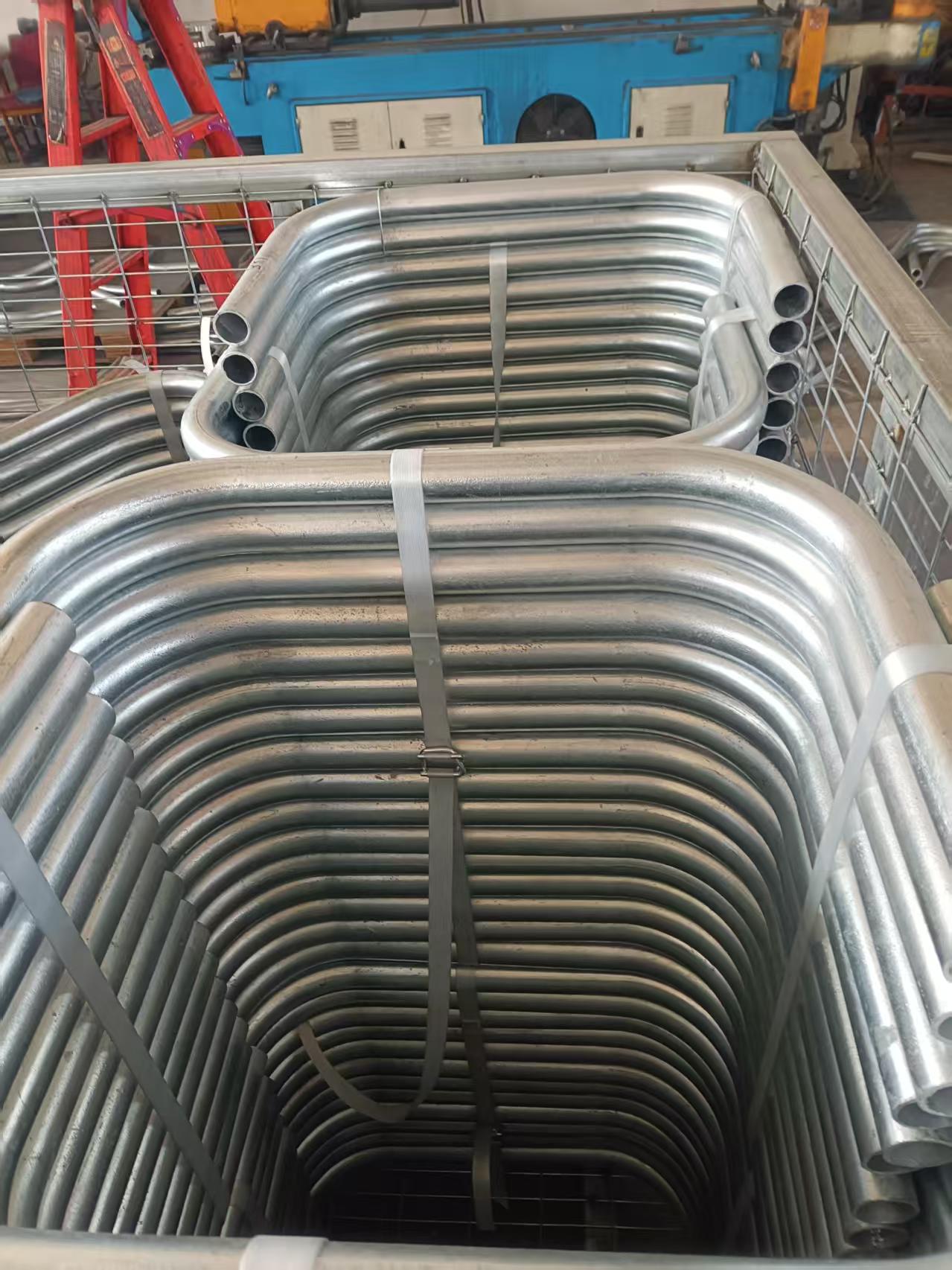
A hot-dip galvanized handrail termination refers to the end finishing component of a handrail system that has been treated with hot-dip galvanization. It is designed to close, secure, or properly finish the open ends of handrails, ensuring both safety and structural completeness.
The hot-dip galvanizing process involves immersing steel components into molten zinc, forming a strong protective coating that bonds metallurgically with the steel surface. This coating provides long-term protection against rust, corrosion, and environmental damage.
In practical applications, handrail termination components may include end caps, return bends, sealed ends, or connecting fittings depending on the design of the railing system.
Why handrail termination is critical in industrial safety systems
In many engineering projects, the focus is often placed on structural strength and material selection, while finishing components like handrail terminations are underestimated. However, improper or missing termination can lead to safety hazards and premature system failure.
A properly designed hot-dip galvanized handrail termination ensures:
● Elimination of sharp exposed pipe ends that could cause injury
● Prevention of water, dust, and debris entering the handrail system
● Improved corrosion resistance at vulnerable open ends
● Better structural continuity and load distribution
● Compliance with safety regulations in industrial environments
These functions make it an essential detail in any professional handrail system design.
Key advantages of hot-dip galvanized handrail termination
Hot-dip galvanized handrail termination components provide both mechanical protection and long-term environmental resistance. Their advantages are particularly important in harsh industrial and outdoor environments.
● Excellent corrosion resistance
The zinc coating protects steel from rust even in humid, coastal, or chemical environments
● Long service life
Compared to untreated steel, galvanized components significantly extend the lifespan of railing systems
● Improved safety performance
Smooth and sealed ends reduce the risk of injury from sharp edges
● Low maintenance requirements
Reduced corrosion means less frequent repair and replacement work
● Strong structural compatibility
Can be integrated with different handrail systems such as round pipes, square tubes, and custom railings
● Cost-effective lifecycle performance
Although initial cost is slightly higher, long-term maintenance savings are significant
Common applications across industries
Hot-dip galvanized handrail termination is widely used in environments where safety and durability are critical:
● Industrial plants and manufacturing facilities
● Steel structure platforms and walkways
● Staircase and mezzanine railing systems
● Oil and gas refineries
● Power plants and energy facilities
● Water treatment and wastewater plants
● Bridges, docks, and marine structures
● Public infrastructure such as pedestrian walkways and railings
In all these applications, environmental exposure and mechanical stress require durable finishing solutions.
Design types and structural variations
Depending on project requirements, handrail termination systems can take several forms:
● Sealed end caps
Used to fully close the open end of pipe railings, preventing debris and moisture entry
● Return bend terminations
The handrail curves back into the structure for a continuous and safe finish
● Welded closure ends
The pipe is welded shut and then galvanized for a seamless finish
● Connector-based terminations
Used when railings connect to walls, columns, or adjacent structures
Each design serves different functional and aesthetic requirements depending on the project.
Why hot-dip galvanizing is essential
The galvanizing process is the key factor that distinguishes this termination type from ordinary steel components.
● Zinc forms a protective barrier against oxygen and moisture
● Provides sacrificial protection, meaning it corrodes before the steel does
● Ensures uniform coverage even on complex shapes
● Offers long-term resistance in outdoor and industrial environments
This makes hot-dip galvanized components especially suitable for long-term infrastructure projects.
Common problems solved by proper handrail termination
Many structural failures and maintenance issues in railing systems are caused by poor or missing termination details.
Hot-dip galvanized handrail termination helps solve:
● Rust formation at exposed pipe ends
● Water accumulation inside hollow railings
● Sharp edges causing safety risks
● Premature structural degradation
● High maintenance costs due to corrosion
By addressing these issues early, project reliability is significantly improved.
Conclusion
Hot-dip galvanized handrail termination is a small but essential component in modern railing systems, ensuring safety, corrosion resistance, and structural completeness. By sealing and protecting the ends of handrails, it prevents common issues such as rust, water ingress, and safety hazards while improving the overall durability of the system.
For B2B buyers and engineering contractors, selecting properly galvanized termination components ensures long-term performance, reduced maintenance costs, and compliance with safety standards. As industrial and infrastructure projects continue to demand higher durability and reliability, hot-dip galvanized handrail termination remains a key detail in high-quality railing system design.
FAQ:
Q1: What is the main purpose of handrail termination?
It is used to safely close and finish the ends of handrail systems, improving safety and preventing corrosion inside the pipe.
Q2: Why is hot-dip galvanizing important?
It provides strong corrosion resistance and long-term protection in outdoor and industrial environments.
Q3: Where is it commonly used?
It is widely used in industrial plants, bridges, stair systems, platforms, and marine structures.
Q4: Does it require maintenance?
It requires very little maintenance, mainly periodic inspection for damage or wear.
Post time: May-19-2026