
Bridge Steel Grating may show little difference between designs immediately after installation. Panels are level, fasteners are secure, drainage openings are clear, and protective coatings remain intact. The real differences often become visible only after years of rain, vibration, road contamination, maintenance work, and repeated wet-dry cycles.
Some bridge walkways gradually begin to vibrate even though they have never been significantly overloaded. Other panels start to rattle, while some grating surfaces remain in good condition but the fasteners, support angles, or drainage structures underneath begin to corrode. Long-term Bridge Steel Grating performance therefore depends on more than panel thickness. Support, fastening, drainage, corrosion protection, and maintenance should be considered as one system.
Why Can a Walkway Vibrate Even When Its Load Capacity Is Sufficient?
Meeting the required load capacity does not necessarily mean a steel grating walkway will have no noticeable deflection under foot traffic. On long and narrow bridge maintenance walkways, a relatively large unsupported bearing bar span can create noticeable flexibility even under normal pedestrian loads.
Actual stability depends on bearing bar depth, effective span, bearing direction, and the stiffness of the supporting frame. Two grating panels with the same specification can feel very different if their support beam spacing is different.
For Bridge Steel Grating, it is therefore important to know not only how much load the panel can carry, but also how far the bearing bars actually span between effective supports. If excessive span is the real problem, simply increasing panel weight may not be the most efficient solution.
What Changes After Years of Service?
| Initial Condition | Possible Long-Term Change | Practical Effect |
|---|---|---|
| Fasteners are secure | Repeated vibration affects connections | Panels may rattle or shift |
| Drainage openings are clear | Dirt, leaves, and road debris accumulate | Drainage efficiency decreases |
| Protective coating is intact | Hidden connections and cut edges remain wet | Local corrosion develops |
| Walking surface is clean | Mud, oil, and road spray accumulate | Slip resistance decreases |
| Panels are easy to remove | Maintenance demand increases | Oversized panels become difficult to handle |
| Load condition is stable | Maintenance equipment or vehicles are introduced | Local concentrated loads increase |
This is why bridge grating should not be evaluated only by its condition at installation. Cleaning, inspection, and maintenance several years later are equally important.
Bridge Drainage Depends on More Than Grid Open Area
The open structure of Bridge Steel Grating makes it suitable for outdoor bridge walkways because rainwater can pass directly through the grid. However, theoretical open area does not always represent long-term drainage performance.
Over time, leaves, sand, road dirt, ice, and maintenance debris can collect around drainage channels and supporting steel. Even if the grating itself remains relatively clear, the water path underneath may become restricted.
A practical drainage design should therefore consider not only whether water can pass through the grating, but also whether accumulated debris can be removed easily later. Properly sized removable grating panels above drainage channels are often more practical for long-term maintenance than permanently fixed sections.
Larger openings are not automatically better. Grid spacing should also consider pedestrian comfort, dropped tools, maintenance vehicles, and the type of debris expected on the bridge.
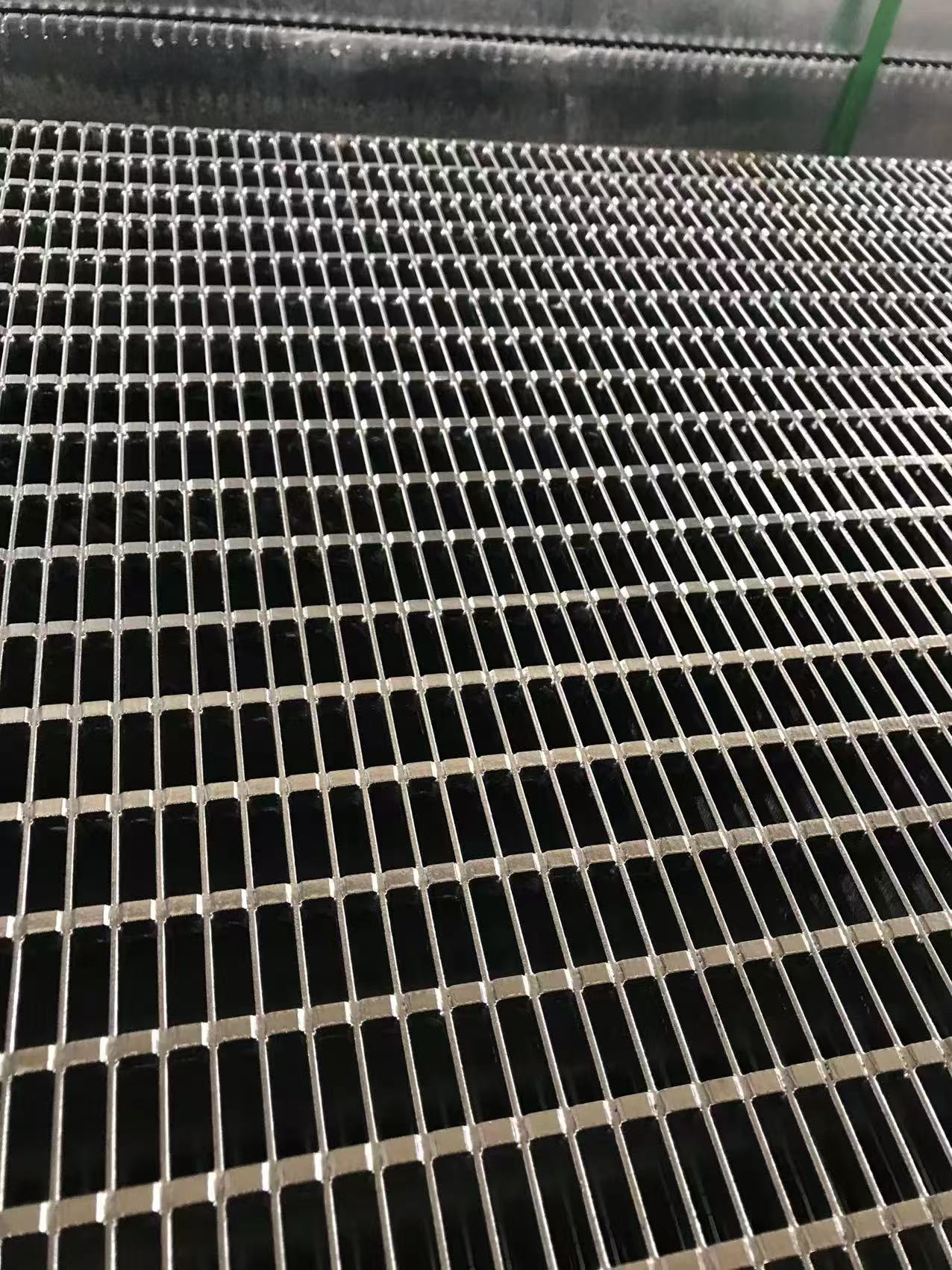
Corrosion Often Begins Below the Grating Surface
Open steel grating has good airflow and can dry relatively quickly after rain. Fasteners, bolts, support angles, welded joints, and sheltered frame areas may remain wet for much longer.
This difference is especially important on coastal bridges and road bridges exposed to deicing salts. Chloride-containing moisture can remain around connections and create a more persistent corrosion environment than on the exposed grating surface.
Hot-dip galvanized Bridge Steel Grating can improve the outdoor corrosion resistance of carbon steel, but the grating panel is not the only component that requires protection. Support frames, fasteners, drainage frames, and fabricated edges should also receive corrosion protection suitable for the environment.
If the grating panel remains intact while the support structure deteriorates, the reliability of the entire walkway is still reduced.
Good Drainage Does Not Automatically Mean Good Slip Resistance
An open grid reduces standing water, but bridge walkways can also be exposed to road spray, mud, oil, and other contaminants. When these materials remain on the bearing bars, slip risk can increase even when drainage is functioning properly.
In these conditions, Serrated Steel Grating can provide additional surface grip while retaining the drainage advantages of an open-grid structure.
Drainage and slip resistance perform different functions. Drainage reduces liquid accumulation, while serrated bearing bars improve contact between footwear and the walking surface. For bridge areas that must remain accessible during wet weather, both factors should be considered together.
Panel Layout Directly Affects Future Maintenance
Bridge grating often covers bearings, drainage channels, utilities, cables, and structural inspection points. If these areas are covered by large fixed panels, future inspection may require unnecessary dismantling or lifting equipment.
Dividing panels into excessively small sections is not ideal either, because it increases joints, fasteners, and potential movement points.
A more practical layout separates permanently fixed areas from locations that need regular access. Bearings, drainage points, and utility inspection openings can use appropriately sized removable panels, while normal walking areas remain securely fixed.
Where pipes, cables, or structural members pass through the platform, custom openings can be produced according to drawings. This reduces on-site cutting of bearing bars and helps preserve edge support and protective coatings.
When Is Heavy Duty Steel Grating Actually Necessary?
A normal bridge inspection walkway experiences very different loads from an area used by maintenance carts, equipment, or service vehicles. Concentrated loads deserve particular attention because wheels and equipment feet transfer weight through relatively small contact areas.
Heavy Duty Steel Grating becomes more appropriate where there are larger support spans, concentrated equipment loads, wheel loads, or frequent heavy maintenance operations.
However, the supporting frame must be designed for the same load. Installing heavy-duty grating over an inadequate support structure does not create a true heavy-duty system.
Heavier grating should therefore solve a verified load requirement rather than compensate for loose fasteners, poor drainage, or inadequate support design.
Different Bridge Areas Can Use Different Grating Structures
There is no need to use one grating specification throughout an entire bridge.
General inspection walkways can use Press-Welded Steel Grating when the span and pedestrian load are moderate. Areas exposed to frequent rain or contamination can use Serrated Steel Grating, while higher-load locations may require Heavy Duty Steel Grating. Drainage channels, bridge bearings, and inspection points can use removable grating covers, while irregular areas around utilities can use custom-shaped panels.
Steel frames, fasteners, edge treatments, and angle steel embedded parts can also be coordinated with the overall grating layout. The objective is not to make every panel more complex, but to use the structure that actually fits each operating condition.
Conclusion
The long-term performance of Bridge Steel Grating depends on how the grating panel works with the entire bridge access system. Bearing bars transfer loads, but support span affects deflection. Fastening influences long-term stability. Drainage determines how effectively water and debris leave the walkway. Corrosion protection should cover both panels and supporting connections, while panel layout directly affects future maintenance efficiency.
Rather than simply increasing grating thickness, a more useful design approach is to consider actual loads, support conditions, environmental exposure, and long-term maintenance requirements, then match each bridge area with the appropriate grating structure.
FAQ
1. Why can Bridge Steel Grating vibrate even when it is not overloaded?
The cause may be support span, frame stiffness, or bearing bar direction. A longer unsupported span can produce more noticeable deflection even under normal pedestrian loads.
2. Is Serrated Steel Grating suitable for bridge walkways?
Yes, especially in areas frequently exposed to rain, mud, oil, or road spray. Serrated bearing bars improve surface grip while maintaining the drainage benefits of open grating.
3. When should Heavy Duty Steel Grating be used on a bridge?
It is more appropriate where concentrated equipment loads, wheel loads, larger support spans, or frequent heavy maintenance operations are present. The supporting frame should also be checked for the same load.
4. Why can the structure below the grating corrode before the grating surface?
Open grating surfaces dry relatively quickly, while clips, bolts, support angles, and sheltered connections can remain wet and collect road contaminants or salts for longer periods, creating more persistent corrosion conditions.
Post time: Aug-18-2026