
An Angle Steel Embedded Part is not usually the most visible part of a steel grating system, but it often decides whether the final installation feels solid, flat, and safe. In drainage trenches, workshop floors, industrial platforms, cable channels, parking areas, and equipment access zones, steel grating panels or trench covers need a reliable supporting edge. The angle steel embedded part provides this edge before the cover plate or grating panel is installed.
Many project problems do not start from the grating panel itself. A cover may shake because the frame is uneven. A steel grating panel may not sit flush with the floor because the embedded height was not controlled well. A trench edge may crack because the concrete was not properly protected. These issues show why the supporting structure should be designed together with the grating product, not treated as a small construction detail.
A Small Support Part With a Big Structural Role
The main function of an angle steel embedded part is to create a stable bearing surface. When a steel grating panel, trench cover, or metal access cover is placed over an opening, it must transfer load to both sides of the structure. If the support is weak, uneven, or too narrow, the panel may move, bend, or become noisy during use.
Angle steel is suitable for this role because of its L-shaped section. One side can be embedded or fixed along the concrete edge, while the other side provides a horizontal support surface. This structure helps the cover sit properly and makes the edge of the trench or platform opening stronger.
In actual projects, the embedded angle steel does not only support vertical load. It also helps protect the concrete edge from impact, keeps the opening shape more accurate, and gives installers a clear reference line when placing the final grating panel.
Why Steel Grating Needs a Proper Embedded Frame
Steel grating is often used in places where drainage, ventilation, inspection access, and load-bearing performance are needed at the same time. However, even strong steel grating needs the right supporting frame to work correctly.
For example, in a drainage trench, the grating cover may be removed regularly for cleaning. If the frame is not stable, repeated removal and placement can wear the edge or make the panel loose. In a workshop, small carts or forklifts may pass over the grating. If the embedded support does not match the load direction, the panel may vibrate or produce noise. In outdoor projects, rainwater and corrosion may affect both the grating and the embedded part, so surface treatment should be considered as a system.
This is why angle steel embedded parts are commonly used with trench covers, heavy duty steel grating, serrated grating, and other industrial grating products. They help the final installation become more predictable and easier to maintain.
Common Site Problems an Angle Steel Embedded Part Can Help Reduce
A well-matched angle steel embedded part can help reduce many practical problems in steel grating and trench cover projects.
- Uneven installation: When the embedded angle steel height is controlled accurately, the grating panel can sit closer to the surrounding floor level.
- Panel shaking: A stable support edge helps reduce movement when people, carts, or vehicles pass over the cover.
- Concrete edge damage: The angle steel frame protects the trench or opening edge from repeated impact and chipping.
- Difficult maintenance: A clear and stable frame makes removable grating covers easier to lift, place back, and align.
- Early deformation: Correct support direction and enough bearing area help the panel transfer load more safely.
- Installation mismatch: When the embedded frame is designed together with the grating panel, the final system is easier to assemble on site.
These details may seem minor at the beginning of a project, but they can strongly affect long-term use.
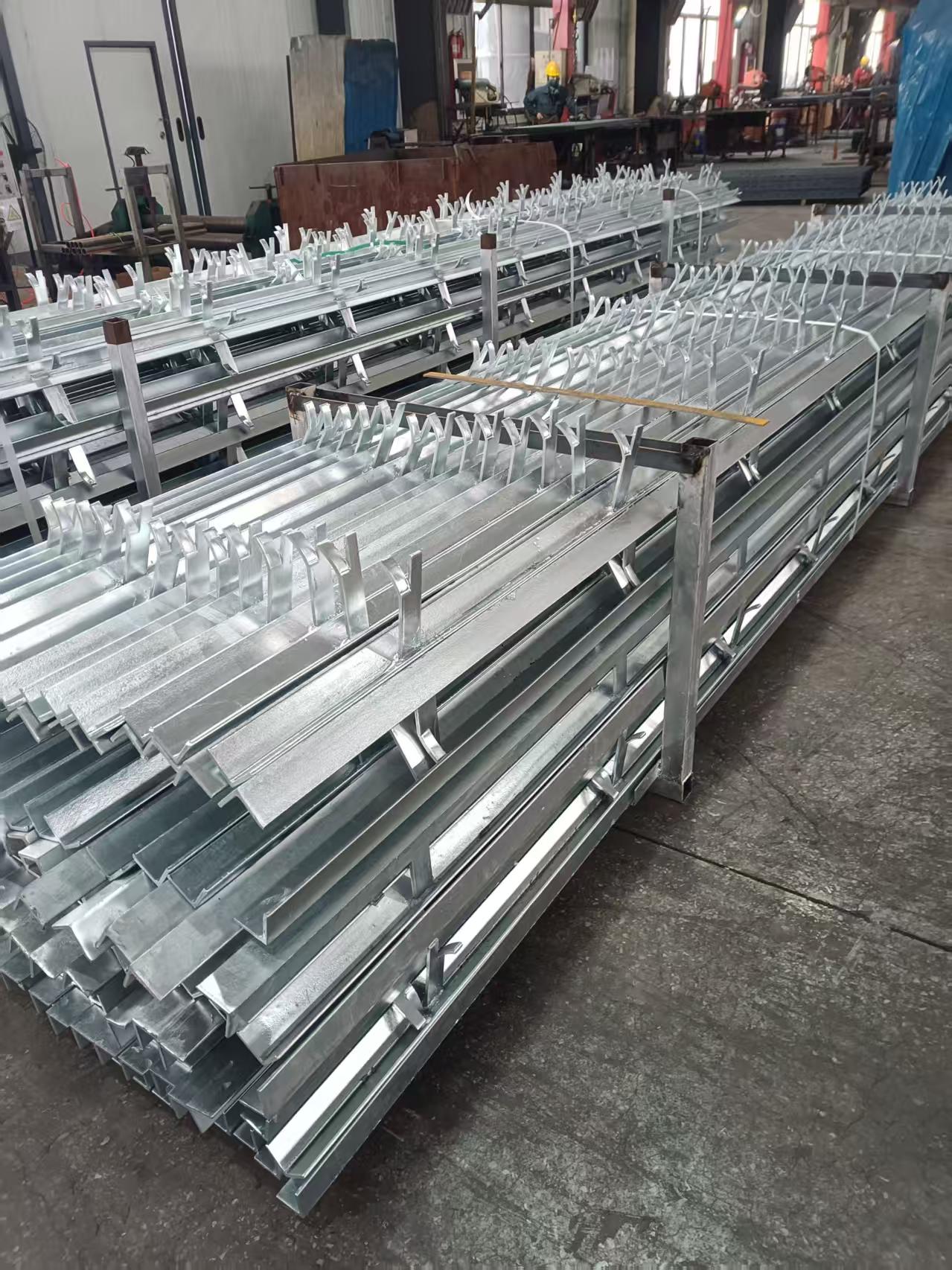
Angle Steel Embedded Parts for Drainage Trench Covers
Drainage trench covers are one of the most common applications for angle steel embedded parts. In factories, warehouses, parking areas, and outdoor drainage systems, trench covers must support traffic while allowing water to pass through. The embedded angle steel creates a clean and strong edge for the cover to rest on.
For steel grating trench covers, the angle steel frame helps maintain the correct panel position and reduces edge movement. For heavy-duty trench covers, the frame needs stronger support because the cover may carry forklifts, vehicles, or repeated rolling loads. For removable covers, the frame should allow convenient lifting and replacement without damaging the concrete edge.
When trench covers are used outdoors, hot-dip galvanized angle steel embedded parts are often a practical choice because they offer better corrosion resistance in wet environments.
Angle Steel Embedded Parts for Industrial Platforms
In industrial platforms and maintenance walkways, angle steel embedded parts can be used around floor openings, equipment access sections, or platform edges. These areas often need grating panels that are strong, removable, and easy to align.
If the embedded support is not accurate, workers may feel the panel move underfoot, or the grating surface may not remain level with the platform. For maintenance areas, this can affect both safety and operating efficiency.
By using a properly designed angle steel embedded part, the platform can have a cleaner edge, stronger support, and more convenient grating installation. This is especially useful for production plants, power stations, machinery workshops, and industrial facilities where grating panels are used every day.
Material and Surface Treatment Should Match the Environment
Angle steel embedded parts can be produced with different materials and surface treatments depending on the project environment.
For general indoor areas, carbon steel angle embedded parts can provide practical strength and cost efficiency. For outdoor drainage channels, wet floors, and humid industrial sites, hot-dip galvanized angle steel is often preferred because the zinc layer helps improve rust resistance. For coastal, chemical, or highly corrosive environments, stainless steel may be considered when stronger corrosion resistance is needed.
The embedded part should not be weaker than the surrounding grating system. If a galvanized trench cover is used outdoors but the embedded frame has poor corrosion protection, the system may still develop problems at the support edge. Therefore, the grating panel and embedded part should be selected as a matching set.
Our Support for Steel Grating and Embedded Installation Solutions
Our product range covers steel grating panels, trench covers, heavy duty steel grating, serrated steel grating, press lock steel grating, wave-shaped steel grating, and related metal support parts. For projects that require angle steel embedded parts, we focus on matching the support structure with the final grating application.
For drainage systems, angle steel embedded parts can be matched with steel grating trench covers to improve seating stability and maintenance convenience. For heavy-load areas, the embedded support can be designed to work with stronger bearing bars and reinforced grating panels. For outdoor projects, galvanized treatment can be selected to improve long-term durability. For walkways or platforms where the surface needs to stay flat, accurate frame design helps the grating panel fit more smoothly with the surrounding structure.
Different applications require different matching ideas. A workshop trench may need easy-to-remove grating covers. A parking drainage channel may need stronger support for vehicle loads. An outdoor platform may need anti-corrosion treatment. A public walkway may need a cleaner appearance and safer walking surface. Our products can be adjusted around these actual project needs.
Why Matching the Frame and Grating Matters
A steel grating system is not only made of the visible panel. The frame, support edge, fixing method, surface treatment, and installation height all affect final performance. If the angle steel embedded part is designed separately from the grating panel, mismatch can easily happen.
For example, the grating may be strong enough, but the support edge may be too narrow. The trench cover may have the correct size, but the frame height may create an uneven surface. The panel may be galvanized, but the embedded part may rust earlier. These problems can increase maintenance work and reduce the service life of the whole system.
When the angle steel embedded part and steel grating are considered together, the final installation is more stable, safer, and easier to maintain.
Conclusion
Angle Steel Embedded Part plays an important role in steel grating installation, trench cover support, drainage channel construction, and industrial platform systems. Although it is often hidden after installation, it affects panel flatness, load transfer, edge protection, noise reduction, maintenance convenience, and long-term safety.
For projects using trench covers, heavy duty grating, serrated grating, or platform steel grating, the embedded frame should be matched with the final product from the beginning. With suitable angle steel size, material, surface treatment, and support design, the whole system can perform more reliably in daily use.
FAQ
1. What is an Angle Steel Embedded Part?
An Angle Steel Embedded Part is a metal support component made from angle steel. It is embedded into concrete or fixed along an opening to support steel grating panels, trench covers, or other metal cover systems.
2. Why is angle steel used under steel grating or trench covers?
Angle steel provides an L-shaped support structure that helps the grating or cover sit firmly, transfer load properly, and protect the concrete edge from damage.
3. Can angle steel embedded parts be used with heavy duty steel grating?
Yes. For heavy-duty grating or vehicle-load trench covers, angle steel embedded parts can provide a stronger and more stable support edge when properly designed.
4. Should angle steel embedded parts be galvanized?
For outdoor, wet, or drainage-related applications, hot-dip galvanized angle steel is commonly recommended because it helps improve corrosion resistance and supports longer service life.
Post time: Jul-07-2026