
Press-Welded Steel Grating has become an essential structural component in modern industrial and infrastructure projects. As industries continue to prioritize safety, durability, and lifecycle efficiency, engineers and project planners increasingly rely on steel grating systems that can deliver predictable performance under demanding conditions.
From large-scale energy facilities to transportation hubs and manufacturing plants, press-welded steel grating provides a reliable solution for load-bearing surfaces, access platforms, and drainage systems.
In B2B procurement and project specification, material selection is no longer based solely on initial cost. Long-term performance, compliance with international standards, and ease of installation now play a decisive role. Press-welded steel grating addresses these requirements through a controlled manufacturing process that ensures structural consistency, high load capacity, and adaptability to various operating environments.
Defining Press-Welded Steel Grating and Its Structural Characteristics
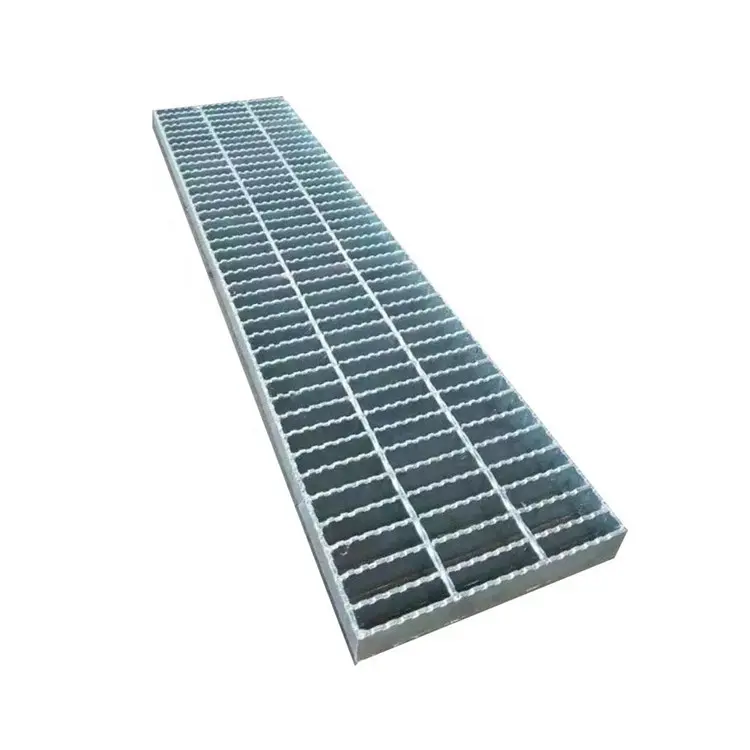
Press-welded steel grating is a type of metal grating produced by positioning bearing bars and cross bars at precise intervals, pressing them together under high pressure, and welding the intersections to form a rigid panel. This method creates a permanent bond at each contact point, resulting in a highly stable structure.
Several defining characteristics distinguish press-welded steel grating from other grating types:
● Welded intersections that prevent bar movement under load
● Uniform spacing that supports consistent load distribution
● Flat bearing bars that enhance strength and rigidity
● Clean, regular panel geometry suitable for engineered installations
Because of its welded construction, press-welded steel grating is particularly well suited for applications where vibration, repeated traffic, or dynamic loads are present.
Manufacturing Process and Its Impact on Performance
The manufacturing process of press-welded steel grating directly influences its mechanical performance and service life. Bearing bars are first slotted or prepared to receive cross bars. These components are then aligned with high precision before undergoing resistance welding under controlled pressure.
This process delivers several performance-related advantages:
● Strong metallurgical bonding at each intersection
● Reduced risk of deformation during long-term use
● Enhanced resistance to fatigue and cyclic loading
● Improved dimensional accuracy across large panels
For B2B buyers and project engineers, this level of manufacturing control translates into predictable behavior during installation and operation, reducing the likelihood of structural issues over time.
Typical Industrial and Infrastructure Applications
Press-welded steel grating is widely used across multiple industries due to its strength, versatility, and compliance with engineering standards. Its open-grid design also supports effective drainage and ventilation, which is critical in industrial environments.
Common application scenarios include:
● Industrial walkways, platforms, and service corridors
● Stair treads and access systems in production facilities
● Trench covers and drainage grates in infrastructure projects
● Offshore platforms, docks, and marine facilities
● Power plants, refineries, and chemical processing units
In these settings, press-welded steel grating provides a balance between structural safety and operational practicality.
Material Selection and Surface Treatment Options
Material choice and surface treatment significantly affect the performance of press-welded steel grating, particularly in corrosive or outdoor environments. Carbon steel remains the most widely used base material due to its strength and cost efficiency.
Common material and finish options include:
● Carbon steel for standard industrial applications
● Hot-dip galvanized steel for corrosion protection
● Painted or coated finishes for controlled indoor environments
● Stainless steel variants for chemical or hygienic conditions
Hot-dip galvanizing is especially important for outdoor installations, as it forms a protective zinc layer that extends service life and reduces maintenance requirements.
Load Capacity Considerations and Engineering Standards
Load-bearing performance is one of the most critical factors when specifying press-welded steel grating. Load capacity depends on several variables, including bearing bar thickness, bar height, spacing, and span length.
Key factors influencing load performance include:
● Bearing bar dimensions and steel grade
● Distance between structural supports
● Type of load, such as pedestrian, equipment, or vehicle traffic
● Compliance with relevant design standards
Press-welded steel grating is typically manufactured in accordance with recognized standards such as ASTM, ANSI, ISO, and EN specifications. Adherence to these standards ensures consistent safety margins and facilitates approval by engineering consultants and regulatory bodies.
Installation Efficiency and Long-Term Maintenance Benefits
Beyond structural performance, press-welded steel grating offers practical advantages during installation and throughout its service life. Its modular design allows for efficient handling and integration into prefabricated structures.
Operational benefits include:
● Panels can be cut and fitted with minimal structural impact
● Lightweight design reduces installation labor
● Open structure minimizes debris accumulation
● Long service intervals with low maintenance demands
These characteristics are particularly valuable in large industrial projects where downtime and maintenance costs have a direct impact on operational efficiency.
Sustainability and Lifecycle Performance
From a sustainability perspective, press-welded steel grating supports long-term resource efficiency. Steel is fully recyclable, and durable grating systems reduce the need for frequent replacement.
Lifecycle advantages include:
● Extended service life when properly coated or galvanized
● Reduced material waste due to durability
● Compatibility with sustainable construction practices
● Lower total cost of ownership over time
For B2B stakeholders focused on lifecycle cost analysis and environmental responsibility, these factors strengthen the case for press-welded steel grating in modern infrastructure development.
Conclusion:
Press-Welded Steel Grating continues to play a critical role in industrial and infrastructure projects where strength, safety, and long-term reliability are non-negotiable. Its welded construction, predictable load performance, and adaptability to various environments make it a dependable choice for engineers, contractors, and facility operators. By understanding its manufacturing process, application scope, and compliance requirements, B2B decision-makers can confidently specify press-welded steel grating as part of durable and efficient industrial systems.
FAQ:
What distinguishes press-welded steel grating from other grating types?
Press-welded steel grating features welded intersections that provide higher rigidity and load stability compared to mechanically locked or non-welded grating systems.
Is press-welded steel grating suitable for outdoor and marine environments?
Yes. When hot-dip galvanized or produced from corrosion-resistant materials, it performs reliably in outdoor, coastal, and marine conditions.
How is the load capacity of press-welded steel grating determined?
Load capacity is calculated based on bearing bar size, spacing, span length, material grade, and applicable engineering standards.
Can press-welded steel grating be customized for specific projects?
Yes. It can be fabricated in various panel sizes, bar configurations, surface treatments, and load ratings to meet specific project requirements.
Post time: Jan-29-2026