
Choosing the right Steel Grating Stair Treads Supplier is not simply a matter of selecting a standard size and placing an order. Industrial stairs are part of a complete access system, so the stair treads need to match the stringers, walking conditions, connection method, load requirements, surface treatment, and the surrounding platform structure.
For factories, equipment platforms, wastewater treatment facilities, outdoor steel structures, maintenance stairs, and industrial walkways, steel grating stair treads are widely used because their open structure supports drainage while providing a durable walking surface. However, if tread dimensions, bolt-hole positions, side plates, or nosing details are not confirmed before fabrication, even correctly manufactured stair treads may still require adjustment during installation. For this reason, stair treads should be treated as project components rather than isolated standard products.
What Should Be Confirmed Before Ordering Steel Grating Stair Treads?
A quotation for custom steel grating stair treads should start with the actual stair structure. Simply providing tread length and width may not be enough, especially when the treads must match existing stringers or a customized steel staircase.
Important project information usually includes:
- Tread width and depth;
- Required quantity;
- Distance between stair stringers;
- Bearing bar direction;
- Side plate dimensions;
- Bolt-hole size and position;
- Plain or serrated grating surface;
- Nosing requirements;
- Surface treatment;
- Actual operating environment.
These details affect both fabrication and installation. For replacement stair projects, customers can also provide existing stair drawings, tread dimensions, mounting-hole positions, or accurate measurements from the current structure to reduce the risk of mismatch.
Serrated or Plain Steel Grating Stair Treads?
Surface type is one of the first decisions that should be made for an industrial stair project. Plain steel grating stair treads may be suitable for dry and relatively clean indoor areas, while serrated steel grating stair treads are often preferred in outdoor, wet, oily, or frequently washed environments where additional traction is required.
The choice should follow real working conditions rather than applying serrated grating to every stair automatically.
| Stair Environment | Typical Consideration |
|---|---|
| Dry indoor equipment access | Plain grating may be sufficient |
| Outdoor stairs exposed to rain | Serrated surface may improve traction |
| Wastewater or wet processing area | Slip resistance becomes more important |
| Oily maintenance area | Anti-slip surface should be considered |
| Outdoor corrosive environment | Corrosion protection is also important |
Some projects may use a combination of different products. Serrated treads can be used on stairs, while standard grating is used on dry platform areas, allowing each section to match its actual operating condition.
Why Are Side Plates and Bolt-Hole Positions So Important?
The grating surface is only one part of a stair tread. In many industrial stair systems, the tread is connected to the stair stringers through side plates, which means the dimensions of the side plates and the position of the mounting holes directly affect installation.
Common site problems include bolt holes that do not align with the stringers, side plates that do not match the connection structure, incorrect tread width, or inconsistent gaps along the staircase. For a steel grating stair treads manufacturer, these details should ideally be confirmed before production begins.
When drawings are available, the supplier can coordinate important fabrication details such as side plate thickness, bolt-hole diameter, hole center distance, overall tread width, grating depth, and connection position. For retrofit projects without complete drawings, accurate measurements from the existing structure can often be used to develop the required tread design.
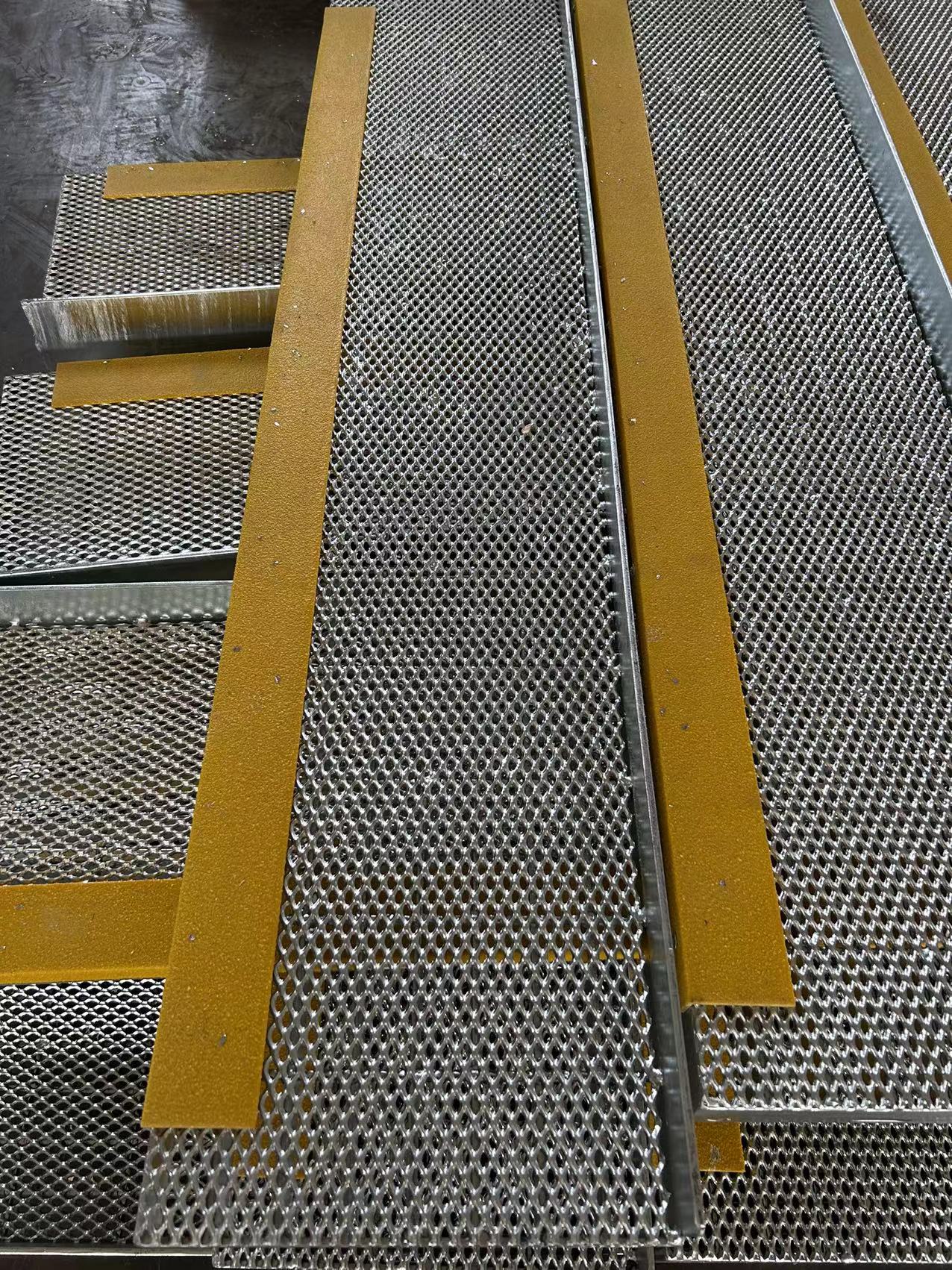
Why Should Industrial Stair Treads Consider Nosing?
Nosing is the front-edge section of a stair tread. Depending on the project, it can help define the tread edge, improve footing at the front of the step, and provide an additional anti-slip area.
A galvanized steel grating stair tread with nosing is often used for outdoor industrial stairs, equipment maintenance platforms, and access systems where a clearly defined tread edge is useful. The nosing design should be confirmed together with tread depth and side plate dimensions because changes to the nosing may also affect the overall geometry of the tread. It is therefore better to include this detail in the original fabrication drawing rather than modify it after galvanizing.
Why Are Hot-Dip Galvanized Steel Grating Stair Treads Commonly Used Outdoors?
For outdoor and many industrial applications, hot dip galvanized steel grating stair treads are commonly selected because the zinc coating provides corrosion protection for the fabricated steel structure.
As with custom platform grating, major cutting, welding, side plate assembly, and bolt-hole preparation are generally better completed before hot-dip galvanizing. This allows the complete fabricated tread to receive surface treatment after the main fabrication work has been finished. If bolt holes or side plates need major modification after galvanizing, the modified areas may require additional corrosion protection.
For custom stair projects, accurate fabrication drawings therefore help improve both installation accuracy and coating continuity.
Standard Stair Treads or Custom Steel Grating Stair Treads?
Standard stair treads are suitable when the staircase follows common dimensions, but industrial projects often involve non-standard stair widths, unusual stringer spacing, existing structures, or special installation conditions.
A custom steel grating stair treads supplier becomes more valuable when the project requires:
- Non-standard tread widths;
- Special side plate designs;
- Customized bolt-hole locations;
- Serrated anti-slip surfaces;
- Special nosing details;
- Hot-dip galvanized finishing;
- Replacement treads for existing stairs;
- Matching platform grating and access components.
Custom fabrication can reduce drilling, cutting, and adjustment after delivery, especially when many treads need to be installed on the same industrial staircase.
Steel Grating Stair Treads Should Be Coordinated With the Complete Access System
Industrial stairs rarely exist independently. They usually connect one platform to another and work together with stair stringers, landing grating, handrails, and fixing accessories. This means that a project may require much more than stair treads alone.
A complete access system may include:
- Steel Grating Stair Treads;
- Serrated Steel Grating;
- Hot-Dip Galvanized Platform Grating;
- Handrail components;
- Landing grating;
- Fixing accessories;
- Custom steel components.
Coordinating these products within one project helps reduce dimensional conflicts between the stairs and surrounding platform structures and makes the entire access system easier to install.
First Steel Grating Solutions for Industrial Stair Projects
First Steel Grating provides steel grating stair treads and related grating solutions for industrial access systems. Depending on project requirements, the tread design can be coordinated around dimensions, grating type, side plates, bolt holes, serrated surfaces, nosing, and hot-dip galvanized finishing.
For projects that include more than the staircase itself, First Steel Grating can also provide platform grating, serrated steel grating, trench covers, fixing accessories, and customized steel grating components. This allows the stairs and surrounding access structures to be considered as one coordinated project rather than separate products.
For custom or replacement projects, customer drawings and existing installation dimensions can be used to help match the tread configuration to the actual structure.
Send Your Stair Drawing for a Custom Quote
If you are looking for a Steel Grating Stair Treads Supplier for a new industrial staircase or a replacement project, you can send First Steel Grating your stair drawing, tread dimensions, quantity, stringer spacing, bolt-hole requirements, surface type, and galvanizing requirements.
If the exact specification has not yet been finalized, you can also provide the operating environment and existing stair structure information. First Steel Grating can then evaluate the project and recommend a suitable custom steel grating stair tread solution, together with related platform grating or access components where required.
Providing complete dimensions and installation information at the quotation stage can reduce repeated revisions and make the final quotation more closely aligned with the actual project.
FAQ
1. Can Steel Grating Stair Treads be customized according to drawings?
Yes. Custom steel grating stair treads can be fabricated according to tread dimensions, side plate design, bolt-hole positions, plain or serrated surfaces, nosing requirements, and surface treatment.
2. Are serrated steel grating stair treads more suitable for outdoor stairs?
They are often a suitable choice for outdoor or wet environments because the serrated surface can provide additional traction. The final selection should still consider the actual working conditions and maintenance requirements.
3. Can galvanized stair treads be supplied with side plates and bolt holes?
Yes. Side plates and mounting holes can be fabricated according to the stair structure, and major fabrication work is usually completed before hot-dip galvanizing.
4. What information should be provided for a steel grating stair tread quotation?
It is useful to provide the stair drawing or tread dimensions, quantity, stringer spacing, side plate and bolt-hole requirements, surface type, nosing requirement, and surface treatment. This information helps the supplier prepare a more accurate custom quotation.
Post time: Sep-15-2026