
In industrial and commercial facilities, stairways are a critical element for safe access and efficient workflow. Choosing the right stair surface is essential to prevent slips, ensure long-term durability, and support heavy traffic. Stair treads steel bar gratings provide an optimal solution by combining robust structural strength with superior traction. For B2B buyers, understanding their design, applications, and advantages is key to improving workplace safety and operational efficiency.
Understanding Stair Treads Steel Bar Gratings
Stair treads steel bar gratings consist of high-strength steel bars arranged in a grid pattern. The bearing bars run longitudinally while cross bars hold the structure together, forming a durable open surface. This design allows liquids, dirt, and debris to pass through, minimizing slip hazards and making the stairway easier to maintain.
Compared to solid treads, steel bar gratings offer superior load-bearing capacity without adding excessive weight. Optional serrated surfaces further improve traction, making them suitable for industrial walkways, platforms, and emergency escape routes.
Key Benefits of Steel Bar Stair Treads
The use of stair treads steel bar gratings brings several practical advantages for industrial and commercial applications:
● Enhanced Slip Resistance – Serrated or textured bars prevent slips in wet, oily, or dusty environments
● Durability – High-strength steel withstands heavy pedestrian traffic, forklifts, or light machinery
● Drainage Efficiency – Open-grid design allows water, chemicals, or debris to fall through, reducing hazards
● Low Maintenance – Easy to clean and replace individual treads without disrupting the entire staircase
● Customizable Design – Tread width, load capacity, and surface treatment can be tailored for specific projects
These benefits make steel bar stair treads not just a safety measure but also a cost-effective solution for long-term industrial performance.
Material Options and Surface Treatments
Selecting the proper material and surface treatment is essential to match operational demands and environmental conditions:
● Carbon Steel – Cost-effective, durable, and suitable for most indoor applications
● Hot-Dip Galvanized Steel – Provides rust resistance for outdoor and humid environments
● Stainless Steel – Ideal for chemical plants, food processing areas, or marine environments
● Serrated or Coated Surfaces – Improves traction and reduces slip risks under challenging conditions
Material choice directly affects the lifespan, safety, and maintenance requirements of the stair treads, which is an important consideration for B2B buyers seeking long-term reliability.
Industrial Applications of Stair Treads Steel Bar Gratings
Steel bar stair treads are widely used in environments where safety, load-bearing, and drainage are critical:
● Manufacturing Facilities – Access stairs for operational areas, mezzanines, and equipment platforms
● Chemical and Petrochemical Plants – Resistant to oil, acids, and corrosive substances
● Power Plants – Durable treads for access to heavy equipment areas
● Offshore and Marine Structures – Corrosion-resistant surfaces suitable for wet or salty environments
● Municipal Infrastructure – Pedestrian stairways, drainage stairs, and public access areas requiring slip resistance
Using steel bar stair treads in these applications helps companies reduce accidents, improve operational efficiency, and maintain compliance with workplace safety standards.
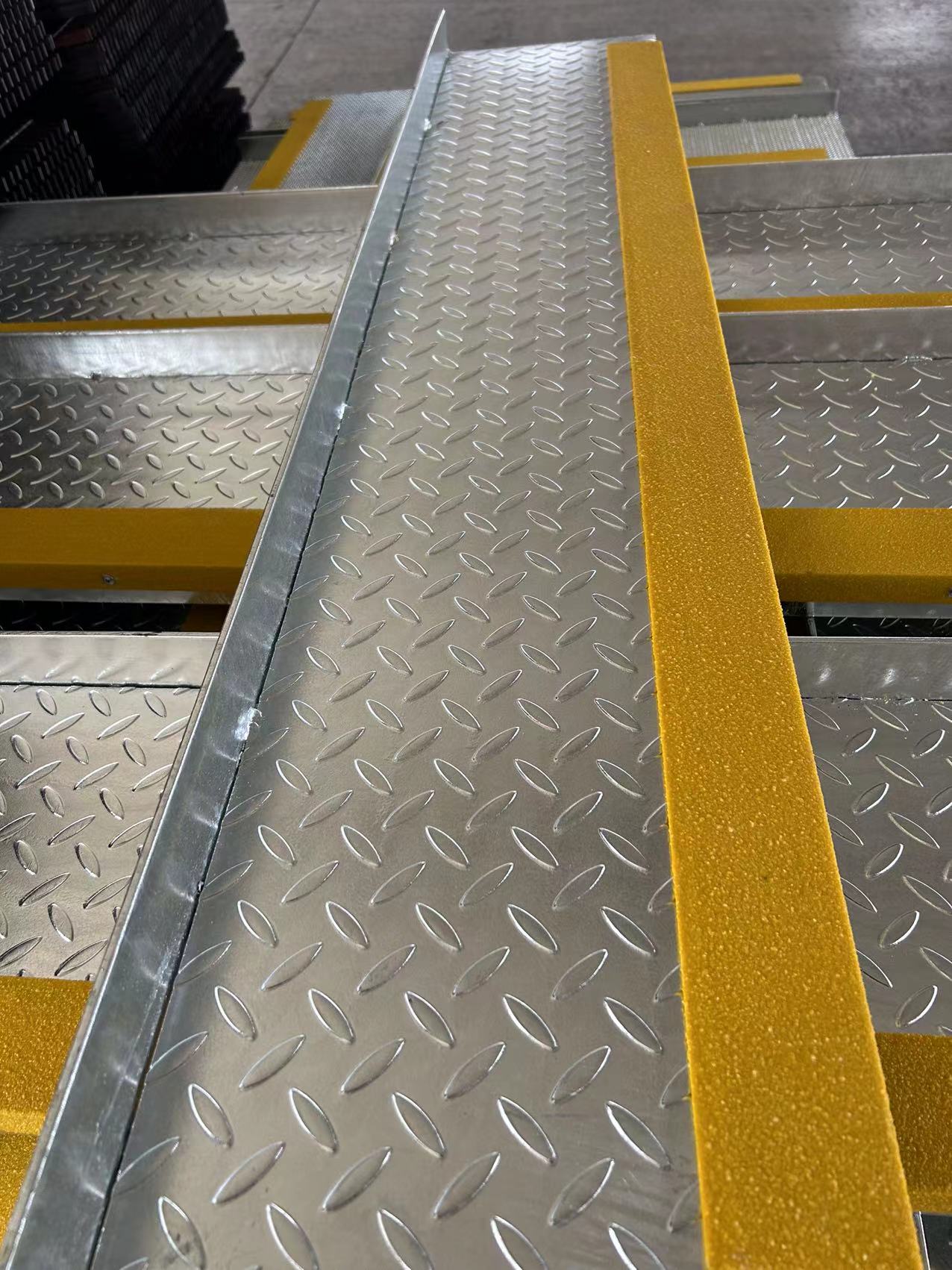
Installation Best Practices
Proper installation ensures optimal performance and longevity of steel bar stair treads:
● Align treads to distribute weight evenly across supporting structures
● Secure panels using industrial-grade fasteners or brackets
● Ensure edges are flush with stair stringers to avoid tripping hazards
● Inspect regularly for signs of corrosion, wear, or loose fasteners
● Keep drainage openings clear of debris for optimal performance
Well-installed stair treads can last decades, providing a safe and low-maintenance solution for industrial environments.
Compliance and Safety Considerations
Steel bar stair treads contribute to workplace safety and regulatory compliance:
● Slip-resistant surfaces help meet OSHA and other local safety regulations
● Load-bearing capacity ensures safe passage of personnel and equipment
● Corrosion and chemical resistance improve performance in challenging environments
● Durable design reduces the need for frequent replacements, minimizing operational disruptions
For B2B projects, choosing stair treads that comply with safety standards helps reduce liability and improve employee confidence.
Why B2B Buyers Prefer Steel Bar Stair Treads
B2B buyers value steel bar stair treads for several reasons:
● Enhance worker safety while reducing accident risk
● Provide long-lasting and durable stair solutions for industrial use
● Enable easy maintenance and modular replacement
● Can be tailored to specific project dimensions, loads, and environmental conditions
● Offer cost-efficient, high-performance stair solutions for industrial and commercial facilities
Investing in steel bar stair treads ensures safety, durability, and operational efficiency, making them a strategic choice for industrial infrastructure.
Conclusion
Stair treads steel bar gratings provide a high-performance, cost-effective solution for industrial and commercial stairways. Their durable steel construction, open-grid design, and optional serrated surfaces ensure slip resistance, efficient drainage, and long-term reliability. Whether used in manufacturing plants, chemical facilities, power generation sites, offshore platforms, or municipal infrastructure, steel bar stair treads enhance safety, operational efficiency, and return on investment. Careful selection of materials, surface treatments, and installation practices ensures that stair systems remain safe and durable under demanding conditions.
FAQ:
Q1: What makes stair treads steel bar gratings better than solid stair treads?
Steel bar gratings provide better drainage, lighter weight, and optional anti-slip surfaces while maintaining high load-bearing capacity.
Q2: Can these stair treads be customized for specific industrial needs?
Yes, B2B buyers can customize width, length, bar spacing, load capacity, and surface treatment to match project requirements.
Q3: Where are steel bar stair treads most commonly used?
They are widely used in manufacturing facilities, chemical plants, power plants, offshore platforms, and municipal stairways.
Q4: How should steel bar stair treads be maintained?
Routine inspection, cleaning debris from drainage openings, and timely replacement of damaged panels will ensure long-term performance.
Post time: Mar-05-2026