
A Stainless Steel Grating Cover is often considered when a project needs better corrosion resistance, easier cleaning, or longer service in wet environments. But stainless steel is not automatically the best choice for every drainage channel, platform opening, or trench cover.
In many ordinary outdoor locations, a properly galvanized carbon steel grating can perform well. Stainless steel becomes more valuable when the environment introduces conditions that coatings alone may not handle comfortably, such as repeated chemical exposure, chloride-rich moisture, strict hygiene requirements, or frequent washdown.
The useful question is therefore not simply “Is stainless steel better?” but whether the operating environment actually justifies stainless steel.
Where Stainless Steel Grating Cover Starts to Make a Real Difference
The decision becomes clearer when the actual exposure is compared with the function of the cover.
| Operating Condition | Galvanized Steel May Be Enough | Stainless Steel Becomes More Relevant |
|---|---|---|
| Normal outdoor rain | Often suitable | Usually not necessary unless other risks exist |
| Frequent washdown | Possible with suitable coating | More attractive when cleaning is intensive |
| Coastal salt exposure | Needs careful protection | More useful where chlorides remain on the surface |
| Chemical splash | Depends on chemical | Often preferred when compatible with the medium |
| Food processing area | Possible in non-hygienic zones | Stronger option for frequent cleaning and hygiene |
| Wastewater channel | Suitable in many areas | More useful in highly corrosive or chemical zones |
| Indoor dry service | Usually sufficient | Often unnecessary |
| Visible architectural area | Depends on finish requirement | Useful where appearance and corrosion resistance both matter |
This distinction helps avoid two opposite mistakes: using carbon steel where the environment is too aggressive, or specifying stainless steel where its additional performance brings little practical benefit.
Corrosion Resistance Depends on the Actual Exposure, Not the Word “Wet”
A wet environment does not automatically mean stainless steel is required.Rainwater on an outdoor drainage cover is very different from seawater spray, chemical cleaning agents, acidic process liquid, or wastewater containing corrosive contaminants. The frequency and duration of exposure also matter.
A cover that becomes wet and dries quickly may experience a relatively moderate corrosion condition. A cover that remains continuously damp, receives repeated chemical splash, or sits in a chloride-rich environment faces a much more demanding situation.
For this reason, material selection should consider the actual source of moisture:
- ordinary rain or humidity;
- salt spray or coastal atmosphere;
- process chemicals;
- cleaning agents;
- wastewater or sludge;
- food or beverage residue.
The more persistent or aggressive the exposure becomes, the stronger the case for using a Stainless Steel Grating Cover.
Stainless Steel Is Not One Universal Material
One important point is often overlooked: “stainless steel” is a material family, not a single corrosion-resistant solution.Different stainless grades behave differently in chemical, chloride, and high-moisture environments. A grade that performs well in general indoor washdown conditions may not be the best choice for stronger chloride exposure or certain chemicals.
This becomes especially important in chemical plants, coastal facilities, food processing lines, and wastewater treatment systems.Before deciding on the stainless grade, useful information includes the type of liquid or chemical present, concentration, operating temperature, cleaning chemicals, exposure frequency, and whether the surface is able to dry between cycles.
Choosing stainless steel is only the first decision. Choosing the stainless steel that matches the environment is the more important one.
Frequent Cleaning Can Change the Material Decision
In some facilities, the reason for using stainless steel is not severe corrosion but repeated cleaning.Food processing, beverage production, pharmaceutical areas, and other hygienic environments may require regular washdown. In these locations, surfaces are repeatedly exposed to water, detergents, cleaning chemicals, and physical cleaning.
A Stainless Steel Grating Cover can be useful because the material does not rely on a separate zinc coating for basic corrosion protection. This can simplify long-term surface maintenance in areas that are cleaned frequently.
The open-grid structure also allows water and cleaning liquid to pass through instead of remaining across a solid cover.However, the grating geometry still matters. If food residue, sludge, or other material becomes trapped around the intersections, the surface still requires regular cleaning. Stainless steel improves material durability, but it does not make the grating maintenance-free.
Drainage Covers Need More Than Corrosion Resistance
A drainage channel cover must do more than resist rust.It also needs to support the expected load, remain stable on the frame, allow water to pass, and be practical to remove when the channel needs cleaning.For this reason, specifying stainless steel without considering the frame can create an incomplete system.
A strong stainless grating panel installed on a weak or rapidly corroding carbon steel frame may still become difficult to use over time. The frame, fixing components, edge supports, and surrounding structure should therefore be evaluated together with the cover.
The same principle applies to load. A Stainless Steel Grating Cover used over a pedestrian drain has very different structural requirements from one exposed to carts, forklifts, or vehicle wheels.Material and load capacity are separate decisions and should not be confused.
Coastal Locations Need More Attention to Chlorides
Coastal environments are one of the clearest situations where stainless steel may offer a practical advantage.Salt-containing moisture can remain on steel surfaces, especially around sheltered edges, fixings, and drainage channels. Repeated wet-dry cycles can increase corrosion pressure over time.
In these conditions, the material decision should not be based only on whether the installation is “outdoors.” A normal inland outdoor environment and a coastal drainage system can have very different exposure levels.
Where salt spray, seawater, or chloride-rich moisture is persistent, a suitable stainless steel grade may provide more reliable long-term performance than standard carbon steel protection.The exact grade still needs to match the chloride severity and service conditions.
When Stainless Steel May Be Unnecessary
Stainless steel can also be over-specified.A dry indoor service area, lightly loaded inspection opening, or ordinary outdoor drainage channel with moderate exposure may perform adequately with galvanized carbon steel.Using stainless steel in these conditions may increase material cost without solving a meaningful operating problem.
A practical decision can usually be made by asking:
- Is corrosion expected to be moderate or severe?
- Are chemicals or chlorides present?
- How often is the area washed?
- Does the cover need a hygienic surface?
- How difficult would replacement be later?
- Is the surrounding frame made from compatible material?
If most of these conditions are mild, galvanized steel may remain the more practical solution. If several of them are demanding, stainless steel becomes easier to justify.
Where a Stainless Steel Grating Cover Fits Best
Stainless steel grating covers are especially useful where corrosion resistance, cleaning, and drainage need to work together. Typical applications include food processing drainage, chemical plant channels, coastal facilities, wastewater areas, washdown zones, and other environments where ordinary coated carbon steel may require more frequent maintenance.
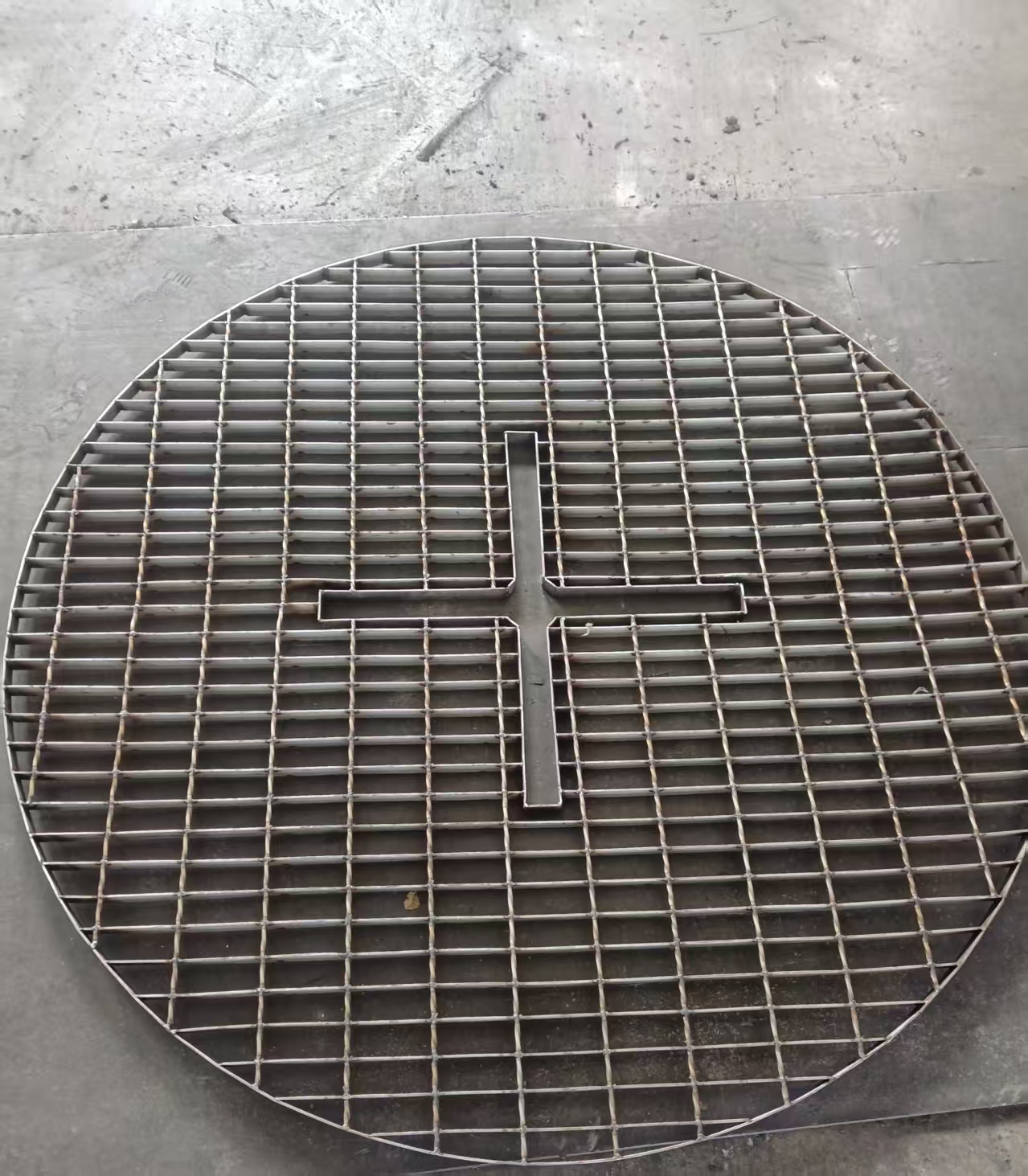
Depending on the project, grating covers can be produced with different panel sizes, bearing bar specifications, openings, edge treatments, and support arrangements. Stainless steel grating can also be combined with custom frames, removable sections, and irregular shapes around equipment or drainage structures.
The important point is to match the complete cover system to the actual environment rather than selecting stainless steel only because it sounds more durable.
Conclusion
A Stainless Steel Grating Cover is most valuable when the environment creates a real need for higher corrosion resistance, frequent cleaning, hygiene, or better performance in chloride and chemical exposure.
It is not automatically the best choice for every drainage or access opening. Ordinary galvanized steel may be entirely suitable in moderate conditions, while aggressive chemical, coastal, hygienic, and washdown environments can make stainless steel a more appropriate long-term solution.
The best material decision comes from understanding what the cover will contact, how often it will be cleaned, what load it will carry, and how the entire frame-and-cover system will be maintained.
FAQ
1. When should a Stainless Steel Grating Cover be used instead of galvanized steel?
It becomes more relevant in corrosive chemical environments, coastal locations, frequent washdown areas, and applications with higher hygiene requirements.
2. Is stainless steel suitable for drainage channels?
Yes. Stainless steel grating covers can provide drainage, access, and corrosion resistance, but the panel load, frame, fixing method, and cleaning requirements still need to be considered.
3. Does every outdoor grating cover need stainless steel?
No. Many ordinary outdoor applications can use hot-dip galvanized steel successfully. Stainless steel is more useful where exposure is significantly more aggressive.
4. Does stainless steel grating require maintenance?
Yes. Stainless steel improves corrosion resistance, but dirt, chemicals, sludge, and process residue can still accumulate. Regular inspection and cleaning remain important.
Post time: Aug-27-2026