
In modern sewage and wastewater treatment facilities, operational safety, durability, and efficiency are essential. Sewage treatment plant steel grating plays a critical role in providing strong, reliable surfaces for walkways, platforms, stair treads, and drainage covers. Its open-grid design allows water, debris, and chemicals to pass through, reducing slip hazards and ensuring proper drainage. For B2B buyers and industrial engineers, understanding the types, materials, and benefits of steel grating is crucial for selecting the right solution for wastewater treatment plants.
What is sewage treatment plant steel grating?
Steel grating in a sewage treatment plant is a fabricated metal surface consisting of load-bearing bars and cross bars welded or pressure-locked together to form a robust, open-grid structure. Unlike solid flooring, steel grating allows liquids and debris to flow through while maintaining structural strength. This design is especially beneficial in sewage treatment environments, where heavy equipment, chemical exposure, and wet conditions are common.
Key characteristics include:
● High load-bearing capacity for personnel and machinery
● Slip-resistant surfaces for wet or slippery conditions
● Open-grid design for drainage and ventilation
● Corrosion resistance to withstand harsh chemical and wastewater environments
By incorporating steel grating, sewage treatment plants can maintain safe, efficient, and long-lasting operations.
Types of steel grating for sewage treatment plants
Selecting the right type of steel grating depends on the specific needs of the wastewater facility, including load requirements, exposure to chemicals, and environmental conditions. Common types include:
● Stainless steel grating: Offers superior corrosion resistance and durability, making it ideal for chemical-laden wastewater and highly corrosive conditions.
● Galvanized steel grating: Hot-dip galvanized grating provides a protective coating to resist rust and moderate chemical exposure, suitable for most sewage treatment walkways and platforms.
● Welded steel grating: High-strength welded bars provide exceptional load-bearing capacity for heavy-duty platforms and maintenance areas.
● Fiberglass reinforced plastic (FRP) grating: Non-conductive, corrosion-resistant, and lightweight, suitable for highly corrosive or wet areas.
Each type can be customized in bar spacing, thickness, and surface treatment to meet the unique requirements of a wastewater treatment facility.
Benefits of using steel grating in sewage treatment plants
Sewage treatment plant steel grating provides numerous advantages for industrial operations:
● Enhanced safety: Anti-slip surfaces reduce accidents caused by wet or contaminated floors.
● Corrosion resistance: Stainless steel, galvanized steel, or FRP grating resists chemical and wastewater corrosion.
● High load-bearing capacity: Supports heavy machinery, vehicles, and maintenance equipment.
● Low maintenance: Open-grid surfaces prevent debris accumulation, simplifying cleaning.
● Versatility: Suitable for walkways, platforms, stair treads, and drainage covers.
These benefits make steel grating an essential component for long-term reliability and safety in sewage treatment facilities.
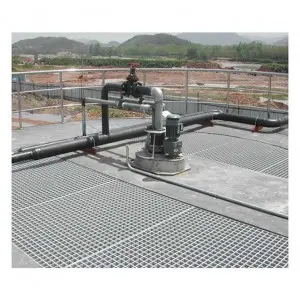
Applications in wastewater treatment plants
Steel grating is widely used across various areas in sewage treatment plants:
● Walkways and catwalks: Provides safe access for personnel throughout the treatment facility.
● Maintenance platforms and mezzanines: Supports heavy equipment and facilitates equipment inspection.
● Stair treads: Ensures secure footing in areas prone to water, sludge, or chemical spills.
● Drainage and trench covers: Allows proper water flow and prevents debris accumulation.
● Outdoor or semi-outdoor process areas: Galvanized or FRP grating resists environmental corrosion, ensuring durability.
Using the correct type of steel grating enhances both operational safety and regulatory compliance for B2B projects in the wastewater sector.
Installation and maintenance considerations
Proper installation and maintenance are crucial for maximizing the performance of sewage treatment plant steel grating:
● Measure and cut grating to fit platforms, walkways, or drainage channels accurately.
● Use bolted, welded, or clip-lock systems to securely attach the grating to support structures.
● Inspect regularly for corrosion, wear, or deformation, especially in chemically aggressive areas.
● Clean debris and sludge to maintain proper drainage and reduce slip hazards.
● Follow manufacturer guidelines regarding load ratings and chemical exposure limits.
By adhering to these practices, facilities can ensure long-term safety, durability, and reduced maintenance costs.
Choosing the right material for sewage treatment
Material selection is key to optimizing performance in wastewater treatment plants. Consider the following factors:
● Exposure to chemicals: Highly corrosive environments require stainless steel or FRP grating.
● Load requirements: Heavy-duty areas may require welded steel or thicker galvanized grating.
● Maintenance needs: Materials that resist corrosion and debris accumulation reduce maintenance frequency.
● Environmental conditions: Outdoor platforms or areas exposed to weather should use galvanized or FRP grating for longevity.
B2B buyers must assess these factors to choose the most effective solution for each section of the facility.
Conclusion
Sewage treatment plant steel grating is a critical component for ensuring safe, durable, and efficient operations in wastewater management facilities. Its high strength, corrosion resistance, and low-maintenance design make it ideal for walkways, platforms, stair treads, and drainage areas. By selecting the right material, type, and installation method, B2B buyers can enhance safety, reduce maintenance costs, and ensure regulatory compliance. Properly installed and maintained steel grating provides long-term reliability and operational efficiency in the challenging environment of sewage treatment plants.
FAQ
Q1: What is the primary purpose of steel grating in sewage treatment plants?
Steel grating provides strong, slip-resistant surfaces for walkways, platforms, stair treads, and drainage covers, allowing water and debris to pass through safely.
Q2: Which materials are commonly used for sewage treatment plant grating?
Common materials include stainless steel, galvanized steel, welded steel, and FRP, chosen based on load requirements and chemical exposure.
Q3: Can steel grating be customized for wastewater treatment facilities?
Yes, grating can be customized in size, thickness, bar spacing, and surface treatment to meet facility-specific requirements.
Q4: How should steel grating in sewage treatment plants be maintained?
Regular inspections, cleaning debris, monitoring for corrosion, and adhering to manufacturer load and exposure guidelines are essential for longevity and safety.
Post time: Jan-15-2026