
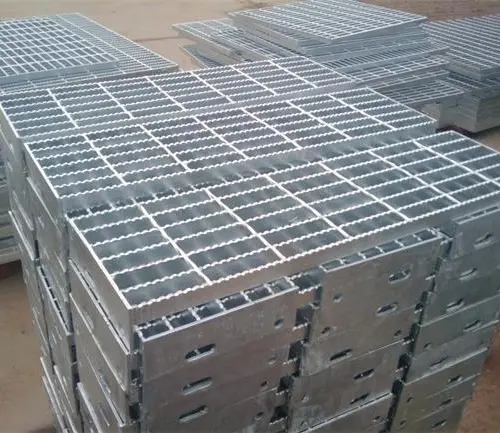
Serrated Steel Grating is widely used in industrial walkways, maintenance platforms, drainage areas, and equipment access zones. Its serrated bearing bar surface provides additional traction in environments where water, oil, or other contaminants may affect walking safety. However, long-term performance depends on more than surface design. The quality and condition of welded connections also influence the stability and service life of the grating panel.
In welded steel grating, bearing bars and cross bars are joined to form a complete structure. These connections help maintain panel geometry and keep the components in their intended positions. Repeated loading, machinery vibration, impact, corrosion, and unsuitable installation conditions may affect welded areas over time. Understanding these factors helps users select and maintain Serrated Steel Grating more effectively.
Why Welded Connections Matter
A typical welded steel grating panel consists of bearing bars arranged in one direction and cross bars positioned across them. Bearing bars carry the main applied loads, while cross bars connect the assembly and help maintain its spacing and overall shape.
The serrated surface is mainly designed to improve slip resistance. It does not replace the structural function of the bearing bars or welded joints. The performance of Serrated Steel Grating still depends on bearing bar dimensions, spacing, support span, material, and connection quality.
Welded areas may experience repeated mechanical stress during daily operation. Foot traffic, material handling, equipment movement, and nearby machinery vibration can all affect the grating structure. If the panel is poorly supported or subjected to loads beyond its intended capacity, certain areas may experience additional stress.
A damaged connection may also affect the relationship between bearing bars and cross bars. If a cross bar separates from a bearing bar, the panel may lose some local rigidity. This can create instability and make further inspection or replacement necessary.
Common Causes of Wear Around Welded Areas
Wear around welded connections usually results from several operating conditions rather than one isolated factor. Identifying these conditions helps users understand why damage may occur and how to reduce avoidable problems.
Repeated loading is a common consideration in industrial platforms and walkways. Continuous foot traffic, transported materials, and equipment movement place recurring stress on the grating. When the support arrangement is unsuitable, or actual loads exceed the design requirements, the panel may experience uneven stress.
Machinery vibration can also influence connection stability. Equipment installed near a grating platform may transmit vibration through the supporting structure. Over time, repeated vibration may contribute to movement or fatigue, particularly when fixing points or support conditions are already inadequate.
Impact is another possible source of damage. Dropped tools, moving carts, and equipment contact may cause local deformation. If a bearing bar or cross bar is damaged, the original load distribution may change.
Environmental exposure should not be overlooked. Moisture, chemical residues, and accumulated dirt can contribute to corrosion around welds and adjacent steel surfaces. Corrosion does not automatically mean that a weld has failed, but prolonged exposure may weaken the surrounding material and make maintenance more difficult.
How Manufacturing Quality Affects Connection Durability
The condition of welded connections begins with manufacturing quality. Accurate bar positioning, consistent welding procedures, and appropriate inspection help produce a stable grating panel. Inconsistent welding or incorrect component alignment may create weaknesses that become more noticeable during long-term use.
For Serrated Steel Grating, the serration process also needs to be coordinated with the overall manufacturing process. The bearing bar surface is processed to create the required toothed profile, while the welded connections must maintain the intended panel structure. The exact production sequence depends on the product design and manufacturing method.
Several details deserve attention:
- Weld consistency: Connections should meet the specified requirements, with attention to visible defects and incomplete joints.
- Bar alignment: Bearing bars and cross bars should be correctly positioned to maintain panel spacing and geometry.
- Surface finishing: Cutting and welding should not leave unnecessary damage or contamination around connection areas.
- Protective treatment: Hot-dip galvanizing or other specified finishes should be suitable for the material and operating environment.
- Final inspection: Finished panels should be checked for deformation, dimensional inconsistencies, and connection defects.
Good manufacturing quality reduces avoidable problems, but it cannot compensate for unsuitable installation or excessive loading. The finished panel must still be matched to the intended application.
Installation Factors That Influence Welded Connections
Installation determines how loads are transferred from the grating panel to its supporting structure. If the frame is uneven, damaged, or incorrectly positioned, the panel may not rest properly on its support points. This can cause movement or uneven loading during operation.
Bearing bar orientation is particularly important because these bars carry the main loads. Their direction should match the support arrangement and the intended load path. Installing a panel in the wrong direction may prevent it from performing as designed.
Fixing methods also affect stability. Loose or unsuitable fasteners may allow the panel to shift under repeated traffic. On the other hand, forcing a panel into an opening that does not match its dimensions can create unnecessary stress around its edges.
Before installation, check that:
- The supporting frame is stable, level, and suitable for the expected loads.
- Bearing bars follow the required structural direction.
- Panel dimensions match the installation opening.
- Fixing clips and fasteners are compatible with the panel and support structure.
- Cut edges and modified sections have suitable finishing and support.
These checks help reduce unnecessary movement and make later inspections more straightforward.
Inspection and Maintenance of Welded Areas
Regular inspection helps identify potential connection problems before they affect the use of an industrial platform or walkway. Inspection frequency should depend on traffic levels, vibration exposure, environmental conditions, and the consequences of possible damage.
During inspection, pay attention to visible cracks, separated cross bars, unusual deformation, corrosion, and changes in panel stability. If one connection looks different from surrounding joints, it should be examined more closely. Surface discoloration alone does not necessarily indicate structural failure, so the condition should be assessed carefully.
Cleaning is also useful because oil, dirt, and chemical residues can accumulate around welded areas and hide early signs of damage. Removing these deposits improves visibility and reduces prolonged contact between corrosive substances and the steel surface. Cleaning products should be compatible with the material and its protective finish.
If a weld appears cracked or a cross bar becomes detached, the affected panel should be assessed by a qualified person. Repair or replacement should follow a suitable procedure for the material and joint design. Improvised welding without understanding the original connection requirements may create additional problems.
Choosing Serrated Steel Grating for Industrial Projects
Selecting Serrated Steel Grating requires more than choosing a non-slip surface. Bearing bar dimensions, cross bar spacing, support span, welding quality, and surface treatment should all match the actual operating conditions.
For example, industrial walkways may prioritize slip resistance and pedestrian loads, while equipment platforms may require different structural specifications. Outdoor installations may also need corrosion protection, such as hot-dip galvanizing. The correct configuration should be determined by the application rather than by appearance alone.
First Steel Grating offers steel grating products for industrial platforms, walkways, stair treads, drainage covers, and related applications. Its product range includes serrated and pressure-welded steel grating, galvanized grating, and customized panels. The company also provides design, production, and installation services for steel grating and steel structure projects.
For projects with specific installation requirements, details such as panel dimensions, bearing bar direction, openings, edge treatment, support conditions, and fixing methods should be confirmed before production. Sharing drawings and application information helps match the grating structure to the actual working environment and reduces unnecessary adjustments during installation.
Conclusion
Welded connections are an important part of Serrated Steel Grating. Repeated loading, vibration, impact, corrosion, and unsuitable installation may affect their condition over time. By considering manufacturing quality, support arrangements, fixing methods, and regular inspection, users can reduce avoidable connection problems and maintain reliable performance in industrial applications.
FAQs
1. Can a damaged cross bar affect serrated steel grating?
Yes. Cross bars connect the bearing bars and help maintain panel geometry. A damaged or detached cross bar may reduce local rigidity and should be assessed to determine whether repair or replacement is necessary.
2. Does hot-dip galvanizing prevent weld damage?
No. Galvanizing provides corrosion protection but does not prevent mechanical wear, impact, or fatigue. Proper support, installation, and inspection are still necessary.
3. What signs may indicate damage around welded connections?
Visible cracks, separated bars, unusual deformation, corrosion around joints, and changes in panel stability may indicate a problem. Suspected structural damage should be professionally assessed.
4. Can serrated steel grating be used near vibrating machinery?
It can be suitable when the panel, supports, and fixing arrangements match the operating conditions. Expected vibration and loading should be considered during product selection and installation.
Post time: Nov-10-2026