
In industrial construction and infrastructure projects, steel grating is more than just a flooring solution—it is a structural component that directly impacts safety, load performance, and long-term maintenance costs. Among the various types available, press-welded steel grating has gained significant attention for its consistent quality, strong joint integrity, and suitability for demanding applications.
For B2B buyers, engineers, and project managers, understanding how press-welded steel grating differs from other grating types—and why it is widely used—can help improve procurement decisions and ensure project reliability.
What is press-welded steel grating?
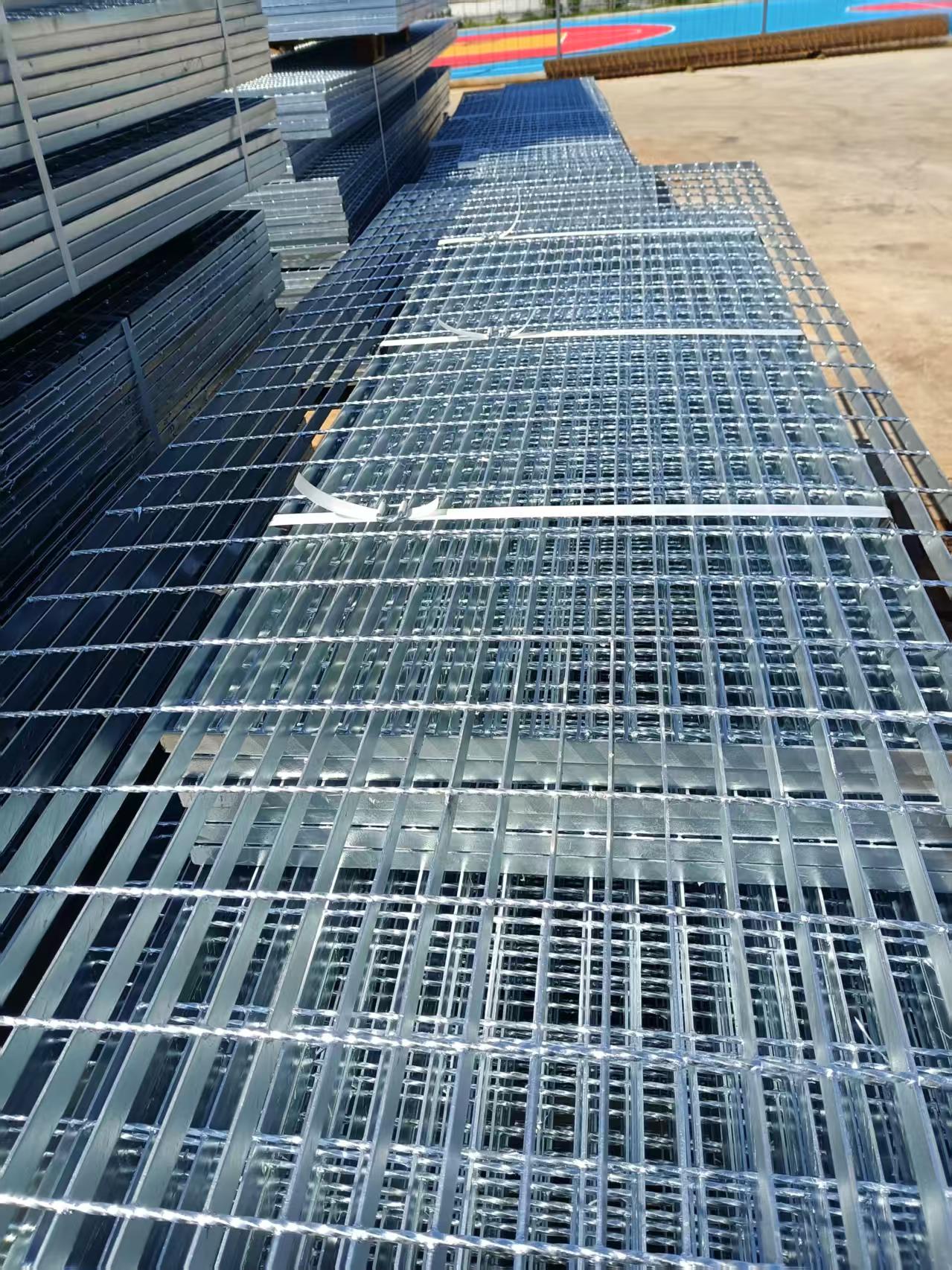
Press-welded steel grating is manufactured by combining load-bearing flat bars and cross bars using high-pressure resistance welding. During the process, cross bars are pressed into position and welded under controlled conditions, creating a firm and uniform bond at each intersection.
This method produces a rigid and durable grid structure with consistent spacing and high dimensional accuracy. Compared to traditional welded or press-locked grating, press-welded grating offers improved strength at connection points and better structural stability under load.
Because of its precision manufacturing, it is commonly used in industrial platforms, walkways, stair treads, and structural flooring systems.
Why press-welded steel grating is widely used
The growing demand for press-welded steel grating is driven by several key performance advantages that align with industrial requirements:
● Strong joint integrity
The resistance welding process creates solid connections between bars, ensuring the grating maintains its shape and strength under heavy loads.
● Uniform structure and accuracy
Precision manufacturing ensures consistent spacing and flatness, which is important for both safety and installation efficiency.
● High load capacity
Designed to support industrial traffic, machinery, and equipment without deformation.
● Improved safety performance
The rigid structure reduces vibration and movement, while optional serrated surfaces enhance slip resistance.
● Reliable long-term performance
The stable structure minimizes wear and reduces the likelihood of failure in demanding environments.
These features make press-welded steel grating a dependable choice for projects requiring both strength and precision.
Common materials and finishing options
Material selection plays a critical role in determining the performance of press-welded steel grating in different environments:
● Carbon steel
Widely used due to its high strength and cost efficiency, suitable for general industrial applications.
● Hot-dip galvanized steel
Provides excellent corrosion protection, making it ideal for outdoor or humid environments such as wastewater plants or bridges.
● Stainless steel
Offers superior resistance to corrosion and chemicals, commonly used in food processing, pharmaceutical, and chemical industries.
● Surface treatments
Options such as galvanizing, painting, or powder coating enhance durability and extend service life.
Choosing the appropriate material and finish ensures optimal performance and reduces maintenance requirements over time.
Typical applications across industries
Press-welded steel grating is used in a wide range of industrial and commercial applications where reliability and safety are essential:
● Industrial platforms and walkways
Provides stable and safe access for workers in manufacturing plants and processing facilities.
● Stair treads and access systems
Used in high-traffic stairways where strength and slip resistance are required.
● Drainage covers and trench systems
Allows water and debris to pass through while maintaining structural support.
● Energy and power plants
Supports heavy equipment access and maintenance operations.
● Oil, gas, and offshore facilities
Performs reliably in harsh environments with exposure to moisture, chemicals, and heavy loads.
● Transportation and infrastructure projects
Used in bridges, railways, and public infrastructure requiring long-term durability.
Its versatility makes it a key material in both new construction and renovation projects.
Installation and maintenance insights
One of the advantages of press-welded steel grating is its ease of installation and minimal maintenance requirements:
● Panels can be quickly installed using clips, bolts, or welding depending on project requirements
● The rigid structure simplifies alignment and reduces installation errors
● Regular inspections help identify wear, corrosion, or damage early
● Open-grid design reduces debris buildup and cleaning needs
● Individual panels can be replaced without dismantling entire sections
These characteristics reduce downtime and contribute to lower overall operational costs.
How press-welded steel grating supports safety and compliance
Industrial projects must meet strict safety and engineering standards. Press-welded steel grating supports compliance in several ways:
● Provides stable walking and working surfaces
● Reduces slip hazards with optional anti-slip designs
● Maintains structural integrity under heavy loads
● Performs reliably in both indoor and outdoor environments
These benefits help companies meet regulatory requirements while improving workplace safety.
Why B2B buyers choose press-welded steel grating
From a procurement perspective, press-welded steel grating offers clear advantages:
● Consistent manufacturing quality and structural reliability
● Strong performance in heavy-duty and high-traffic environments
● Flexible customization options for different industries
● Lower long-term maintenance and replacement costs
● Proven durability in harsh industrial conditions
Its combination of strength, precision, and cost efficiency makes it a preferred choice for infrastructure and industrial projects.
Conclusion
Press-welded steel grating is a high-performance solution designed for industrial environments that demand strength, precision, and reliability. Its advanced manufacturing process ensures strong connections, uniform structure, and long-term durability. Whether used in platforms, walkways, stair systems, or drainage applications, it delivers consistent performance and enhanced safety. For B2B buyers, selecting the right specification and material can significantly improve project outcomes while reducing lifecycle costs. As industrial standards continue to evolve, press-welded steel grating remains a dependable and forward-looking solution.
FAQ: Press-Welded Steel Grating
Q1: How is press-welded steel grating different from traditional welded grating?
It uses resistance welding under pressure, resulting in stronger joints and more uniform structure compared to traditional methods.
Q2: Is press-welded steel grating suitable for outdoor use?
Yes, especially when treated with hot-dip galvanizing or made from stainless steel, it performs well in outdoor environments.
Q3: Can it be customized for specific applications?
Yes, it can be tailored in terms of size, bar spacing, load capacity, and surface type to meet project requirements.
Q4: What industries commonly use press-welded steel grating?
It is widely used in manufacturing, energy, chemical processing, transportation, and infrastructure projects.
Post time: Mar-31-2026