
Choosing between Press Lock Steel Grating and press-welded steel grating is not simply a question of which product is stronger or more expensive. Both can be used for platforms, walkways, ventilation areas, access structures, and architectural applications, but they create different results in terms of appearance, fabrication flexibility, load design, and project integration.
A Press Lock Steel Grating is often selected when a project places more emphasis on regular grid geometry, clean visual lines, or customized spacing. Press-welded grating, by comparison, is widely used in industrial environments where practical load-bearing performance, repetitive panel production, and straightforward platform construction are priorities. The better choice depends on what the grating needs to do after installation, not simply on how the two products look in a catalogue.
The Main Difference Is in the Grid Structure
The most visible difference between press lock grating and press-welded grating comes from the way the bearing bars and cross bars are connected.
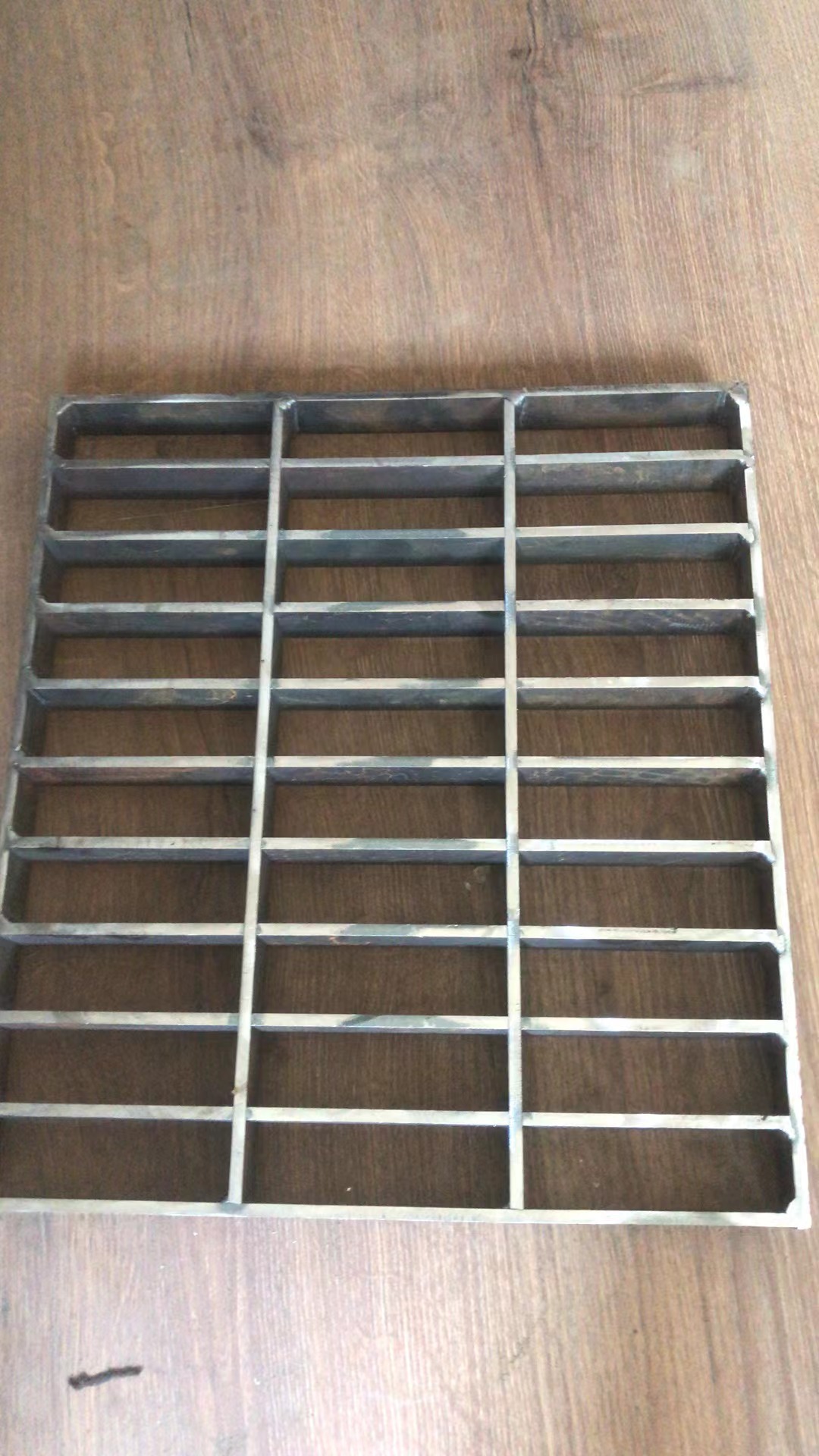
In press lock grating, cross bars are mechanically pressed into prepared bearing bars to form a regular grid. This structure can create a relatively clean and uniform appearance, which is one reason custom press lock grating is frequently considered for architectural walkways, ventilation screens, façades, public access areas, and projects where the grating remains highly visible.
Press-welded steel grating uses welded intersections between the bearing bars and cross bars. Its structure is familiar in factories, power plants, wastewater facilities, maintenance platforms, and other industrial applications where the grating is primarily treated as a functional floor or access surface.
Neither structure should be judged only by appearance. Bearing bar size, spacing, support span, material, and loading conditions still determine whether a specific panel is suitable for the project.
When Does Press Lock Steel Grating Add More Value?
The advantage of Press Lock Steel Grating becomes clearer when the grid itself forms part of the finished design rather than remaining only a hidden industrial component.
For example, a steel walkway inside a production plant may mainly need reliable access and drainage. A walkway in a commercial building, observation area, transport facility, or visible architectural structure may need to satisfy functional requirements while also maintaining a more controlled visual rhythm.
Press lock grating can be especially relevant when a project requires:
- Regular and visually consistent grid patterns;
- Customized bearing bar and cross bar spacing;
- Architectural or semi-architectural appearance;
- Ventilation or screening functions;
- Grating that remains visible as part of the structure;
- Non-standard panel layouts designed around surrounding architecture.
In these situations, the value is not simply “better appearance.” A more controlled grid can help the grating integrate with nearby railings, structural frames, façades, floor modules, or ventilation openings.
Press-Welded Grating Still Has a Strong Industrial Role
Press-welded grating remains a very practical option for many industrial applications because the product is well suited to repetitive platform layouts, maintenance walkways, production areas, drainage structures, and large access systems.
Where appearance is secondary to function, press-welded grating may provide a more direct solution. Large industrial platforms often contain many repeated panels, and standardized welded grating can be efficient when the same structural pattern needs to continue across a large area.
This is why the decision between press lock grating vs welded grating should not become a simple “premium versus standard” comparison. In many heavy industrial projects, press-welded grating may actually be the more logical choice because it matches the structure, production rhythm, and maintenance environment better.
The Application Usually Decides More Than the Product Name
A more useful comparison starts with the project environment.
| Project Requirement | Press Lock Steel Grating | Press-Welded Grating |
|---|---|---|
| Highly visible architectural walkway | Often a strong option | Possible, but appearance may be less important |
| Industrial maintenance platform | Possible when specified | Commonly used |
| Custom grid spacing | Strong flexibility | Depends on production specification |
| Large repeated platform areas | Suitable for selected projects | Often practical |
| Ventilation or screening application | Frequently considered | Can also be used |
| Heavy industrial access | Depends on structural design | Common application |
| Decorative or public-facing area | Often preferred for cleaner grid appearance | Functional alternative |
The table does not mean one grating type automatically performs better in every category. It shows where each structure tends to fit naturally. Final selection still depends on engineering requirements.
Load Capacity Should Not Be Decided by Structure Type Alone
One of the easiest mistakes is assuming that press-welded grating is always stronger or that press lock grating is mainly decorative. Neither assumption is reliable without looking at the actual specification.
For both products, structural performance depends on factors such as bearing bar height, bearing bar thickness, spacing, support span, material grade, panel size, and the type of load applied.
A heavy duty press lock steel grating can be designed for demanding applications when the structure is specified correctly, while a lightly configured welded grating may be completely unsuitable for concentrated equipment loads.
The correct question is therefore not “Which type is stronger?” but rather “Which structure can be configured most effectively for this particular platform, span, load, and installation condition?”
Custom Spacing Can Change the Function of Press Lock Grating
One of the more useful aspects of custom press lock grating is the ability to use the grid as part of the design function.
Changing the spacing can affect:
- Open area;
- Visual transparency;
- Ventilation;
- Light transmission;
- Walking surface characteristics;
- Small-object protection;
- Overall architectural appearance.
For an equipment platform, the priority may be safe access and drainage. For a ventilation screen, open area may matter more. In an architectural walkway, grid proportion and visual consistency may become part of the design language.
This is why press lock grating is often relevant to projects where the engineer or architect wants more control over the relationship between the bearing bars and cross bars rather than simply choosing a standard industrial grid.
Material and Surface Treatment Should Follow the Environment
Both press lock and press-welded grating can be matched with different materials and surface treatments depending on project conditions.
Galvanized press lock grating can be considered for outdoor structures and industrial environments where corrosion protection is required. Stainless steel press lock grating may be more relevant in projects where corrosion resistance, hygiene, material appearance, or special environmental exposure becomes more important.
For carbon steel grating, surface treatment should be considered together with fabrication. Major cutting, welding, openings, and edge details are generally better resolved before the final protective treatment so that the completed component can receive a more consistent finish.
The choice between galvanized carbon steel and stainless steel should therefore follow the actual exposure conditions rather than simply using the more expensive material by default.
Where Press Lock Steel Grating Can Be Used Beyond Platforms
Another reason to separate press lock grating from ordinary industrial platform thinking is that it can serve more than one function within a project.
Depending on the specification, it may be used for:
- Pedestrian walkways;
- Building access floors;
- Ventilation grilles;
- Screening structures;
- Façade elements;
- Equipment platforms;
- Bridge or observation walkways;
- Architectural floor sections.
In these applications, industrial press lock grating may need to balance structural performance with airflow, visibility, appearance, or surrounding design requirements.
That makes the product particularly suitable for projects where the grating remains visually exposed and becomes part of the finished architectural or industrial environment.
First Steel Grating Solutions for Different Grating Structures
First Steel Grating can provide both press lock and press-welded steel grating solutions, allowing the product structure to be selected according to the project instead of forcing one grating type into every application.
For press lock projects, customized solutions can include different panel dimensions, bearing bar and cross bar spacing, galvanized or stainless steel options, irregular panel shapes, and related fabrication requirements. For industrial access systems, the project can also be coordinated with platform grating, stair treads, trench covers, fixing accessories, and other customized steel components.
This is useful when one project contains several different functional areas. A visible walkway may use Press Lock Steel Grating, while a nearby maintenance platform or drainage section uses another grating structure that better matches its operating conditions.
Choosing the Right Structure Creates More Value Than Choosing One Product Everywhere
There is no reason for every area of a project to use exactly the same steel grating structure. In many cases, the more efficient approach is to match each area with the grating type that best fits its function.
Press Lock Steel Grating has clear value where regular geometry, customized spacing, visual integration, and special architectural or ventilation requirements matter. Press-welded grating remains highly practical for many conventional industrial platforms and repeated access structures.
For projects that include both architectural and industrial areas, First Steel Grating can help coordinate different grating types within one project. Send us your layout drawing or application requirements, and we can help evaluate where press lock grating, welded grating, galvanized finishes, stair treads, or other customized components fit more naturally into the overall structure.
FAQ
1. What is the main difference between Press Lock Steel Grating and press-welded grating?
The main difference is the way the cross bars and bearing bars are connected. Press lock grating uses a mechanically pressed grid structure, while press-welded grating uses welded intersections. This influences appearance, fabrication options, and typical applications.
2. Is Press Lock Steel Grating only used for architectural projects?
No. It can also be used for industrial platforms, walkways, ventilation areas, access floors, and other functional structures when the specification matches the required load and environment.
3. Can Press Lock Steel Grating be hot-dip galvanized?
Yes. Galvanized press lock grating can be used for outdoor and industrial applications where additional corrosion protection is required.
4. Can First Steel Grating customize Press Lock Steel Grating?
Yes. First Steel Grating can provide customized panel dimensions, grid spacing, galvanized or stainless steel options, irregular shapes, and related grating components according to project requirements.
Post time: Sep-22-2026