
In many industrial and construction projects, the biggest challenge is not just selecting a material—it is solving multiple problems at once. Buyers often face issues such as inconsistent product quality, difficult installation, poor appearance, and high maintenance costs. Plug-in steel grating has emerged as a practical solution that directly addresses these common pain points.
For B2B buyers, the real value of plug-in steel grating lies not only in its structure, but in how it simplifies project execution, improves consistency, and reduces long-term risks.
Why traditional grating solutions often fail in real projects
Before choosing plug-in steel grating, many project teams experience recurring issues with conventional grating products:
● Uneven surfaces causing installation delays and safety concerns
● Welding deformation leading to poor alignment and rework
● Inconsistent spacing affecting both appearance and performance
● High labor costs due to on-site adjustments
● Difficulty meeting both functional and aesthetic requirements
These problems can increase project timelines, raise costs, and negatively impact the final result—especially in projects where precision and appearance matter.
How plug-in steel grating solves these challenges
Plug-in steel grating is designed specifically to overcome the limitations of traditional grating systems. Its press-locked structure ensures consistency, strength, and ease of use.
● No welding distortion
Because it is manufactured without welding heat, the structure remains flat and stable, eliminating alignment issues during installation.
● Precise and uniform spacing
Each bar is accurately positioned, ensuring a clean and consistent grid that meets both structural and visual expectations.
● Faster installation process
With accurate dimensions and minimal need for adjustment, installation becomes quicker and more predictable, reducing labor costs.
● Improved project efficiency
Less rework and fewer installation errors mean projects can be completed on time and within budget.
● Balanced performance and appearance
Unlike traditional grating that focuses only on strength, plug-in grating delivers both structural reliability and a refined visual finish.
These advantages directly address the real concerns faced by contractors and procurement teams.
Where plug-in steel grating creates the most value
Plug-in steel grating is especially valuable in projects where both performance and presentation are critical:
● Commercial buildings and public spaces
Where visual consistency is important for design and branding.
● Architectural facades and ceilings
Providing a modern appearance while maintaining ventilation and light flow.
● Industrial walkways with visibility requirements
Where safety and aesthetics must coexist.
● Transportation hubs and infrastructure
Such as metro stations and pedestrian bridges where durability and appearance matter equally.
● Renovation projects
Where precise fitting reduces installation complexity and disruption.
In these scenarios, plug-in steel grating helps avoid the common trade-off between function and design.
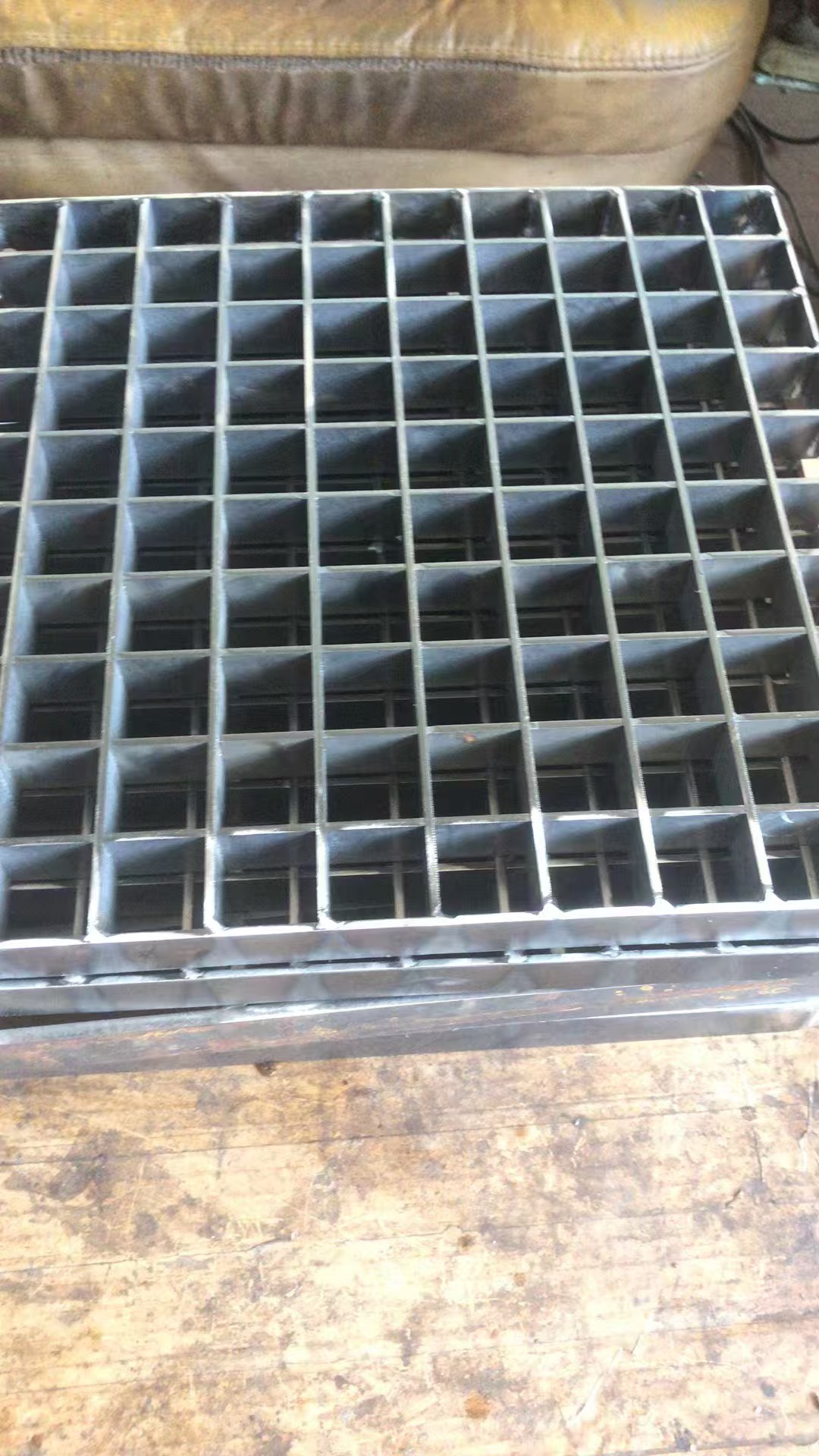
Reducing long-term maintenance and operational costs
Another major concern for B2B buyers is lifecycle cost. Many materials may seem cost-effective initially but result in higher maintenance expenses over time.
Plug-in steel grating helps reduce these hidden costs:
● Its stable structure minimizes deformation and damage over time
● The open-grid design prevents debris buildup and simplifies cleaning
● High-quality materials and finishes extend service life
● Individual panels can be replaced without dismantling entire sections
By reducing maintenance frequency and repair needs, it supports long-term cost control.
Material flexibility for different environments
Different projects require different material solutions, and plug-in steel grating offers flexibility to match various environments:
● Carbon steel for general indoor applications with controlled conditions
● Hot-dip galvanized steel for outdoor or humid environments requiring corrosion protection
● Stainless steel for high-end or highly corrosive environments such as chemical plants or coastal areas
This flexibility allows buyers to optimize both performance and budget according to project needs.
Key considerations when choosing plug-in steel grating
To fully benefit from plug-in steel grating, buyers should focus on practical selection criteria rather than just specifications:
● Match load requirements to actual usage conditions, avoiding overdesign or underperformance
● Select appropriate bar spacing to balance safety, drainage, and appearance
● Consider installation efficiency, especially for large-scale projects
● Evaluate long-term maintenance expectations rather than only initial cost
● Ensure compatibility with the overall project design and structure
Making decisions based on real usage scenarios leads to better outcomes than relying solely on technical data.
Why B2B buyers are shifting toward plug-in steel grating
More and more B2B buyers are choosing plug-in steel grating because it solves multiple project challenges at once:
● Reduces installation time and labor costs
● Improves consistency and overall project quality
● Eliminates common issues related to welding deformation
● Supports both functional and architectural requirements
● Lowers long-term maintenance and replacement expenses
This shift reflects a growing demand for materials that not only perform well but also simplify project management.
Conclusion
Plug-in steel grating is not just another type of grating—it is a solution designed to address real-world project pain points. By offering precise structure, easy installation, and long-term reliability, it helps B2B buyers overcome common challenges related to quality, efficiency, and cost control.
In projects where both performance and appearance matter, plug-in steel grating provides a balanced and practical choice. By focusing on actual project needs and lifecycle value, buyers can achieve better results, reduce risks, and ensure long-term success.
FAQ:
Q1: What problem does plug-in steel grating solve compared to traditional grating?
It eliminates welding deformation, improves dimensional accuracy, and reduces installation difficulties.
Q2: Is plug-in steel grating suitable for decorative applications?
Yes, its uniform and clean appearance makes it ideal for architectural and commercial projects.
Q3: Does it require less maintenance than welded grating?
Generally, yes. Its stable structure and open design reduce maintenance needs and cleaning frequency.
Q4: Can it be used in outdoor environments?
Yes, especially when treated with galvanization or made from stainless steel for corrosion resistance.
Post time: Apr-03-2026