
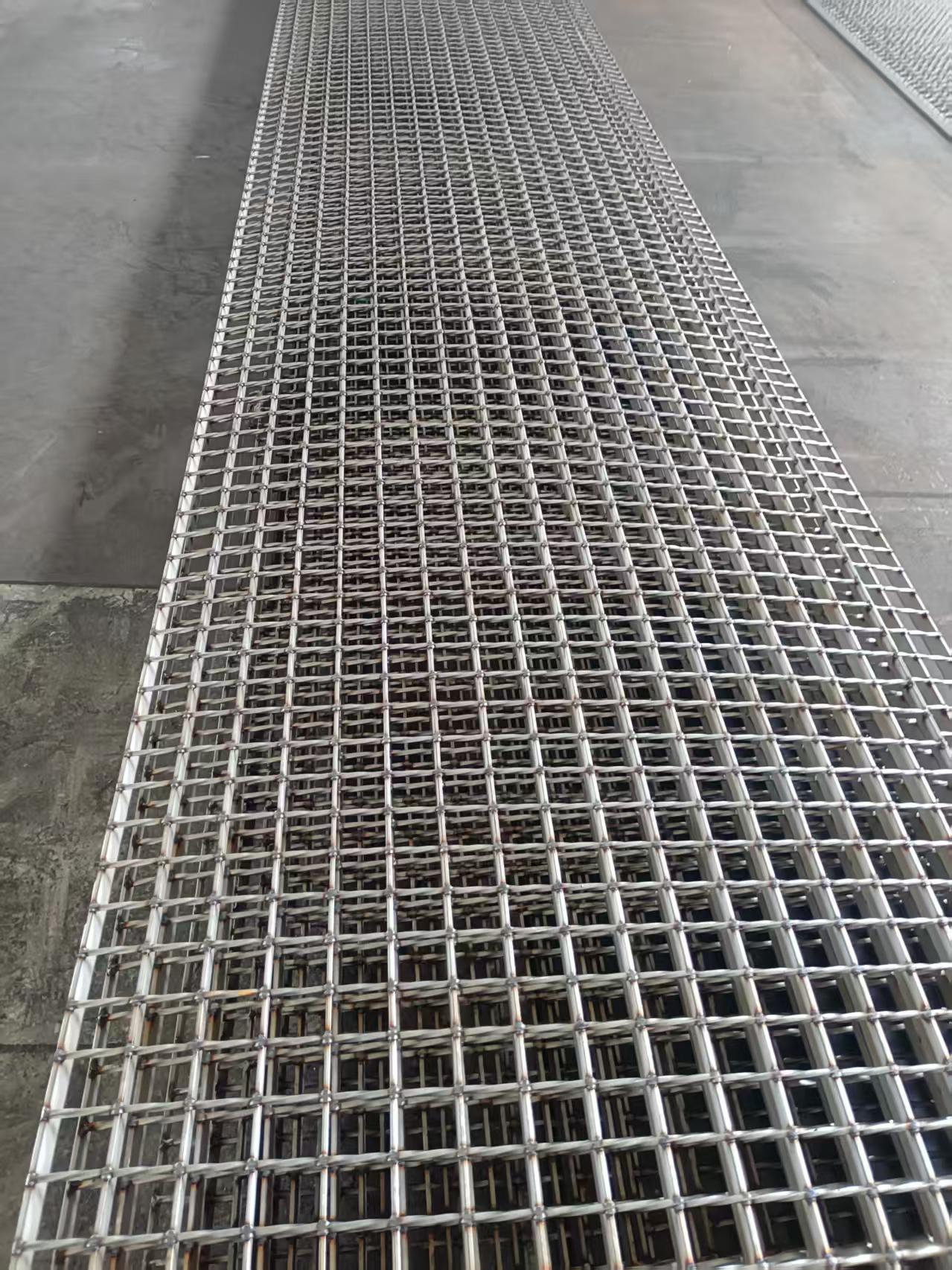
Plug-In Steel Grating uses interlocking steel bars to create an open-grid panel. The way these bars fit together affects grid uniformity, structural stability, installation accuracy, and performance under working loads. Unlike grating designs that rely primarily on welded intersections, plug-in structures depend on matching slots or notches to position crossing bars correctly.
How the Interlocking Structure Works
A plug-in steel grating panel consists of intersecting bars arranged in a regular pattern. Slots or notches allow the bars to fit together at their crossing points. Depending on the specific design, assembly may involve inserting or pressing the bars into position to create the intended grid.
The quality of these intersections affects how accurately the panel maintains its shape. When the slots match the corresponding bars, the grid can retain consistent spacing and alignment. Poorly matched components may create gaps, uneven intersections, or local deformation during assembly. This makes Plug-In Steel Grating particularly dependent on dimensional accuracy. The position and depth of each notch must correspond to the intended bar arrangement. If the dimensions vary across a panel, some intersections may fit correctly while others remain loose or require excessive force to assemble.
It is important to distinguish grid stability from overall load capacity. Interlocking helps maintain the relationship between crossing bars, but the panel’s structural performance also depends on material properties, bar dimensions, spacing, span, and installation details. These elements must be evaluated together rather than treating the connection method as the sole measure of quality.
Bar Fit and Grid Uniformity
Grid uniformity is one of the clearest indicators of assembly quality. When crossing bars fit correctly, the panel is more likely to maintain regular openings and consistent external dimensions. This matters when several panels must align across a platform, walkway, or equipment access area.
Inconsistent bar fit can create practical problems even when individual dimensional deviations appear small. Uneven intersections may affect the surface level, while irregular openings can make adjacent panels harder to align. If the outer dimensions vary, installers may need additional adjustments to fit the grating into its supporting frame.
- Notch dimensions: Width, depth, and position must match the corresponding bars and the specified assembly method.
- Bar consistency: Variations in thickness, width, or straightness can prevent uniform engagement at crossing points.
- Assembly alignment: Bars must be positioned correctly so that intersections form the intended grid without unnecessary distortion.
- Edge dimensions: The completed panel needs consistent external dimensions to fit its frame and connect with adjacent sections.
These details work together. Accurate notches cannot fully compensate for bent bars, and straight bars cannot guarantee a uniform grid if the slots are incorrectly positioned. Quality control should therefore consider both individual components and the assembled panel.
How Interlocking Relates to Load Performance
When a grating panel carries a load, its bars respond according to their orientation, dimensions, material properties, and support arrangement. The primary load-bearing bars generally span between supports and resist much of the applied load. Crossing bars help maintain the grid and interact with the main bars through the interlocking connections.
For Plug-In Steel Grating, the effectiveness of this arrangement depends on the specific connection design. The intersections must maintain the intended relationship between the bars, but this does not mean that the load is distributed equally in every direction. A common misconception is that a denser grid automatically provides greater load capacity. Smaller openings may change the surface characteristics and spacing of the bars, but load performance also depends on the dimensions and spacing of the load-bearing bars, the unsupported span, and the structural design of the complete panel.
Support conditions are especially important. Two panels with similar dimensions may perform differently if one spans a greater distance or has a different bearing arrangement. The orientation of the main bars relative to the supports also affects how the load is carried. Concentrated loads require particular attention because the force may act over a limited area rather than being distributed evenly across the panel. Where equipment, carts, or other heavy objects will pass over the grating, the design should account for the expected loading conditions.
Consequently, Plug-In Steel Grating should be assessed as a complete structural assembly. The interlocking connection is one part of the design, not a substitute for checking load requirements, support spacing, and the suitability of the finished panel.
Manufacturing Accuracy and Quality Inspection
Manufacturing accuracy determines whether the intended connection geometry can be reproduced consistently. Notches that vary in position or dimensions can prevent bars from fitting together correctly. Cutting defects, burrs, and local deformation may also interfere with assembly or affect the finished surface.
Assembly practices matter just as much. Components should be aligned and fitted using a method appropriate for the product design. Applying excessive force to compensate for an incorrect fit can damage the connection area or distort the grid. A panel that appears complete may still contain inconsistent intersections that require further inspection.
- Component inspection: Check bar dimensions, straightness, notch positions, and visible cutting defects before assembly.
- Assembly inspection: Confirm that the bars engage correctly and the grid remains aligned without unnecessary force.
- Finished-panel inspection: Examine external dimensions, opening consistency, surface alignment, and visible damage around intersections.
- Installation verification: Check panel orientation, bearing conditions, frame dimensions, and compatibility with the intended application.
Each stage addresses a different source of problems. Component inspection identifies manufacturing deviations, assembly inspection checks the fit between parts, and final inspection confirms the condition of the completed panel. Installation verification then determines whether the panel matches the actual site requirements. Inspection should also reflect the product’s intended use. Applications with stricter dimensional requirements may need more detailed checks than installations where minor variations do not affect fitting or function. Any applicable load-rating and safety requirements must be verified separately from visual quality.
Installation and Long-Term Service
Even a well-manufactured panel can perform poorly if installed incorrectly. The supporting frame must provide suitable bearing, and the main load-bearing bars must be oriented according to the design. Insufficient support or incorrect positioning can change the way loads act on the panel.
Panel dimensions are another important consideration. An oversized panel may be difficult to position, while an undersized one may leave unwanted gaps or insufficient edge support. Site cutting should not be treated as a routine solution to dimensional mismatches because modifications can affect bar continuity and edge integrity. Any proposed alteration should be reviewed against the product design.
Operating conditions also influence service life. Moisture, corrosive substances, temperature changes, and repeated loading may affect the steel or its connections. Material selection and surface protection should therefore reflect the environment in which the grating will be used.
During service, inspections should look for displaced bars, damaged intersections, corrosion, deformation, and changes in the supporting structure. Unusual movement or visible damage should be assessed before the affected area continues in use. Maintenance or replacement decisions should follow the product specifications and relevant safety requirements.
Application Requirements and Product Customization
Plug-In Steel Grating may be suitable for industrial walkways, access platforms, drainage covers, and other open-grid structures, provided the specific design meets the application’s requirements. Each use places different demands on the panel. Walkways may require consistent openings and a level surface, while equipment platforms may need closer attention to concentrated loads and support spacing.
Customized solutions can account for panel dimensions, bar arrangements, opening patterns, material requirements, and surface treatment. Confirming the installation layout, expected loads, environmental exposure, and dimensional tolerances before production helps align the grating design with actual operating conditions and reduces avoidable on-site adjustments.
Conclusion
The performance of Plug-In Steel Grating depends on the relationship between its interlocking bars and the complete installation. Accurate notches, consistent bar dimensions, correct assembly, suitable support, and appropriate load assessment all contribute to reliable performance. Evaluating these elements together helps ensure that the finished panel meets the practical requirements of its intended application.
FAQ
1. What makes plug-in steel grating different from welded grating?
Plug-in steel grating uses matching slots or notches to connect intersecting bars, while welded grating relies on welded intersections. The actual structural behavior depends on the design and specifications of each product.
2. Can incorrect notch dimensions affect installation?
Yes. Incorrect notch dimensions or positions can prevent bars from fitting together properly, create uneven intersections, and make it more difficult to achieve the required panel dimensions.
3. Is plug-in steel grating suitable for heavy loads?
It can be suitable when the specific design is rated for the expected loads and installed with appropriate support. Bar dimensions, span, material properties, and connection design must be evaluated before use.
4. What information is useful when specifying plug-in steel grating?
Important details include panel dimensions, expected loads, support spacing, opening requirements, environmental conditions, and any relevant installation constraints. These details help establish a specification suited to the application.
Post time: Oct-27-2026