
In chemical plants, safety, corrosion resistance, and operational efficiency are paramount. Industrial steel grating for chemical plants provides a robust, long-lasting solution for walkways, platforms, mezzanines, and stair treads. Its open-grid design allows liquids, chemicals, and debris to pass through, reducing slip hazards and simplifying maintenance. For B2B buyers, selecting the right type and material of steel grating is critical to ensure compliance, safety, and long-term reliability.
Why steel grating is essential in chemical plants
Chemical plant environments often involve corrosive substances, wet conditions, and heavy equipment. Steel grating offers:
● High structural strength to support machinery and personnel
● Corrosion-resistant surfaces to withstand chemical exposure
● Anti-slip properties to prevent accidents in wet or hazardous areas
● Open design for effective drainage, ventilation, and visibility
These characteristics make industrial steel grating indispensable for platforms, maintenance areas, and access walkways in chemical processing facilities.
Types of industrial steel grating suitable for chemical plants
Choosing the right grating type and material is crucial for safety and durability:
● Stainless steel grating: Excellent corrosion resistance, ideal for areas exposed to acids, alkalis, or other chemicals.
● Galvanized steel grating: Hot-dip galvanized surfaces provide protection against moisture and moderate chemical exposure.
● Fiberglass reinforced plastic (FRP) grating: Non-conductive, corrosion-proof, and lightweight; suitable for highly corrosive or wet areas.
● Welded or pressed steel grating: Provides high load-bearing capacity for platforms and heavy-duty walkways.
Each type can be customized in bar spacing, thickness, and surface treatment to meet specific chemical plant requirements.
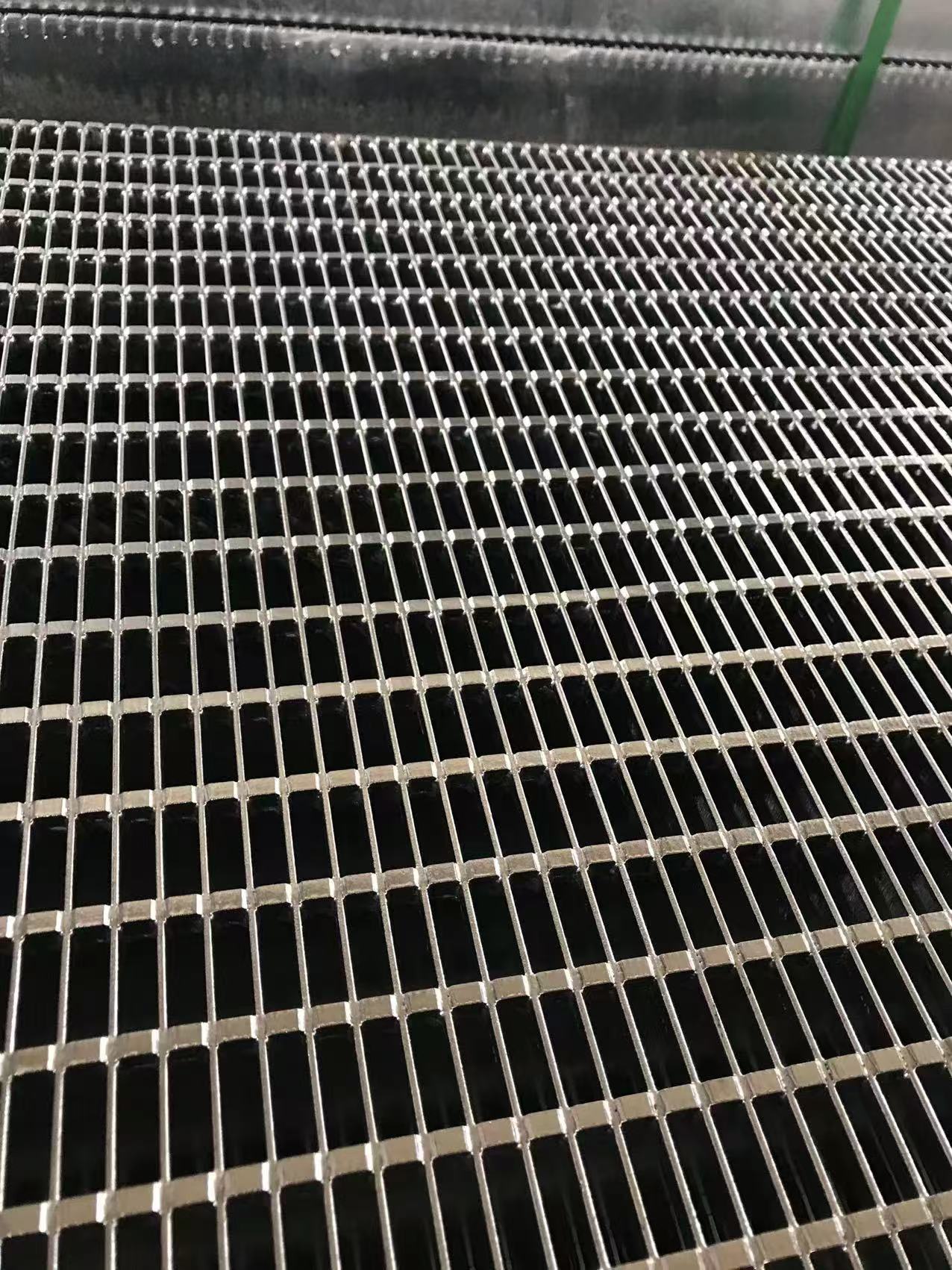
Benefits of industrial steel grating in chemical facilities
Industrial steel grating provides multiple advantages for chemical plants:
● Enhanced safety: Anti-slip surfaces reduce accidents caused by liquids or chemical spills.
● Corrosion resistance: Materials and coatings protect against acids, alkalis, and moisture.
● High load-bearing capacity: Supports personnel, equipment, and maintenance machinery.
● Low maintenance: Open design prevents chemical accumulation and simplifies cleaning.
● Versatility: Can be installed in walkways, platforms, stair treads, mezzanines, and drainage covers.
By choosing the appropriate grating, chemical plants can ensure a safer workplace while minimizing downtime and maintenance costs.
Applications in chemical plants
Industrial steel grating is widely applied in various chemical plant environments:
● Walkways and catwalks: Provides safe passage for personnel across processing areas.
● Maintenance platforms and mezzanines: Supports heavy equipment and allows easy monitoring.
● Stair treads: Ensures secure footing in areas with chemical spills or wet conditions.
● Drainage and trench covers: Facilitates chemical runoff management and prevents standing liquid hazards.
● Outdoor or semi-outdoor process areas: Galvanized or FRP grating resists corrosion from weather and chemicals.
Proper material selection and installation ensure long-term performance and compliance with industrial safety regulations.
Installation and maintenance considerations
For chemical plant applications, installation and maintenance are critical:
● Accurately measure platform dimensions to ensure proper fit and load distribution.
● Use bolted, welded, or clip-lock systems suitable for chemical exposure.
● Inspect regularly for corrosion, wear, or structural damage, especially in areas exposed to harsh chemicals.
● Maintain clean surfaces and proper drainage to prevent slip hazards.
● Follow manufacturer guidelines for load limits and chemical compatibility.
Adhering to these practices ensures safety, reliability, and reduced maintenance costs over the grating’s service life.
Conclusion
Industrial steel grating is an essential component for chemical plants, providing safe, durable, and corrosion-resistant surfaces. By selecting the right material, type, and installation method, B2B buyers can enhance safety, reduce maintenance costs, and ensure compliance with chemical industry standards. Whether for walkways, platforms, stair treads, or drainage areas, industrial steel grating delivers long-lasting performance and operational reliability in harsh chemical environments.
FAQ
Q1: Why is stainless steel grating preferred in chemical plants?
Stainless steel provides excellent corrosion resistance, making it suitable for areas exposed to acids, alkalis, and other corrosive substances.
Q2: Can industrial steel grating be customized for chemical plants?
Yes, grating can be customized in size, thickness, bar spacing, and surface treatment to meet specific plant requirements.
Q3: How is industrial steel grating maintained in chemical facilities?
Regular inspection, cleaning, and monitoring for corrosion or wear are essential to maintain safety and longevity.
Q4: Can FRP grating be used instead of steel in chemical environments?
Yes, FRP grating is corrosion-proof, lightweight, and non-conductive, making it suitable for highly corrosive or wet areas.
Post time: Jan-13-2026