
Industrial stair systems are an essential part of many facilities, providing safe access to elevated platforms, equipment areas, maintenance spaces, and production zones. Unlike ordinary stairs, industrial stair treads need to withstand frequent use, heavy loads, moisture, oil contamination, and changing environmental conditions. Therefore, selecting the right stair tread material is important for ensuring safety, durability, and long-term performance.
Stair treads steel bar gratings are widely used in industrial environments because they combine strong load-bearing capacity, effective drainage, and slip-resistant performance. However, different applications have different requirements. Factors such as load capacity, material selection, surface design, and installation conditions should be carefully considered to ensure the stair system performs reliably throughout its service life.
Why Are Stair Treads Steel Bar Gratings Suitable for Industrial Applications?
Stair treads steel bar gratings are usually manufactured by connecting bearing bars and cross bars to create a strong open-grid structure. Compared with traditional solid stair steps, this design allows water, dust, and small debris to pass through, helping reduce surface accumulation and improve workplace safety.
Industrial environments often involve complex working conditions. Maintenance workers may need to carry tools while using stairs, production areas may have liquid splashes, and outdoor facilities may experience rain, humidity, and temperature changes. Under these conditions, stair treads must provide not only sufficient strength but also reliable slip resistance and corrosion protection.
The main advantages of steel bar grating stair treads include:
- Strong load-bearing performance: Properly designed bearing bars can support regular foot traffic and industrial maintenance activities.
- Excellent drainage capability: The open-grid structure allows liquids to pass through quickly and helps reduce standing water.
- Improved slip resistance: Serrated or textured surfaces increase friction between footwear and the tread.
- Convenient maintenance: The open structure makes inspection and cleaning easier in many applications.
Because of these characteristics, steel bar grating stair treads are commonly used in factories, wastewater treatment plants, energy facilities, warehouses, and outdoor industrial structures.
Key Factors to Consider When Choosing Stair Treads Steel Bar Gratings
Load Capacity and Structural Design
Load capacity is one of the most important factors affecting the safety of stair treads steel bar gratings. Different applications create different loading conditions. For example, a staircase used only for pedestrian access requires different specifications compared with a maintenance staircase where workers frequently carry tools or equipment.
The structural performance of steel bar grating stair treads depends on several factors:
- Bearing bar height and thickness;
- Support spacing and tread span;
- Cross bar design;
- Expected pedestrian and equipment loads.
If the load capacity is insufficient, long-term use may cause deformation, excessive deflection, or structural fatigue. Therefore, load requirements should be evaluated before selecting the product rather than focusing only on initial cost.
Material Selection and Corrosion Resistance
The operating environment has a direct impact on the material selection of stair treads steel bar gratings. Moisture, chemicals, and outdoor exposure can affect durability and service life.
Common material options include:
- Carbon steel: Provides good strength and cost efficiency for general industrial applications.
- Galvanized steel: The zinc coating improves corrosion resistance and makes it suitable for outdoor and humid environments.
- Stainless steel: Provides higher corrosion resistance for demanding environments such as chemical processing areas or locations with strict cleanliness requirements.
For example, wastewater treatment facilities often require better corrosion protection because of constant exposure to moisture. In chemical environments, material selection should be based on the specific corrosive substances present.
Surface Design and Slip Resistance
The surface design of stair treads plays an important role in workplace safety. Industrial stairs may be exposed to rainwater, oil, cleaning liquids, or dust, which can reduce surface traction. Serrated steel bar grating stair treads feature a toothed surface design that increases contact points between footwear and the tread. This structure provides better grip and is especially suitable for wet or slippery environments.
However, slip resistance depends on more than surface design. Factors such as workplace conditions, cleaning frequency, and footwear type should also be considered when selecting the most suitable tread design.
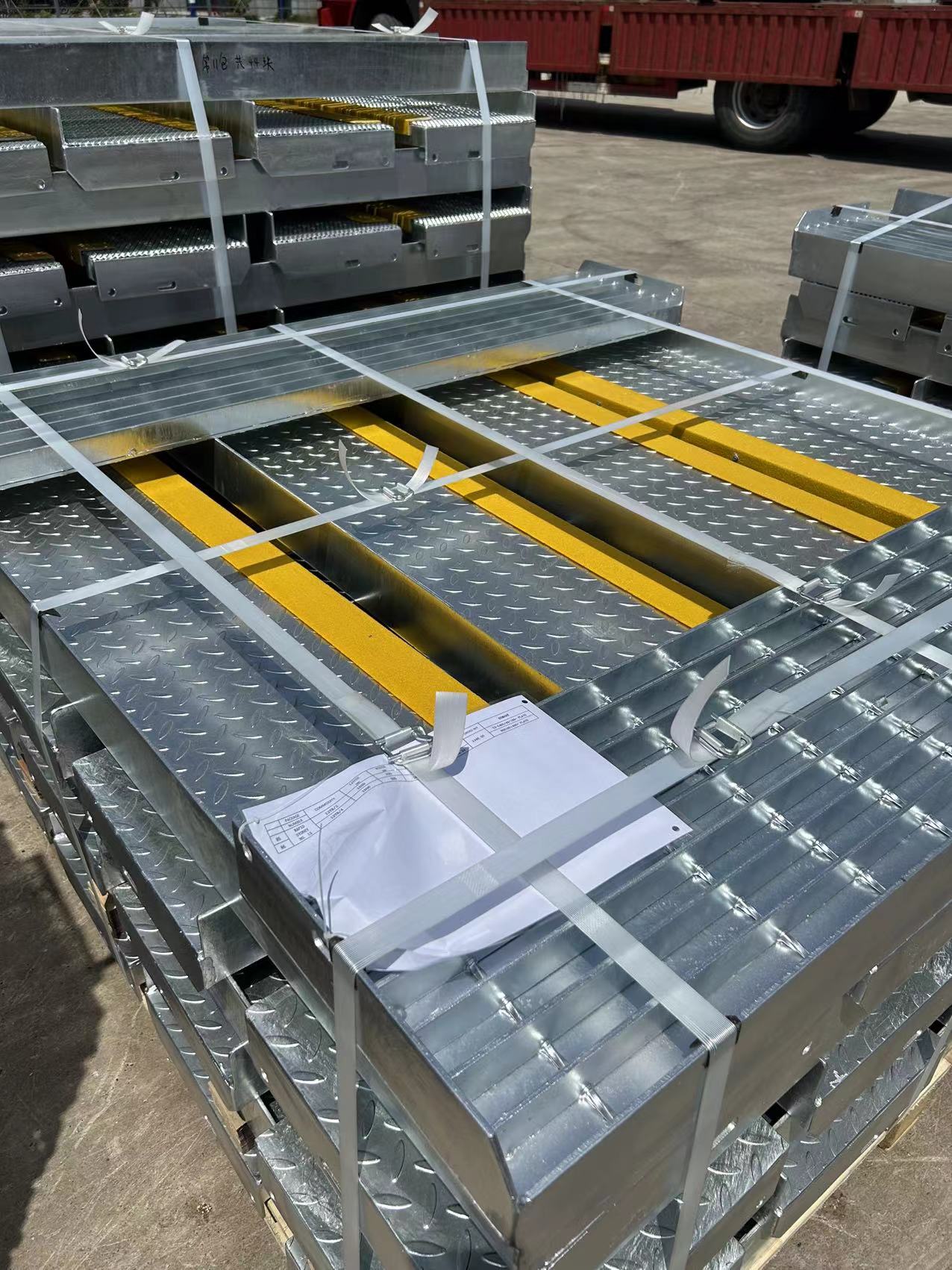
Applications of Stair Treads Steel Bar Gratings in Industrial Facilities
Due to their strength, drainage performance, and durability, steel bar grating stair treads are suitable for a wide range of industrial applications. In manufacturing facilities, these stair treads are commonly used for production platforms, equipment access areas, and elevated working spaces. These locations often require frequent movement while maintaining structural stability.
In wastewater treatment plants and water-related facilities, the environment is usually wet and demanding. The open structure of steel grating helps improve drainage and reduce slippery conditions caused by water accumulation. In energy facilities, warehouses, and outdoor industrial structures, steel bar grating stair treads provide reliable access solutions because they can withstand demanding conditions while requiring relatively low maintenance.
Typical applications include:
- Industrial equipment platforms;
- Maintenance walkways and access stairs;
- Wastewater treatment facilities;
- Warehouse platforms;
- Outdoor steel structures.
How Does Installation Affect Performance?
Even high-quality stair treads steel bar gratings require proper installation to achieve their expected performance. The tread dimensions, support structure, and fixing method must match the overall stair design to prevent movement or uneven surfaces during use.
During installation, attention should be paid to the bearing direction, support position, and connection method. For areas requiring regular maintenance, removable fixing methods may provide easier replacement. For permanent structures, stronger connections may be preferred to improve stability. After installation, the stair system should be inspected to ensure that tread alignment, fixing points, and overall structural stability meet the required safety standards.
How to Maintain Stair Treads Steel Bar Gratings?
Although steel bar grating stair treads are designed for durability, regular maintenance can help extend their service life. This is especially important in environments with high humidity, corrosion risks, or heavy daily traffic.
Recommended maintenance practices include:
- Removing oil, dust, and debris from the tread surface;
- Checking bearing bars for corrosion or deformation;
- Inspecting fixing components for looseness;
- Repairing damaged protective coatings when necessary.
Proper maintenance not only helps preserve product performance but also reduces the need for frequent replacement and repairs.
Choosing the Right Stair Tread Solution
For industrial projects that require safe access, stable load capacity, and long-term durability, selecting the right stair tread design is essential. We specialize in steel grating design, manufacturing, and installation, providing stair treads steel bar gratings suitable for different industrial applications. By considering load requirements, material selection, surface design, and installation conditions, we can help develop solutions that better match specific project requirements.
Conclusion
Stair treads steel bar gratings are widely used in industrial access systems because of their strong load capacity, drainage performance, slip resistance, and durability. However, choosing the right product requires careful consideration of the working environment, structural requirements, material type, surface treatment, and installation conditions. A properly selected stair tread solution can improve workplace safety, reduce maintenance requirements, and provide reliable performance over many years. By evaluating actual application needs before installation, industrial facilities can create safer and more efficient access systems.
Frequently Asked Questions
1. Can stair treads steel bar gratings be used in outdoor environments?
Yes. With suitable surface treatment, steel bar grating stair treads can be used for outdoor platforms, equipment access stairs, and industrial structures. Material and coating selection should depend on climate conditions and corrosion exposure.
2. Do steel bar grating stair treads require a special supporting structure?
Yes. They usually need to be installed on a properly designed stair framework. Support spacing, fixing methods, and tread dimensions should be determined according to structural requirements.
3. What factors affect the service life of stair treads steel bar gratings?
Service life is mainly affected by material type, surface treatment, operating environment, maintenance frequency, and loading conditions. Proper material selection and regular inspection can significantly improve durability.
4. Why are steel bar grating stair treads preferred over solid steel steps in industrial areas?
Steel bar grating stair treads provide better drainage and ventilation while reducing water accumulation on the surface. These advantages make them more suitable for many industrial environments where safety and maintenance efficiency are important.
Post time: Oct-13-2026