
Press-welded steel grating is widely used in industrial platforms, walkways, stair treads, drainage covers, and other applications that require an open structural surface. Its performance depends not only on the dimensions of the steel bars but also on how securely the individual components are joined during manufacturing. The welding process connects the bearing bars and cross bars into a unified panel. If the connections are inconsistent or defective, the finished grating may not perform as intended under operational loads.
How Is Press-Welded Steel Grating Manufactured?
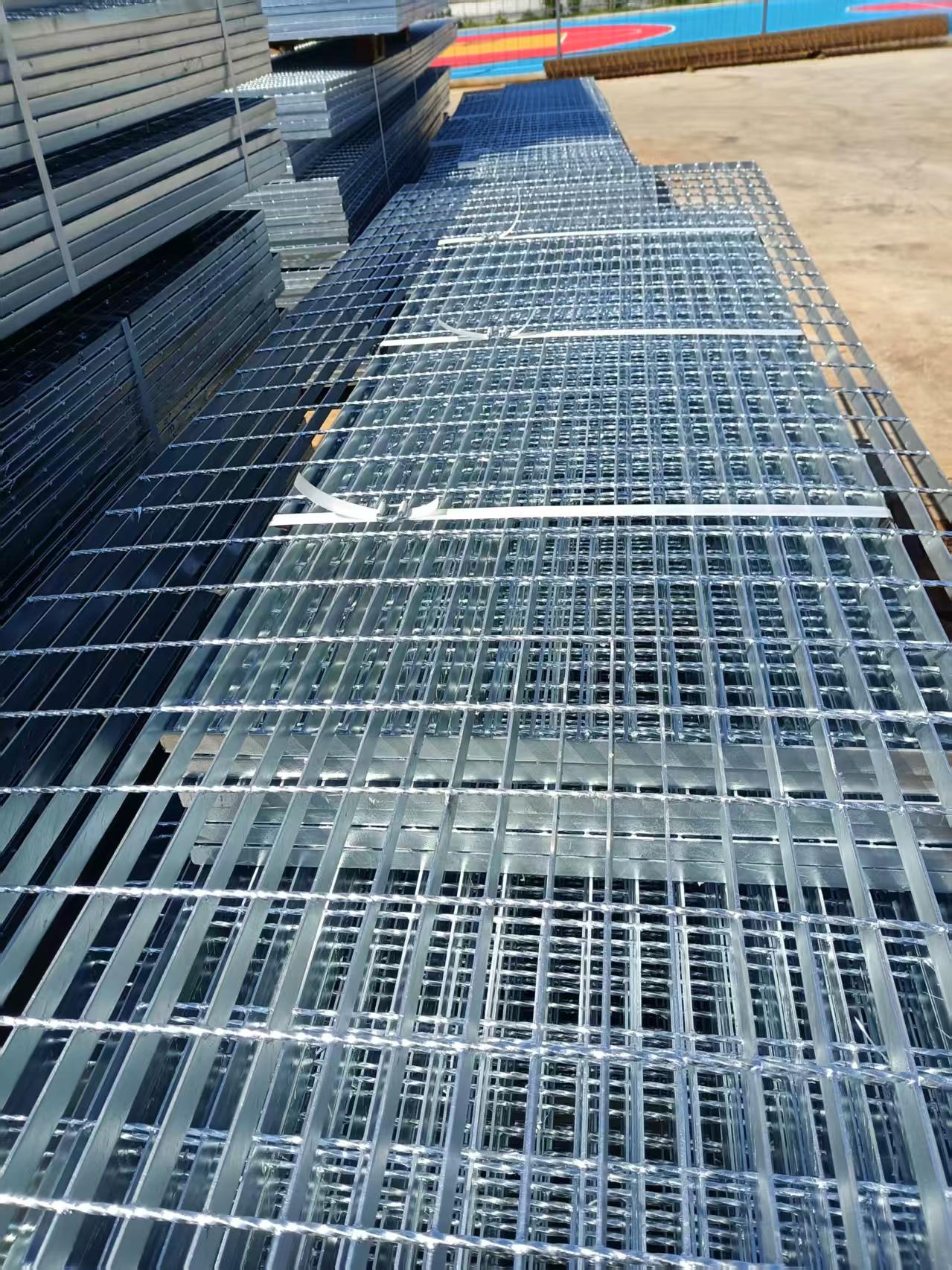
Press-welded steel grating is generally manufactured by placing cross bars across parallel bearing bars and joining the intersections through a controlled pressure-resistance welding process. Heat generated by electrical resistance, combined with applied pressure, forms connections between the intersecting steel components. The bearing bars primarily carry the applied loads and transfer them to the supporting structure. Cross bars connect the bearing bars, maintain their spacing, and help the panel retain its intended grid arrangement. Although these components perform different functions, they must work together as a stable assembly.
During production, the position of each bar, the alignment of the panel, and the consistency of the welding operation influence the finished product. Inadequate joining may leave weak connections, while inconsistent positioning can affect grid spacing and panel dimensions. The objective is not simply to join individual bars. It is to produce a panel with consistent geometry and dependable connections that suit its intended application. This requires appropriate equipment settings, accurate material positioning, and quality checks throughout manufacturing.
Why Does Welding Quality Matter for Structural Performance?
The connection between bearing bars and cross bars affects how the grating maintains its structure during handling, installation, and service. While bearing bars provide the main load-carrying capacity, the welded intersections help preserve the arrangement of the panel and resist unwanted movement between components.
When connections are properly formed, the grating is more likely to retain its intended configuration under normal service conditions. Poorly formed welds, by contrast, may allow local movement, reduce connection reliability, or contribute to premature damage under repeated use.
- Connection consistency: Welds should be formed consistently across the panel. Significant differences between intersections may indicate unstable production conditions and create localized weak points.
- Bar alignment: Bearing bars and cross bars must remain correctly positioned during welding. Misalignment can produce uneven openings, affect panel dimensions, and complicate installation.
- Connection integrity: Each intersection should form an appropriate bond without unacceptable defects. A connection that appears acceptable externally may still require verification through suitable inspection methods.
- Panel stability: The combined effect of welding and positioning determines whether the finished grating maintains its intended shape during handling and installation.
These factors are especially relevant when panels are used across elevated platforms or industrial walkways. However, good welding alone does not establish the load capacity of a panel. Bearing bar dimensions, support span, steel properties, loading conditions, and installation details must also be considered.
What Manufacturing Problems Can Affect Welded Connections?
Welding quality can be affected by equipment condition, process settings, material positioning, and production consistency. Understanding these potential problems helps explain why inspection should extend beyond the appearance of the finished panel.
Insufficient or inconsistent welding conditions may produce connections that do not achieve the required integrity. Excessive or poorly controlled heat can also affect the local material and the appearance of the welded intersection. The acceptable process window depends on the materials, component dimensions, equipment, and applicable production requirements. Positioning errors present another challenge. If cross bars shift before or during welding, the resulting panel may have irregular openings or inconsistent spacing. Such deviations can affect the fit between adjacent panels and make it more difficult to align the grating with its supporting structure.
Material condition also matters. Variations in surface cleanliness, steel dimensions, or component preparation may influence process stability. For this reason, manufacturers need to control both the welding operation and the condition of incoming materials.
Typical production checks may include:
- Before welding: Verify material dimensions, component positioning, equipment condition, and relevant process settings.
- During welding: Monitor production stability and check whether bar alignment and grid spacing remain consistent.
- After welding: Examine panel dimensions, visible connection defects, deformation, and the overall condition of the finished assembly.
- When required: Apply suitable additional inspection or testing to verify connection integrity and compliance with specified acceptance criteria.
The appropriate inspection method depends on the product specification, applicable standards, and intended service conditions. Visual examination is useful for identifying obvious problems, but it cannot establish every aspect of weld integrity on its own.
How Does Welding Consistency Affect Installation?
Manufacturing accuracy becomes particularly important when steel grating panels must fit a predefined platform layout. Even when individual bars are adequately joined, dimensional variations can create difficulties during installation.
For example, inconsistent cross-bar spacing may produce a visibly irregular grid. Panel distortion can affect how the grating sits on its supports, while inaccurate overall dimensions may create unexpected gaps or alignment problems at panel joints. These issues can increase the need for on-site adjustments. Cutting or modifying a finished panel may then introduce additional work and require renewed assessment of its structural suitability, particularly if load-carrying bearing bars are affected.
For Press-Welded Steel Grating, consistent welding and accurate panel fabrication should therefore be treated as related quality requirements. Reliable connections help maintain the assembly, while dimensional control ensures that the panel can be installed according to the intended layout. This relationship also matters when grating panels are used alongside stair treads, drainage systems, equipment bases, or other prefabricated components. Correct dimensions and predictable panel geometry make coordination easier and reduce the likelihood of installation conflicts.
How Should Welding Quality Be Evaluated for Different Applications?
For platforms and walkways, the assessment should consider panel dimensions, bearing bar orientation, support spacing, and the integrity of welded intersections. The grating must also be secured correctly after installation. Reliable welds cannot compensate for insufficient support or unsuitable fastening.
For drainage covers and other panels exposed to repeated handling, dimensional stability and connection durability may be particularly important. Where panels are exposed to vibration, impact, or other demanding service conditions, the design should account for those conditions rather than relying on general assumptions about welded strength.
When evaluating Press-Welded Steel Grating, project requirements should define the relevant dimensions, loading criteria, material specifications, and acceptable manufacturing tolerances. Inspection records and appropriate test results can then help demonstrate whether the finished product meets those requirements. It is also important to distinguish between appearance and performance. A uniform-looking panel may still require further verification, while minor cosmetic differences do not automatically indicate structural failure. Acceptance should be based on defined technical criteria rather than visual impressions alone.
Customized Press-Welded Steel Grating Solutions
Different industrial applications require different combinations of panel dimensions, bearing bar specifications, grid spacing, and support arrangements. We provide steel grating solutions for varied project requirements, with attention to manufacturing consistency, dimensional accuracy, connection quality, and installation compatibility. Confirming the intended application and technical requirements before production helps align the finished panels with the conditions in which they will be used.
Conclusion
The welding process plays an important role in the performance of press-welded steel grating by joining bearing bars and cross bars into a stable assembly. Consistent connections, accurate positioning, controlled manufacturing conditions, and appropriate inspection help maintain panel integrity and dimensional accuracy. However, overall performance also depends on bar dimensions, support span, loading conditions, and installation quality. Considering these factors together provides a more reliable basis for evaluating steel grating suitability in industrial applications.
FAQs
1. Is press-welded steel grating suitable for heavy-duty applications?
It can be suitable when the bearing bar dimensions, panel span, material properties, and support arrangement are designed for the required loads. The welding method alone does not determine whether a panel is suitable for heavy-duty service.
2. Can weld defects always be identified through visual inspection?
No. Visual inspection can identify obvious defects, misalignment, and surface irregularities, but some connection problems may require additional testing. The inspection approach should follow the applicable specification and acceptance criteria.
3. Does a stronger welded connection automatically mean a higher load capacity?
No. Load capacity depends on the complete panel design, including bearing bar dimensions, span, steel properties, support conditions, and loading type. Connection quality is important, but it is only one part of the assessment.
4. What information should be confirmed before manufacturing press-welded steel grating?
Important details include panel dimensions, bearing bar size and spacing, cross-bar spacing, material requirements, loading conditions, support locations, and applicable standards. Confirming these details in advance helps reduce dimensional errors and installation problems.
Post time: Oct-22-2026