
Outdoor handrails are exposed to rain, humidity, temperature changes, airborne pollutants, and repeated physical contact. Although hot-dip galvanizing provides a protective zinc coating, the long-term durability of a handrail system also depends on how its ends are designed, installed, and maintained. Termination points deserve particular attention because they can contain exposed edges, joints, gaps, or surfaces where moisture collects.
A well-designed Hot-Dip Galvanized Handrail Termination helps complete the handrail assembly while supporting corrosion protection, safe use, and a consistent appearance. Understanding how these components interact with the surrounding structure makes it easier to identify potential problems before they affect the entire installation.
Why Handrail Terminations Need Special Attention Outdoors
Handrail ends may appear to be minor components, but their position and geometry can influence how the entire system performs. Unlike long, uninterrupted rail sections, termination points often involve changes in shape, connections, or transitions between different components. These details can create locations where water remains after rainfall or where protective coatings are more vulnerable to damage.
Moisture exposure alone does not necessarily cause rapid deterioration. The greater concern is repeated wetting combined with conditions that prevent surfaces from drying properly. Dirt, leaves, road salt, and other contaminants may accumulate around joints or recessed areas, prolonging moisture exposure and increasing the risk of localized corrosion.
The surrounding environment also matters. A handrail installed beside a coastal walkway may face salt-laden air, while one near a roadway may encounter de-icing salts and vehicle pollutants. Industrial outdoor locations can introduce additional airborne contaminants. These conditions influence how frequently the handrail should be inspected and whether additional protective measures are necessary.
The termination itself must also suit the application. A simple end cap, a returned rail end, and a connection fitting serve different structural and practical purposes. Their suitability depends on the handrail design, installation method, and applicable safety requirements. Treating every termination as an interchangeable finishing piece can create problems that become apparent only after installation.
How Termination Geometry Affects Water Exposure
The shape of a termination influences how rainwater moves across the handrail and whether moisture can escape from enclosed or partially enclosed areas. A smooth, accessible surface is generally easier to clean and inspect than a complicated joint with narrow gaps. However, the appropriate geometry depends on the actual component design and the way it connects to the rail.
Water can collect around downward-facing openings, recessed connections, poorly fitted caps, and irregular joints. When moisture remains trapped, the affected area may stay wet long after exposed surfaces have dried. If contaminants are also present, the conditions can become more aggressive.
When assessing a Hot-Dip Galvanized Handrail Termination, consider the following details:
- Drainage and drying: The design should avoid unnecessary water traps. Where hollow sections or enclosed fittings are involved, drainage and ventilation arrangements must be compatible with the component design and galvanizing requirements.
- Joint accessibility: Connections should allow practical inspection and cleaning. Narrow gaps that collect dirt or moisture can make early corrosion more difficult to detect.
- Surface transitions: Abrupt edges, recesses, and overlapping parts deserve attention because they may retain deposits or complicate coating inspection.
- Fit between components: A termination that fits the specified rail profile can reduce unintended gaps and improve the consistency of the finished assembly.
These considerations should be reviewed during design and installation rather than left entirely to routine maintenance. Once a handrail has been fixed in place, correcting an unsuitable joint or inaccessible drainage point may require partial disassembly.
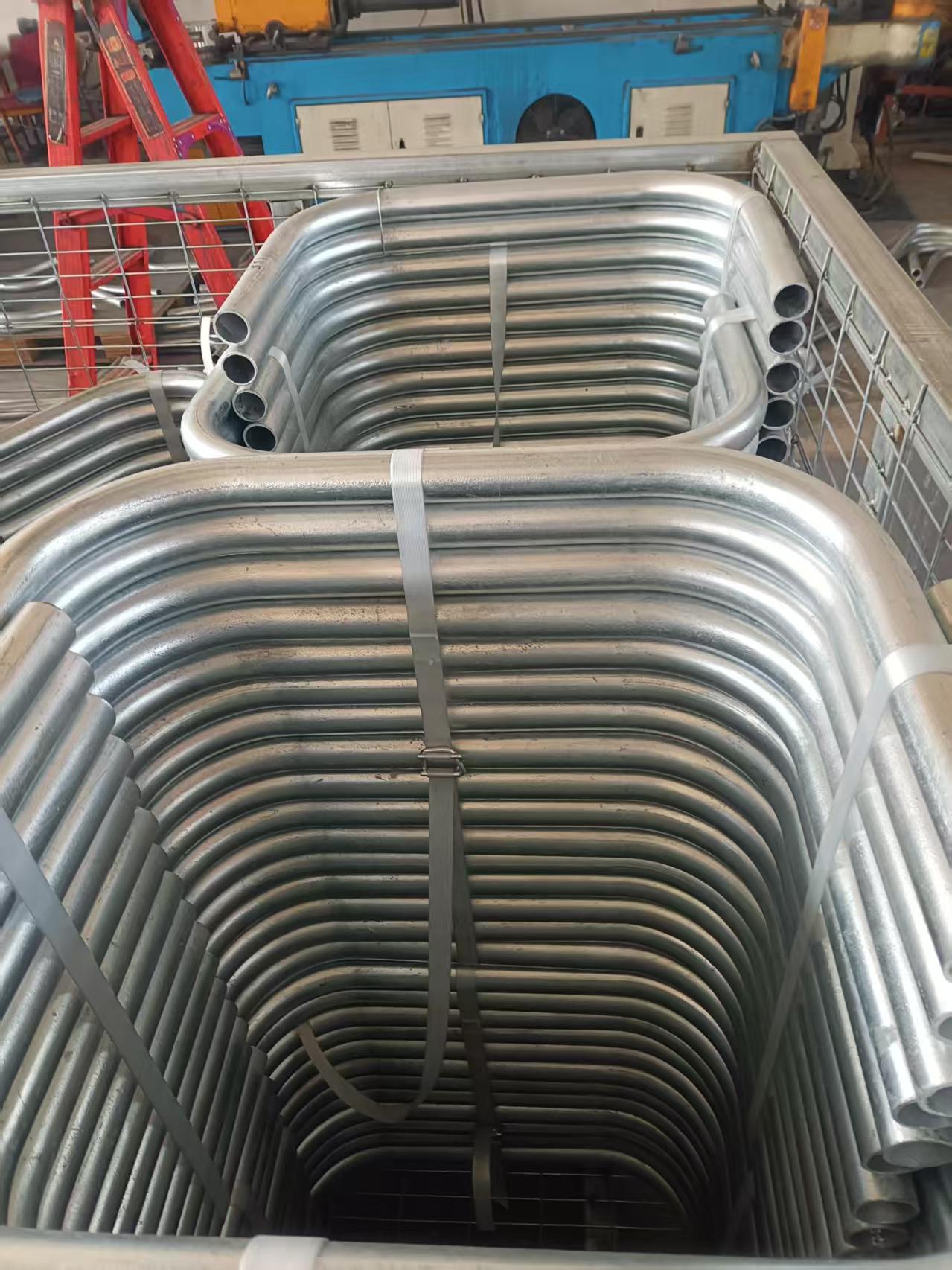
Protecting the Zinc Coating During Installation
Hot-dip galvanizing protects steel by forming a zinc coating that acts as a barrier and provides sacrificial protection when the steel is exposed. Nevertheless, the coating is not immune to mechanical damage. Cutting, drilling, grinding, welding, or forceful handling can affect the protected surface, particularly when these operations take place after galvanizing.
For this reason, the installation sequence matters. Where possible, components should be fabricated and prepared before the galvanizing process, according to the applicable design and production requirements. This approach can reduce the need for field modifications that disturb the coating.
A Hot-Dip Galvanized Handrail Termination should be checked before installation to identify visible coating damage, deformation, poor fit, or defects that could interfere with assembly. The component should also be handled and stored in a way that avoids unnecessary abrasion and prolonged contact with wet, contaminated materials.
If cutting, drilling, welding, or another modification is unavoidable, the affected area should be assessed and repaired using a method permitted by the relevant specification. The repair method depends on the extent of the damage, the intended service environment, and applicable project requirements. Ordinary paint should not automatically be treated as an equivalent replacement for a specified galvanizing repair system.
Installation practices also influence the finished result:
- Confirm compatibility: Check that the termination matches the intended rail profile, connection arrangement, and supporting structure before assembly begins.
- Avoid unnecessary fieldwork: Verify dimensions and connection positions in advance to reduce cutting, drilling, or grinding after coating.
- Inspect contact areas: Examine joints, fasteners, and modified surfaces for visible damage or incomplete assembly.
- Follow the specified repair procedure: Address coating damage before the component enters service, using an approved method suitable for the application.
These steps help preserve the protective system while reducing avoidable rework. They also make it easier to distinguish installation-related defects from deterioration that develops during service.
Maintenance That Extends Outdoor Service Life
Even a properly galvanized handrail requires periodic inspection. Outdoor exposure changes over time, and small defects may develop around connections, fasteners, or areas subject to repeated contact. A maintenance routine should therefore examine both the visible condition of the termination and its relationship with the surrounding handrail.
Inspection frequency should reflect the site environment, exposure severity, usage, and project maintenance requirements. Coastal installations, locations exposed to de-icing salts, and areas with persistent moisture may require closer attention than sheltered environments. There is no single inspection interval suitable for every installation.
During routine checks, look for red rust, damaged or missing coating, accumulated debris, loose connections, deformation, and signs of water retention. Red rust may indicate that the underlying steel is exposed, although the cause and extent should be confirmed before deciding on corrective work. White corrosion products on zinc surfaces should also be assessed in context rather than automatically treated as proof that the component has failed.
Cleaning can help remove contaminants that would otherwise remain on the surface. Use methods compatible with the galvanized coating and avoid aggressive abrasives that may remove protective material. Where damage is found, determine whether cleaning, a coating repair, a connection adjustment, or component replacement is appropriate.
Maintenance records are useful for identifying recurring problems. If the same termination repeatedly collects water or develops corrosion, simply repairing the surface may not resolve the underlying issue. The joint geometry, drainage arrangement, exposure conditions, or installation details may also need to be reviewed.
Choosing Suitable Handrail Termination Solutions
For outdoor projects, the most appropriate termination is one that matches the handrail system, installation conditions, and expected maintenance requirements. Component compatibility, coating condition, drainage, and access for inspection should be considered together rather than evaluated separately.
A carefully specified Hot-Dip Galvanized Handrail Termination can help create a cleaner finished assembly and support long-term corrosion management. Reviewing these details before installation also makes it easier to identify suitable component configurations for walkways, platforms, stairs, and other outdoor access areas. The final selection should follow the project drawings, relevant safety requirements, and the intended service environment.
Conclusion
Outdoor handrail durability depends on more than the presence of a zinc coating. Termination geometry, moisture management, installation practices, and ongoing inspection all influence long-term performance. By addressing these details early, project teams can reduce avoidable coating damage, identify corrosion risks, and maintain a reliable handrail assembly throughout its service life.
FAQs
1. Can a galvanized handrail termination be used in coastal environments?
Yes, provided the component and protective system are suitable for the expected salt exposure. Environmental conditions should guide specification, inspection frequency, and any additional protection required.
2. Does every handrail termination need to be sealed?
No. Sealing depends on the component design and its intended function. An unsuitable seal can interfere with drainage or create moisture traps, so the specified design should be followed.
3. What should be checked when replacing a damaged termination?
Confirm the replacement’s dimensions, connection compatibility, coating condition, and suitability for the installation environment. Also inspect the adjacent rail and supporting connections for related damage.
4. Is surface discoloration always a sign that a termination needs replacement?
No. Discoloration may have different causes and does not necessarily indicate structural failure. The surface should be inspected to determine whether the zinc coating remains intact and whether corrective action is needed.
Post time: Oct-29-2026