
Heavy-duty hot-dip galvanized serrated steel grating is commonly used in industrial platforms, equipment access areas, walkways, and other locations where load support, surface grip, and corrosion protection are important. However, choosing a suitable product involves more than selecting a heavy-duty panel with a galvanized finish. The panel must also match the actual loading conditions, support structure, installation layout, and service environment.
An unsuitable specification can lead to unnecessary costs, installation difficulties, or performance problems during operation. Understanding how these factors work together helps users select Heavy-Duty Hot-Dip Galvanized Serrated Steel Grating that meets the practical requirements of their projects.
Identify the Actual Load Requirements Before Selection
Load conditions are the starting point for selecting heavy-duty steel grating. Different industrial areas may have significantly different requirements, even when they use panels of similar dimensions.
- Uniformly distributed loads: Weight is spread across a relatively large surface, such as personnel or materials distributed over an industrial platform.
- Concentrated and moving loads: Weight acts on a limited area or changes position, such as machinery feet, trolley wheels, or materials placed at specific points.
It is also important to consider whether the grating will experience repeated movement, vibration, or occasional impact. A panel used only for pedestrian access may require a different design from one crossed by wheeled equipment.
For example, an equipment maintenance platform may need to support personnel and tools, while a material handling area may experience localized wheel loads. In the second case, the contact area and wheel loading deserve particular attention. Before requesting a quotation, clarify the intended use, expected load type, movement frequency, and any possible impact conditions. These details provide a more reliable basis for evaluating Steel Grating Load Capacity than simply choosing a product described as heavy-duty.
Match Bearing Bar Specifications to Structural Requirements
Bearing bars are the primary load-carrying elements in many steel grating panels. Their dimensions and spacing directly influence the panel design, so they should be evaluated together with the expected loads and support span.
Three details deserve particular attention:
- Bearing bar height and thickness: These dimensions contribute to the panel’s structural capacity and stiffness. The appropriate combination depends on the design load and installation conditions.
- Bearing bar spacing: Spacing affects load distribution and the size of openings between bars. Smaller contact areas, such as narrow equipment feet or small wheels, may require closer consideration of the opening dimensions.
- Cross bar arrangement: Cross bars connect the grating assembly and help maintain its configuration. Their arrangement should be consistent with the panel design and intended application.
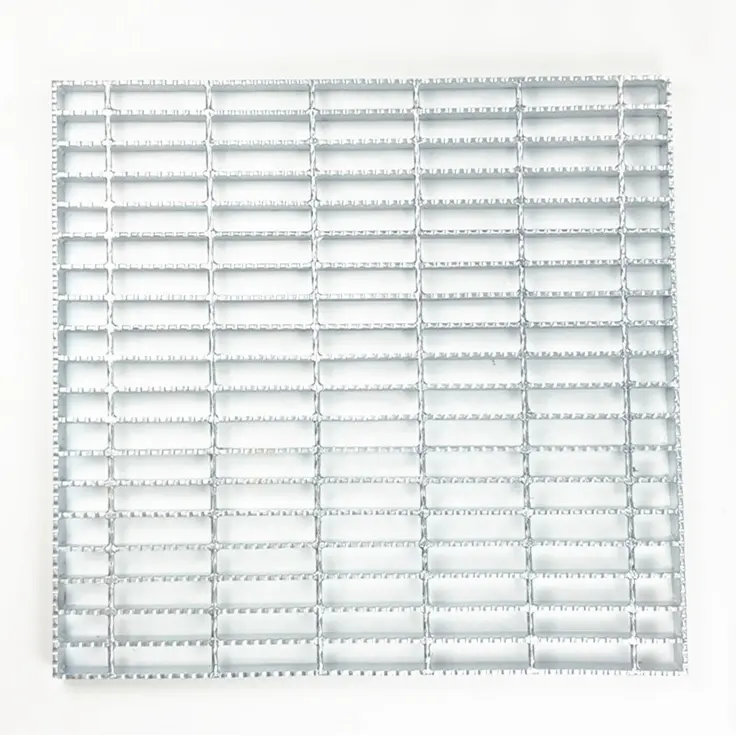
Serrated surfaces provide additional texture that can improve footing in areas exposed to water, oil, or other contaminants. However, serrations should not be confused with structural reinforcement. The depth or shape of the teeth alone does not determine load capacity. Structural performance depends on the complete panel design, including bearing bar specifications, span, and support arrangement.
Check Support Span and Installation Direction
Support span is another major factor affecting steel grating selection. The same panel may perform differently depending on the distance between supporting members. A specification suitable for a short span should not automatically be used across a longer unsupported distance.
Before finalizing the panel design, confirm:
- The clear distance between supporting members.
- The direction in which the bearing bars will run.
- The position and arrangement of supporting steelwork.
- The required fixing method and panel connection details.
Bearing bars generally need to run in the intended spanning direction. If the supporting structure changes or the panel orientation is modified, the original specification should be reviewed again.
The following factors should be considered together:
| Factor | Information to confirm | Selection purpose |
|---|---|---|
| Load condition | Distributed, concentrated, moving, or impact loads | Establishes the design basis |
| Support span | Distance between supporting members | Helps determine the required panel specification |
| Bearing bars | Height, thickness, and spacing | Influences structural performance and opening size |
| Panel layout | Dimensions, direction, and cutouts | Ensures proper fit and installation |
| Fixing method | Clips, bolts, or other specified connections | Helps secure panels in position |
Select Panel Designs for Different Industrial Areas
| Application | Main selection considerations |
|---|---|
| Industrial platforms | Personnel and material loads, support span, access requirements |
| Equipment maintenance areas | Concentrated loads, removable panels, equipment openings |
| Walkways | Pedestrian traffic, surface conditions, drainage, panel fixing |
| Wheeled equipment routes | Wheel loads, contact areas, bearing bar spacing |
| Trench and service covers | Opening dimensions, support conditions, access frequency |
For example, an industrial platform may use standard panels when the layout and support dimensions are regular. Around pipes, columns, valves, and machinery, however, standard panel dimensions may not provide an accurate fit. Custom cutouts or edge treatments may be necessary.
Areas used for equipment maintenance also need to consider future access. Removable panels can make it easier to reach components beneath the platform, provided that their dimensions and fixing arrangements are planned in advance.
For locations exposed to rain or process liquids, drainage and surface conditions should be considered alongside structural requirements. In areas crossed by carts or wheeled machinery, concentrated wheel loads and panel support details may become more important than general pedestrian traffic.
Evaluate Hot-Dip Galvanizing Against the Service Environment
Hot-dip galvanizing forms a zinc coating on the steel surface to help protect it against corrosion. It is commonly considered for outdoor and industrial applications, but its suitability depends on the actual exposure conditions.
Before selecting Hot-Dip Galvanized Steel Grating, review the following factors:
- Moisture exposure: Rain, standing water, and repeated wetting can affect long-term service conditions. Panel arrangements should allow water to drain effectively.
- Chemical contact: Acids, alkalis, salts, and industrial process chemicals may affect protective coatings. The substances and exposure conditions should be evaluated.
- Maintenance requirements: The installation should allow practical access for inspection, cleaning, and panel replacement.
Hot-dip galvanizing should not be assumed to provide sufficient protection in every coastal or chemical environment. Where exposure is particularly aggressive, material and coating suitability should be confirmed with the project designer or a corrosion specialist.
Drainage, installation details, and periodic inspection also contribute to long-term performance. Selecting a finish without considering the operating environment may result in maintenance requirements that could have been anticipated during project planning.
Decide When Standard Panels Are Not Enough
Custom Steel Grating Panels may be worth considering when:
- The installation area has non-standard dimensions.
- Pipes, cables, columns, or machinery require cutouts.
- Panel edges need to match surrounding structures.
- Certain sections must be removable for maintenance.
- Different areas require different panel sizes or configurations.
The decision should be based on the actual site layout rather than choosing customization automatically. Standard panels can simplify ordering and installation when their dimensions fit the project. Custom panels can reduce on-site cutting and adjustment when the layout is more complicated.
Prepare Project Details Before Requesting a Quotation
A clear quotation request helps suppliers understand the application and identify the information needed for product selection. Instead of asking for a general heavy-duty grating price, users should provide the conditions under which the panels will be installed. Where available, prepare:
- Intended application and expected load conditions.
- Support span and supporting structure details.
- Panel length, width, and required quantities.
- Bearing bar requirements, if already specified by the project.
- Openings, cutouts, edge treatments, and fixing preferences.
- Surface treatment and environmental exposure conditions.
Drawings are particularly useful for projects involving multiple panel sizes, irregular layouts, or equipment openings. If the structural specifications have not yet been finalized, sharing the available project information allows the supplier to identify the details that still need technical confirmation.
First Steel Grating provides steel grating products for industrial applications, including serrated grating, hot-dip galvanized grating, platform grating, stair treads, and customized panels. For projects involving different access areas or non-standard layouts, coordinating panel dimensions, openings, edge treatments, and installation requirements can help ensure that the selected products are better suited to actual site conditions.
Conclusion
Selecting Heavy-Duty Hot-Dip Galvanized Serrated Steel Grating requires a coordinated assessment of load conditions, bearing bar specifications, support span, panel layout, and environmental exposure. Standard panels may suit regular installations, while customized designs can address irregular dimensions and equipment access requirements. Confirming these details before ordering helps users make more appropriate product decisions and reduce avoidable installation adjustments.
FAQs
1. What information determines the load capacity of heavy-duty steel grating?
Load capacity depends on the panel design, bearing bar dimensions and spacing, support span, loading conditions, and supporting structure. These factors should be evaluated together.
2. Is serrated steel grating always necessary for industrial platforms?
Not always. Serrated surfaces can improve footing in areas exposed to water, oil, or similar contaminants. The surface choice should reflect the actual operating conditions and safety requirements.
3. When should a project use custom steel grating instead of standard panels?
Custom panels are useful when the installation involves irregular dimensions, equipment openings, special edge requirements, or removable access sections. Standard panels may be more practical for regular layouts.
4. What should be checked before ordering hot-dip galvanized grating for outdoor use?
Review moisture exposure, drainage, possible chemical contact, coating suitability, and maintenance requirements. More aggressive environments may require additional technical evaluation.
Post time: Nov-17-2026