
Bridge steel grating is an essential structural component in transportation infrastructure, pedestrian bridges, industrial walkways, and heavy-load platforms. Its strength, durability, and corrosion resistance make it a reliable choice for engineers, contractors, and government project planners seeking long-lasting and safe bridge decking solutions. As global infrastructure development accelerates, demand for high-performance steel grating continues to grow—particularly in bridges where safety and load capacity are critical.
Why Bridge Steel Grating Is Important for Large-Scale Infrastructure Projects
Bridge environments present unique challenges: heavy traffic loads, outdoor weather exposure, drainage requirements, and safety regulations. Traditional flooring materials often fail to provide the necessary structural performance, whereas steel grating delivers stability, slip resistance, and efficient water drainage.
For B2B buyers such as construction companies, municipal project managers, and industrial engineers, bridge steel grating offers a combination of structural integrity, cost-effectiveness, and ease of installation. Its modular features also make it suitable for new construction and renovation projects.
Key Features That Make Bridge Steel Grating a Preferred Choice
Bridge steel grating is designed to meet strict performance requirements. Its engineering characteristics deliver superior load-bearing capability and long-term durability.
• High load-bearing capacity suitable for both pedestrian and vehicular traffic
• Robust anti-slip surface options to enhance safety in wet and oily conditions
• Efficient drainage design prevents water accumulation and reduces corrosion risks
• Wide availability of stainless steel, carbon steel, and galvanized steel options
• Resistance to heavy impact, vibration, and long-term cyclic loading
• Modular structure for easy replacement and maintenance
• Meets engineering standards for highways, urban bridges, pedestrian walkways, and railway applications
Material Options for Bridge Steel Grating
The choice of material directly affects long-term durability, corrosion resistance, and project cost.
Galvanized Steel Grating
Hot-dip galvanization provides reliable corrosion protection, making it suitable for outdoor bridges exposed to rain, moisture, and industrial environments.
Stainless Steel Grating
Ideal for coastal bridges, chemical plants, and areas requiring high corrosion resistance. Stainless steel also offers excellent aesthetic value for architectural bridges.
Carbon Steel Grating
Carbon steel delivers exceptional strength and cost efficiency and is widely used in heavy-duty bridge structures where weight capacity is a priority.
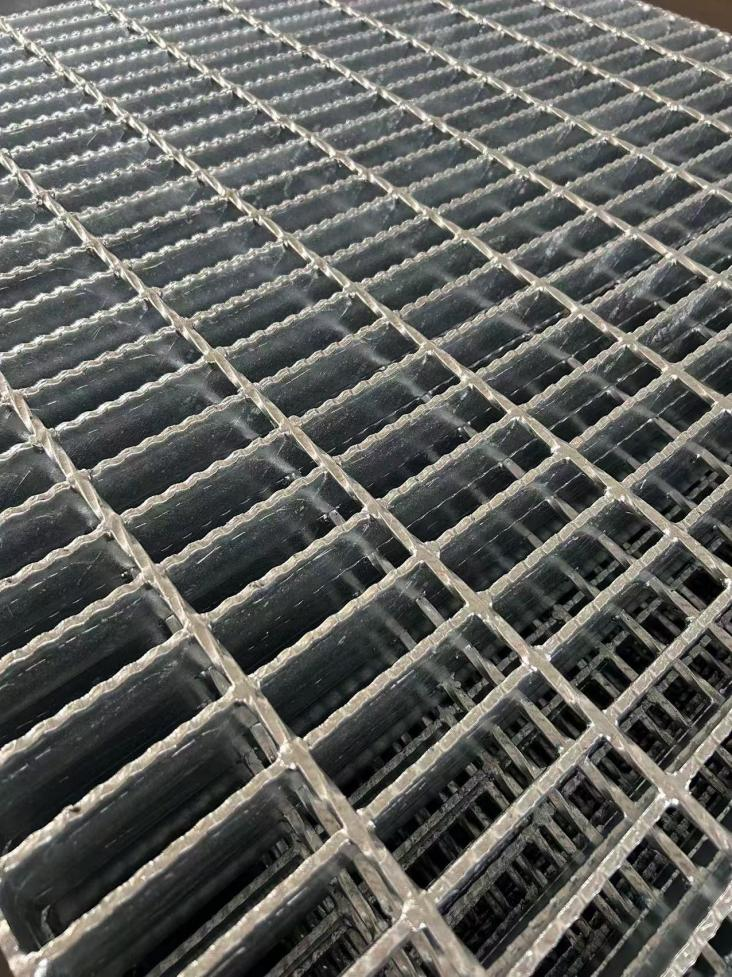
Structural Types of Bridge Steel Grating
Bridge grating is available in multiple structural formats depending on load capacity and application requirement.
Welded Steel Grating
A strong and cost-effective option, commonly used in heavy traffic bridges due to its high mechanical strength.
Swaged or Pressure-Locked Grating
Offers tighter spacing and enhanced uniformity. Suitable for architectural bridge designs that prioritize both safety and appearance.
Heavy-Duty Grating
Engineered for vehicles, trucks, and railway loads. Often used for bridge rehabilitation, industrial platforms, and dock ramps.
Serrated Grating
A slip-resistant surface ideal for pedestrian bridges, overpasses, and wet environments.
Engineering Applications for Bridge Steel Grating
Bridge steel grating is used across multiple infrastructure and industrial sectors due to its versatility and structural stability.
• Pedestrian bridges and footpaths
• Highway bridge decking and maintenance walkways
• Railway platforms, footbridges, and trackside walkways
• Industrial access bridges in oil, gas, mining, and energy facilities
• River-crossing walkways, drainage channels, and flood-control structures
• Bridge inspection platforms and maintenance channels
• Municipal infrastructure and urban overpasses
Benefits for B2B Buyers and Project Contractors
Bridge steel grating offers value beyond basic structural strength—it improves long-term safety and reduces maintenance costs, which is essential for public and private infrastructure.
• Long service life reduces replacement costs
• Lower structural weight simplifies installation and reduces bridge load burden
• High airflow and drainage performance prevent moisture accumulation
• Customizable options including panel size, bar spacing, thickness, and surface treatment
• Compatible with both new construction and retrofitting projects
• Fast installation reduces project downtime
• Environmentally friendly due to long service cycles and recyclability
How to Select the Right Bridge Steel Grating for Your Project
Selecting a suitable product requires consideration of load, environment, and safety requirements.
• Determine vehicle or pedestrian load classification
• Choose between galvanized, stainless steel, or carbon steel
• Confirm anti-slip requirements (serrated vs. smooth)
• Check local safety standards and engineering regulations
• Evaluate corrosion exposure (coastal, industrial, or inland)
• Assess replacement accessibility for long-term maintenance
• Consider custom fabrication for non-standard bridge designs
Summary
Bridge steel grating provides a durable, safe, and cost-effective solution for modern infrastructure projects. Its high load capacity, weather resistance, anti-slip performance, and flexible structural options make it ideal for pedestrian bridges, vehicle bridges, railway platforms, and industrial walkways. For contractors, engineers, and government procurement teams, steel grating represents a long-lasting solution that meets both functional and safety requirements in demanding environments.
FAQ
1. What materials are commonly used for bridge steel grating?
Galvanized steel, stainless steel, and carbon steel are the most widely used due to their strength and corrosion resistance.
2. Is steel grating suitable for heavy vehicle bridge decking?
Yes. Heavy-duty steel grating is specifically designed to support trucks, machinery, and other high-load traffic.
3. What type of grating is best for pedestrian bridges?
Serrated or anti-slip grating is recommended due to enhanced traction and safety in wet conditions.
4. Can bridge steel grating be customized for different bridge designs?
Yes. Panel size, load rating, bar spacing, and surface treatment can all be tailored based on project requirements.
Post time: Dec-09-2025