
Steel grating walkways are widely used in industrial facilities to provide access to equipment, pipelines, cables, and maintenance areas. However, industrial platforms rarely have completely uninterrupted walking surfaces. Pipes may pass through the floor, machinery may occupy part of the platform, and inspection points may require regular access. These conditions make access openings and equipment cutouts an important part of steel grating design. A well-designed opening must accommodate equipment and maintenance requirements without compromising panel stability, secure installation, or pedestrian safety.
Common Types of Openings in Steel Grating Walkways
Pipe and cable openings: Pipes, conduits, and cable trays often pass through elevated platforms. Small penetrations may require localized cutouts, while larger service routes may need openings coordinated with the surrounding support structure. Sufficient clearance should be provided to prevent contact between the grating and installed services.
Equipment access cutouts: Pumps, valves, motors, and other machinery may require openings for connections, inspection, or component removal. Their dimensions should account for both the equipment footprint and the space technicians need to perform maintenance safely.
Inspection and maintenance openings: Some platforms require access to lower-level components or concealed systems. Depending on access frequency, the design may incorporate removable grating panels or dedicated access covers supported by the platform structure.
How Opening Design Affects Panel Strength
Cutting an opening into a steel grating panel changes its load-bearing arrangement. The impact depends on the opening’s dimensions, location, and relationship to the bearing bars and supporting beams.
Bearing bars carry a substantial portion of the applied load, so cutting through them can reduce the panel’s structural capacity. Where possible, openings should be positioned to minimize unnecessary interference with these load-carrying elements. If the layout requires bearing bars to be interrupted, additional framing or reinforcement may be needed to transfer loads around the opening. Cut edges also require appropriate treatment. Depending on the panel design, edge bars or other suitable reinforcement can secure exposed ends, improve local rigidity, and create a defined boundary. Cutting grating to fit around equipment without evaluating the remaining structure may leave unsupported sections or unstable edges.
For an Anti-slip walkway, these details matter beyond structural strength. Openings should fit the intended walking route while avoiding abrupt edges, unexpected gaps, or poorly supported sections that could create tripping hazards. The surrounding grating should remain securely fixed and provide a stable walking surface.
Coordinating Cutouts with the Supporting Structure
Opening dimensions should never be determined by equipment clearance alone. Support beam locations, bearing bar direction, and panel arrangement all influence where an opening can be positioned and how its edges should be supported.
- Bearing bar direction: Identify how the grating spans between supports. An opening that interrupts the primary load-carrying bars may require additional structural consideration.
- Support locations: Check whether the opening falls near a beam, column, or panel joint. The surrounding structure must adequately support the remaining grating sections.
- Opening dimensions: Allow sufficient clearance for installed equipment, connections, and any movement or removal required during servicing.
- Adjacent panel arrangement: Consider how the cutout affects neighboring panels, fastening locations, and continuity of the walking surface.
These details become particularly important when multiple services pass through the same platform. Grouping openings where practical can simplify the layout, but each opening must still satisfy its individual clearance and structural requirements.
Maintaining Safe Access Around Openings
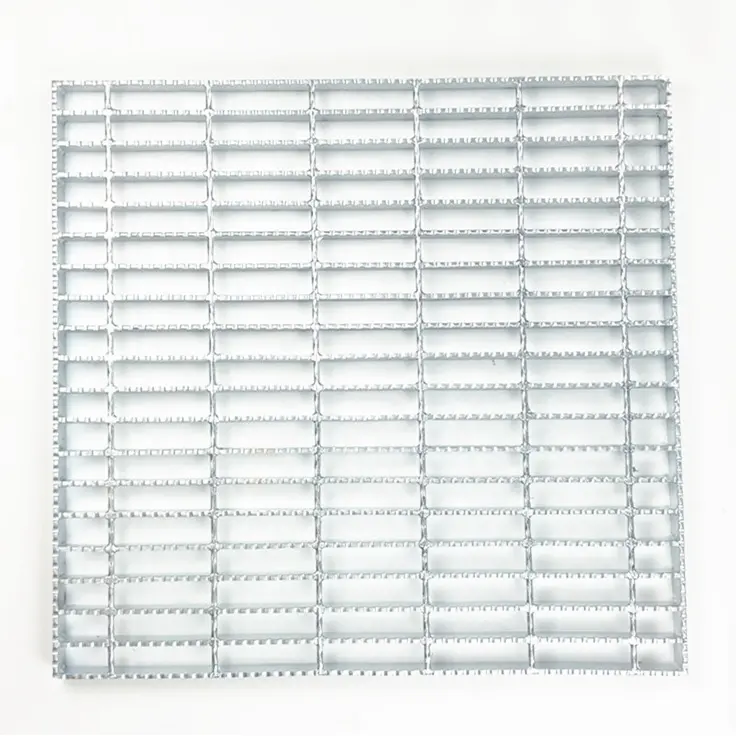
A cutout can solve an equipment access problem while creating a new hazard if its edges and surrounding walking area are poorly planned. For an Anti-slip walkway, opening placement should be coordinated with the panel’s surface pattern, edge treatment, and installation method. Serrated steel grating can provide additional traction in suitable applications, but a slip-resistant surface cannot eliminate risks caused by oversized gaps, loose panels, or poorly finished cut edges.
- Define the opening boundary: Finish exposed edges appropriately and provide support where required to reduce sharp-edge hazards and structural instability.
- Control gaps: Check the spaces between the grating, adjacent panels, and surrounding equipment against applicable project requirements and safety regulations.
- Keep access routes clear: Position openings to avoid unnecessarily narrowing the usable walking area with pipes, cables, or equipment.
- Secure surrounding panels: Confirm that fasteners and support points remain effective after the cutout is introduced.
Large floor openings may need additional protective arrangements depending on their location and intended use.
Fixed Panels or Removable Grating Around Equipment?
The choice between fixed and removable panels depends mainly on how the opening will be used throughout the equipment’s service life.
Fixed panels are generally suitable when an opening accommodates permanent pipework or services that require little direct access. When properly supported and fastened, they provide a stable walking surface. However, the design should still allow required inspection and replacement work to be completed safely. Removable grating panels may be more practical near valves, pumps, inspection points, and components that require frequent servicing. They allow maintenance personnel to access equipment without dismantling a larger platform section. Panel dimensions, lifting methods, and fastening arrangements should be planned in advance to make removal and reinstallation manageable.
For an Anti-slip walkway with frequent maintenance requirements, removable sections should match the surrounding grating in panel depth, surface characteristics, and bearing direction wherever applicable. Their fixing systems must prevent accidental displacement during normal use while allowing authorized personnel to remove them when necessary.
Neither solution is automatically better for every application. The decision should reflect access frequency, equipment clearance, loading conditions, and practical maintenance requirements.
Customized Steel Grating Solutions
For industrial projects requiring an Anti-slip walkway, opening design should be coordinated with equipment layouts, platform support structures, and maintenance needs. We provide steel grating solutions for different platform configurations, with customized panel arrangements that consider opening positions, edge details, fastening methods, and installation requirements.
Conclusion
Access openings and equipment cutouts allow steel grating walkways to accommodate complex industrial layouts while maintaining practical access for operation and maintenance. Successful designs require more than matching the dimensions of pipes or machinery. Bearing bar direction, edge reinforcement, supporting structures, fastening methods, and safe walking clearance must all be considered together. Addressing these factors during the design stage helps reduce on-site modifications, improve installation compatibility, and support reliable long-term use.
FAQs
1. Can an existing steel grating panel be cut to create an equipment opening?
It may be possible, but the panel’s load-bearing structure and support arrangement should be assessed first. Cutting bearing bars without suitable reinforcement can reduce load capacity. Modifications should follow an approved design rather than being made solely for convenience.
2. Should every access opening have reinforced edges?
Not every opening requires the same reinforcement. The appropriate treatment depends on its size, location, interrupted bearing bars, and supporting conditions. The design should establish whether edge bars, additional framing, or other measures are necessary.
3. Are removable grating panels suitable for frequent equipment maintenance?
They can be suitable when properly supported, securely fastened during use, and designed for practical removal. The required lifting clearance and safe handling method should also be considered.
4. Can the position of a steel grating opening be decided during installation?
It is preferable to confirm opening positions and dimensions before fabrication. Cutting panels on-site may affect bearing bars, edge support, and fastening arrangements. If an adjustment is necessary, its impact on structural capacity and installation safety should be assessed before the work proceeds.
Post time: Oct-20-2026