
In modern industrial facilities, public infrastructure, and commercial environments, safety is a top priority. Anti-slip walkways play a crucial role in preventing accidents, providing safe pedestrian access, and ensuring long-term durability under high traffic and harsh conditions. For B2B buyers, engineers, and contractors, understanding the types, materials, and applications of anti-slip walkways is essential for creating secure and reliable environments.
What is an anti-slip walkway?
An anti-slip walkway is a specially designed walking surface that prevents slips and falls, particularly in areas exposed to moisture, chemicals, or heavy traffic. These walkways can be made from steel, aluminum, composite materials, or fiberglass, and often feature serrated or textured surfaces to increase traction. Unlike standard flooring, anti-slip walkways are engineered to meet safety standards and industrial requirements while supporting heavy loads and long-term use.
Key benefits of anti-slip walkways
Anti-slip walkways provide multiple advantages for industrial and commercial environments:
● Enhanced safety: Reduces the risk of slips, trips, and falls in wet or hazardous areas
● Durability: Designed to withstand heavy foot traffic, equipment movement, and harsh environmental conditions
● Low maintenance: Open or textured designs prevent debris buildup and make cleaning easier
● Versatility: Suitable for factories, chemical plants, oil refineries, bridges, and public spaces
● Regulatory compliance: Meets workplace safety standards and municipal safety codes
These benefits make anti-slip walkways a critical investment in safety, efficiency, and operational reliability.
Common types of anti-slip walkways
Depending on the application, different materials and designs are used:
● Steel anti-slip walkways – High strength, ideal for industrial platforms and heavy machinery areas
● Aluminum walkways – Lightweight, corrosion-resistant, suitable for outdoor or coastal environments
● Fiberglass or FRP walkways – Non-conductive, corrosion-resistant, perfect for chemical plants or marine areas
● Textured or serrated metal walkways – Enhanced traction for wet or oily environments
● Composite walkways – Environmentally friendly and durable for light to medium traffic areas
Each type can be customized in size, load-bearing capacity, and surface texture to meet specific project needs.
Applications of anti-slip walkways
Anti-slip walkways are widely used across industrial and public infrastructure projects:
● Industrial plants – Chemical plants, oil refineries, factories, and warehouses
● Bridges and elevated platforms – Ensures safe pedestrian access in public or maintenance areas
● Marine and offshore facilities – Provides safe surfaces in wet or corrosive conditions
● Public spaces – Parks, pedestrian bridges, and urban walkways
● Maintenance paths – Safe routes for inspection, repair, and equipment operation
By integrating anti-slip walkways, facilities can minimize accidents, improve accessibility, and ensure compliance with safety regulations.
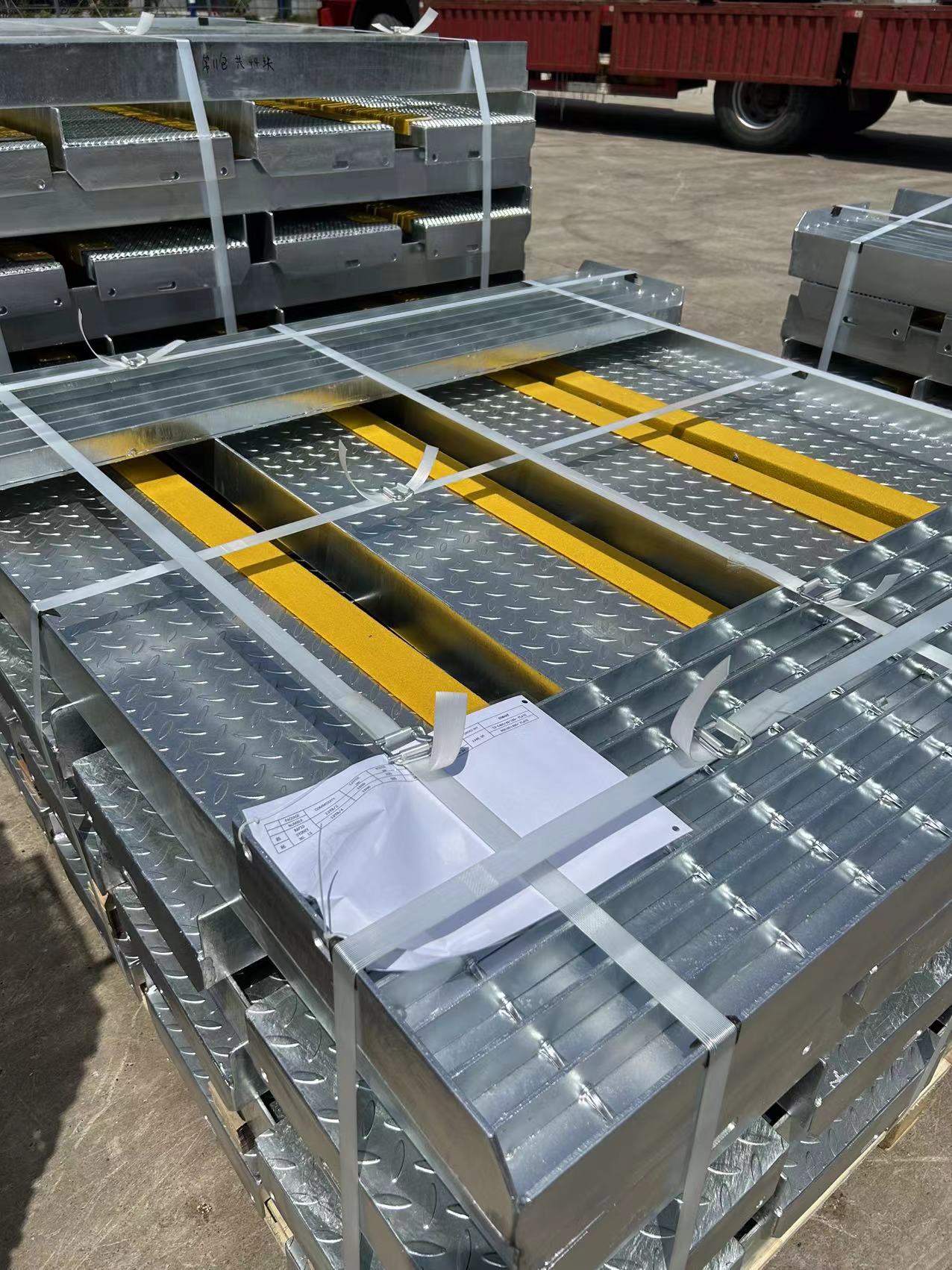
Material and surface treatment considerations
Material selection and surface treatment are key factors in ensuring long-term performance:
● Corrosion resistance: Galvanized steel, aluminum, or FRP prevent rust in wet or chemical environments
● Traction enhancement: Serrated or textured surfaces reduce slip risks
● Load capacity: Industrial applications may require walkways to support heavy equipment or foot traffic
● Durability and maintenance: High-quality materials and coatings reduce long-term maintenance needs
Choosing the right combination of material and surface finish ensures safety and longevity for any industrial or public project.
Installation and maintenance best practices
Proper installation and regular maintenance are crucial for maximizing the effectiveness of anti-slip walkways:
● Ensure accurate measurements and secure fastenings
● Align panels flush with surrounding surfaces to prevent trip hazards
● Inspect periodically for corrosion, loose components, or wear
● Clean regularly to remove debris, oils, or other slippery substances
● Follow manufacturer guidelines for load capacity and environmental exposure
These practices help maintain safety, reduce liability, and extend the lifespan of anti-slip walkways.
Why anti-slip walkways are a smart B2B investment
For B2B buyers, investing in high-quality anti-slip walkways offers multiple operational advantages:
● Reduced workplace accidents and insurance claims
● Compliance with local safety regulations and industry standards
● Lower long-term maintenance costs
● Customizable solutions to meet specific project requirements
● Reliable performance in high-traffic or harsh environments
Properly specified and installed anti-slip walkways enhance both safety and operational efficiency in any industrial or public project.
Conclusion
Anti-slip walkways are a fundamental component of safe and durable industrial, commercial, and public infrastructure. By selecting the right material, surface texture, and installation method, B2B buyers can ensure maximum safety, compliance, and long-term performance. Whether for factories, chemical plants, bridges, or pedestrian areas, anti-slip walkways remain a critical investment in reliable and secure infrastructure.
FAQ:
Q1: What are anti-slip walkways used for?
They are used to provide safe pedestrian access in industrial facilities, public spaces, bridges, and maintenance paths, especially in wet or hazardous areas.
Q2: What materials are commonly used for anti-slip walkways?
Common materials include steel, aluminum, fiberglass (FRP), and composite materials, depending on load requirements and environmental conditions.
Q3: Can anti-slip walkways be customized?
Yes, walkways can be customized for dimensions, load capacity, surface texture, and material to meet specific project needs.
Q4: How should anti-slip walkways be maintained?
Regular inspection for corrosion, loose fasteners, and wear, along with cleaning debris or oils, helps maintain safety and prolong lifespan.
Post time: Jan-27-2026